
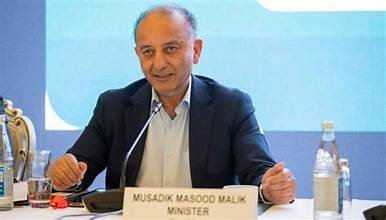
ISLAMABAD: Federal Minister for Climate Change and Environmental Coordination Dr Musadik Malik has called for greater participation of young people in Pakistan’s climate and water policymaking, saying youth can play a key role in bridging the gap between policy decisions and implementation on the ground.
Addressing a National Youth-Led Policy Roundtable on Water Resilience and Climate Action in Pakistan, organized by the Ministry of Climate Change and Environmental Coordination in collaboration with WaterAid Pakistan, the minister said young people could contribute at every stage of policymaking, including formulation, implementation, monitoring and accountability.

Highlighting government initiatives designed to engage young people, Dr Malik said, “Green skills, Climate University, startups, this is how the ministry is turning the idea of youth partnership into lived reality.”
He stressed the need for stronger partnerships among the government, youth, academia, research institutions and the private sector to promote evidence-based policymaking, innovation and effective climate action.
The minister said young people’s strong presence in communities across Pakistan placed them in a unique position to monitor the implementation of policies, identify gaps and provide evidence-based feedback to policymakers.
He also emphasized the importance of women’s empowerment and the meaningful inclusion of vulnerable and marginalized communities in climate and water-related policies and projects.
Referring to the 18th Constitutional Amendment, Dr Malik noted that several important areas of water management and service delivery fall under provincial jurisdiction. He called for greater provincial institutional, technical and human resource capacity, alongside effective federal leadership and coordination.
The minister said climate and water challenges vary significantly across different regions of Pakistan and policies must therefore be tailored to local needs and vulnerabilities. He stressed that indigenous and community knowledge should complement scientific and technical expertise in addressing these challenges.
Dr Malik said the focus should now move beyond policy commitments towards visible and measurable results on the ground, emphasizing effective implementation and accountability.
Federal Secretary for Climate Change and Environmental Coordination Awais Manzur Sumra and senior officials of the ministry also attended the roundtable.
Young participants from across Pakistan shared their experiences and recommendations on water scarcity, floods, droughts, sanitation, public health and climate resilience. They called for stronger youth representation in decision-making, greater community-level action and improved accountability mechanisms.
The roundtable provided a platform for young people to contribute directly to discussions on Pakistan’s climate and water challenges and highlighted the importance of youth leadership in building a more resilient future.
Also Read: Climate Action Needed To Protect Indus Dolphin And Pakistan’s Biodiversity: Musadik Malik