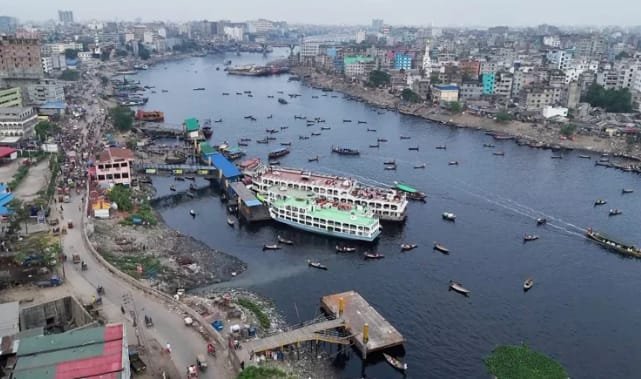
DHAKA: Bangladesh has launched a comprehensive initiative to restore the heavily polluted Buriganga River by introducing online monitoring of industrial Effluent Treatment Plants (ETPs), strengthening enforcement against illegal waste disposal and expanding river restoration efforts.
Director General of the Department of Environment Dr Md Lutfor Rahman said industries will be brought under a digital monitoring system to ensure wastewater is properly treated before being discharged into the river. He added that authorities are also working to increase the river’s water flow to help restore its natural ecosystem.

As part of the initiative, IP cameras will be installed at pollution hotspots, while dedicated control rooms will be established at shipbuilding and ship repair yards to monitor the disposal of hazardous waste.
The Bangladesh Inland Water Transport Authority (BIWTA) is also carrying out regular dredging operations to improve navigability and remove contaminated sediments from the riverbed.
Dr Rahman said untreated industrial wastewater often contains toxic chemicals, dyes, oils and heavy metals that pose serious threats to aquatic ecosystems, public health and the environment. Properly functioning ETPs, he said, are essential for reducing pollution and promoting the safe reuse of treated water.
Environmental experts say the Buriganga continues to suffer from severe pollution caused by untreated industrial effluents, household waste and plastic dumped directly into the river. Numerous dyeing and washing factories, along with shipbuilding and repair yards located along its banks, have long been accused of violating environmental regulations.
Professor A.K.M. Saiful Islam of the Institute of Water and Flood Management at the Bangladesh University of Engineering and Technology (BUET) said stopping the direct discharge of household waste into the river should be the government’s top priority. He also called for improved sewerage systems, the removal of illegal encroachments, clear demarcation of river boundaries and regular dredging to remove plastic waste and polluted sediments.
Officials said Bangladesh has strengthened its environmental governance through the National Environment Policy 2018, Environment Conservation Rules 2023, and Solid Waste Management Rules 2021, which set stricter standards for industrial pollution control and waste management.
According to BIWTA, authorities have identified 307 waste discharge outlets along the Buriganga River. Notices have been served on owners of illegal riverside structures, dockyards and other establishments, directing them to stop dumping waste into the river. Officials warned that legal action would be taken against violators, while further measures are being implemented to block waste discharge through the identified outlets.
Flowing through Dhaka and Narayanganj, the 29-kilometre-long Buriganga River has been the lifeline of Bangladesh’s capital for nearly 400 years. The government hopes the latest interventions will restore the river’s ecological health and significantly improve water quality in one of the country’s most polluted waterways.
Also Read: Assam Flood Death Toll Rises to 41 as More Than 700,000 Affected