
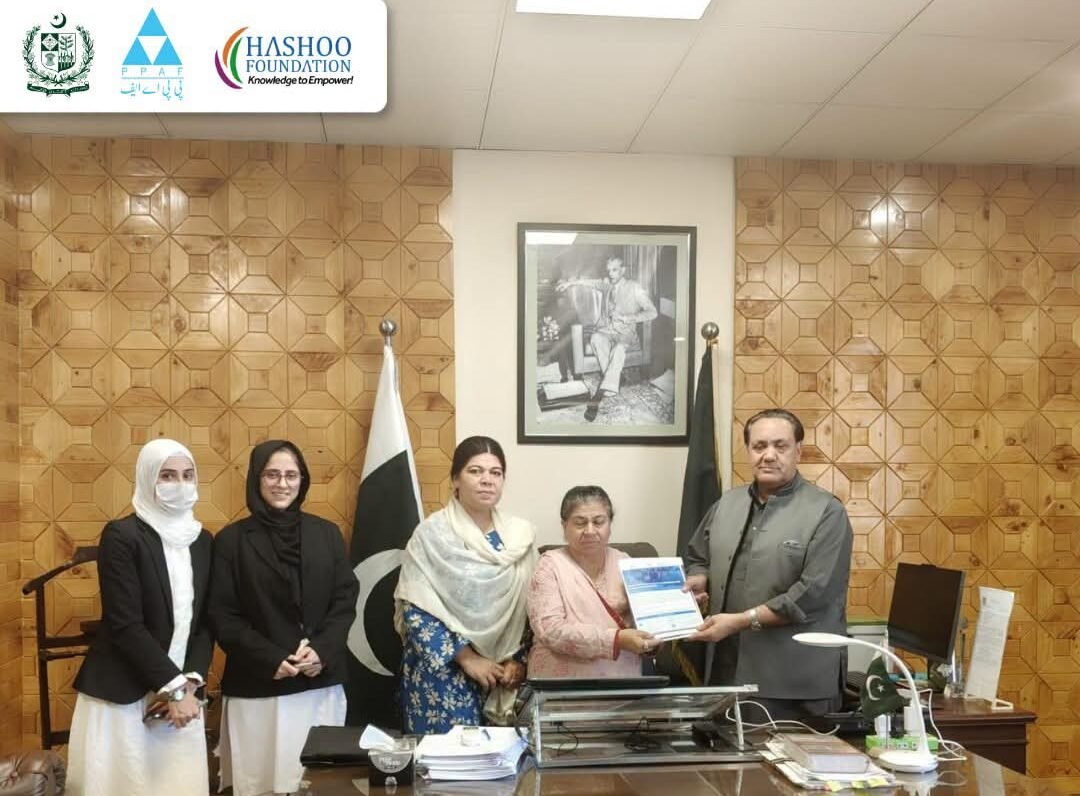
GILGIT: A significant step towards strengthening gender-responsive climate governance has been taken in Gilgit-Baltistan as the Hashoo Foundation engaged with the Environmental Protection Agency (EPA) and the Law & Prosecution Department of the Government of Gilgit-Baltistan to seek endorsement of two policy briefs focused on inclusive climate action.
The engagement was held under a project supported by the Pakistan Poverty Alleviation Fund (PPAF) and focused on integrating gender considerations into climate governance, ecosystem management and provincial policymaking.

The two policy briefs presented for endorsement are:
Gender Mainstreaming in Climate-Resilient Ecosystem Management and Governance Structures
Review of Gender Responsiveness in Climate-Related Provincial Policies of Gilgit-Baltistan
The documents provide evidence-based recommendations aimed at strengthening the role of gender considerations in climate-related decision-making and governance structures across the region.
The initiative highlights the importance of ensuring that climate policies and environmental governance mechanisms take into account the different vulnerabilities, responsibilities and needs of women and other communities affected by climate change.
Gilgit-Baltistan is particularly exposed to climate-related risks, including changing weather patterns, floods, landslides, glacier-related hazards and pressure on natural resources. The policy briefs therefore seek to support more inclusive approaches to climate resilience and ecosystem management.
The engagement with the EPA and Law & Prosecution authorities also represents an effort to connect research and policy recommendations with government decision-making processes.
The Hashoo Foundation said the recommendations are intended to contribute to gender-responsive governance, stronger climate action and more inclusive policymaking in Gilgit-Baltistan.
The initiative underscores the growing recognition that effective climate resilience requires not only environmental and technical solutions but also policies that ensure meaningful participation and representation of different sections of society.
The proposed policy recommendations could help strengthen institutional capacity and provide a framework for integrating gender considerations into future climate-related policies and programmes in Gilgit-Baltistan.
Also Read: Islamabad on High Alert as Rain Continues, Drainage Teams Deployed Across Low-Lying Areas