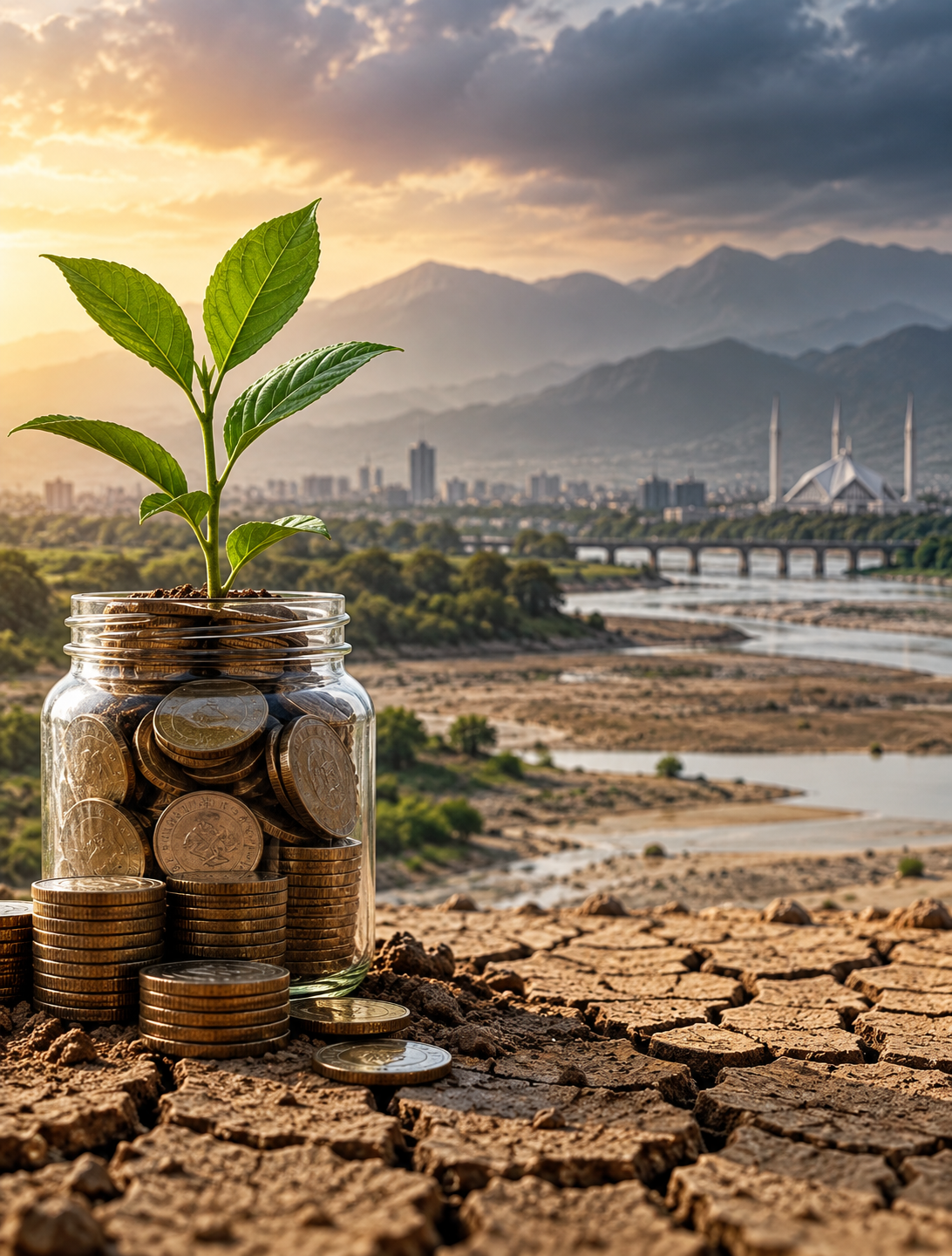
Pakistan is facing a growing climate-finance challenge as rising temperatures, floods, droughts and other climate risks place increasing pressure on the country’s economy and vulnerable communities. At the same time, limited fiscal space and competing demands on public finances are making it difficult to scale up climate investments.
According to the Dawn report, Pakistan’s latest climate commitments estimate that achieving a 50% reduction in projected emissions by 2035 would require around $565.7 billion. Yet the country has so far accessed less than $500 million from major international climate-finance sources, highlighting the significant gap between estimated needs and available resources.

The financing challenge is also linked to institutional and technical barriers. Limited capacity to prepare bankable projects, fragmented coordination between federal and provincial authorities, inadequate tracking of non-budgetary climate flows and limited private-sector participation can all restrict access to available funding. The article points to tools such as blended finance, green bonds, carbon markets and climate-aligned public-private partnerships as potential parts of a broader financing framework.
For Pakistan, climate finance is ultimately about more than funding individual environmental projects. Investments in resilient infrastructure, water security, disaster preparedness, agriculture and clean energy can help reduce future losses while supporting long-term economic development. Building a coordinated and predictable financing system could therefore be an important part of strengthening the country’s ability to respond to escalating climate risks.