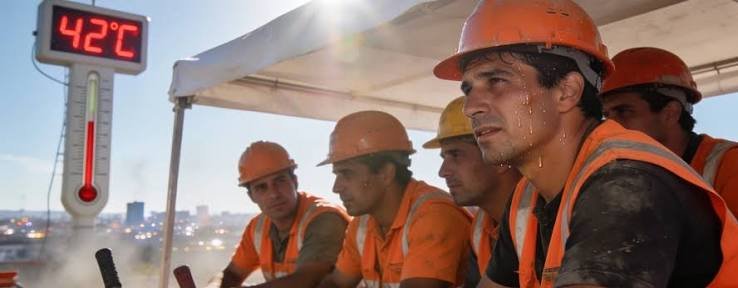
MADRID: Spain is reshaping workplace practices as increasingly severe heatwaves driven by climate change force employers and authorities to introduce new safety measures, revise work schedules and strengthen legal protections for outdoor workers.
In Barcelona, municipal authorities have equipped around 1,400 outdoor workers with smart wristbands designed to monitor body temperature and warn users before heat stress becomes dangerous. The wearable devices activate a flashing red light and alarm when a worker’s body temperature reaches a level associated with a higher risk of heatstroke, allowing them to seek shade, hydrate and rest before symptoms develop.

Antonio Reina, a 54-year-old municipal gardener, said the wristbands provide an additional layer of protection by alerting workers before they begin feeling unwell.
Spain has long experienced hot summers, but climate change is making heatwaves more frequent, more intense and longer-lasting. Last month’s record-breaking heatwave across Europe, which was linked to thousands of excess deaths, has accelerated efforts to improve worker safety, particularly in countries where air conditioning is not widely available.
Employers across Spain have increasingly adjusted working hours to help staff avoid the hottest part of the day. In many sectors, outdoor shifts now begin earlier in the morning and end by early afternoon. Workers are also being encouraged to take regular hydration breaks, wear protective headgear and avoid working alone during extreme heat.
In Madrid, where temperatures often exceed 38 degrees Celsius during summer heatwaves, solar panel installation crews now begin work at 7 a.m. and finish by 1 p.m. Eli de Sousa, who manages one such company, said continuing work beyond early afternoon becomes unsafe because of the extreme temperatures.
Companies have also introduced practical measures such as providing chilled drinking water and temporarily suspending outdoor work when weather conditions become hazardous, with lost working hours made up on cooler days.
For rooftop telecommunications technician Juan Carlos Rodriguez, regular cooling breaks have become essential. He said working at height while wearing heavy safety equipment places additional physical strain on workers during periods of extreme heat.
Although Spanish labour regulations introduced in the 1990s set a maximum workplace temperature of 27 degrees Celsius for indoor environments, enforcement remains inconsistent. Complaints about overheating in schools and workplaces have increased in recent years.
Reflecting stronger enforcement, labour ministry penalties for heat-related workplace violations have more than doubled, rising from about €706,000 in 2022 to nearly €1.6 million last year. Labour Minister Yolanda Díaz has stressed that no worker should become ill or lose their life because of unsafe working conditions.
The government’s approach changed significantly after a 60-year-old street cleaner died from heatstroke in Madrid during the summer of 2022. The incident prompted authorities to introduce new legislation in 2023 requiring employers to adjust working hours and avoid assigning outdoor work during the hottest hours whenever severe heat warnings are issued.
The law also requires employers to implement heat protection protocols when Spain’s national weather agency issues its highest-level heat alerts. Labour unions say these measures have been widely adopted in sectors such as construction and municipal cleaning, although compliance remains uneven in other industries.
Spain has also introduced climate leave following the devastating floods that struck Valencia in 2024, allowing employees to stay away from work during dangerous weather events. However, experts note that applying similar leave during heatwaves remains more challenging because workers are generally still able to travel to their workplaces.
For many self-employed workers, however, adapting to extreme temperatures remains difficult. Fernando Garcia, who operates an ice cream stall in central Madrid, said coping with the heat largely depends on staying hydrated and enduring increasingly harsh summer conditions.
Scientists warn that southern Europe is among the regions most vulnerable to rising temperatures, with climate change expected to make prolonged heatwaves an increasingly common challenge for workers, businesses and public health systems.