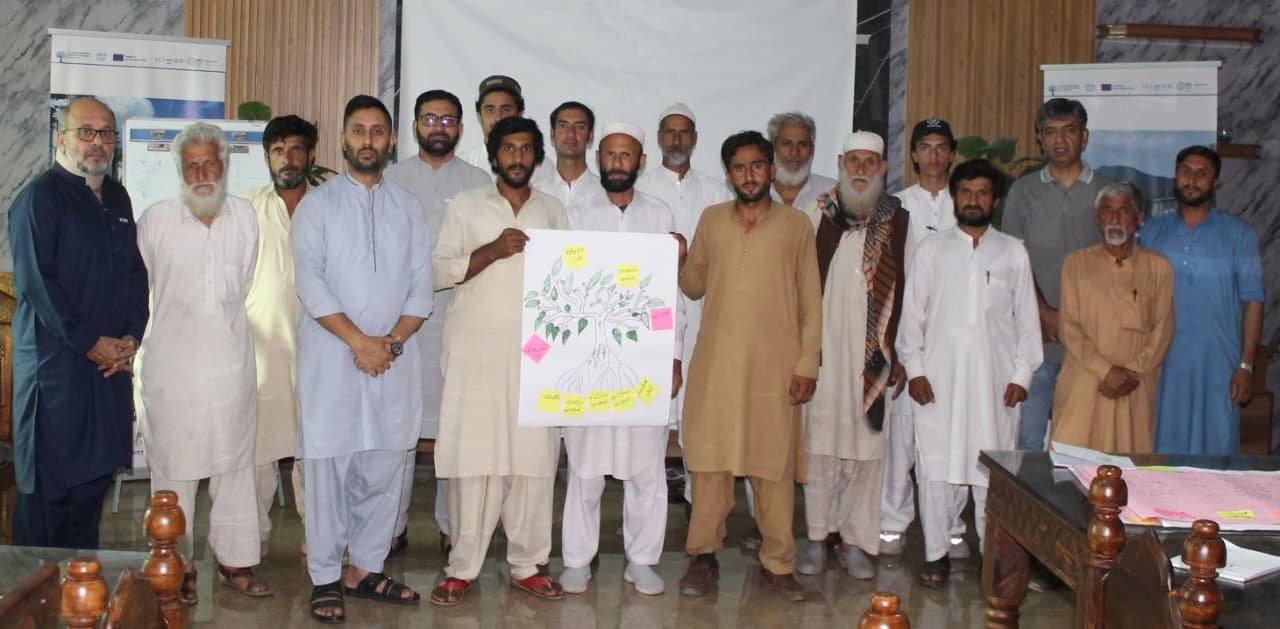
UPPER SWAT: A two-day community training session has been held in Shaheed Baba Village, UC Tirat, District Upper Swat, to help local communities better understand climate risks and develop locally led adaptation solutions.
The training was organised by SPO under the ongoing community training programme of the PROAACT Project. The session brought together the male community group of Shaheed Baba Village to identify key climate-related challenges and explore possible adaptation pathways.

Participants worked with the ICIMOD/UNEP Systematic Participatory Foresight (SPF) Toolkit through a series of practical exercises. These included Rich Picture, Data Walk, Stakeholder Analysis, Importance–Influence Matrix, Problem Tree Analysis, STEEPLE Analysis, Timeline Mapping, and the Impact/Uncertainty Matrix.
Through these activities, participants mapped climate risks, examined the factors contributing to local vulnerability, and identified priorities for community-led adaptation.
The discussions reflected the community’s own experiences of recurring flash floods, declining agricultural yields and increasing water scarcity. Local knowledge and lived experiences were placed at the centre of the process to help build evidence for a community-owned Local Adaptation Plan (LAP).
The training highlights the importance of involving local communities in climate planning, particularly in areas facing growing risks from floods, water shortages and changing agricultural conditions. By combining local knowledge with participatory planning tools, communities can play a stronger role in shaping adaptation measures suited to their own needs.