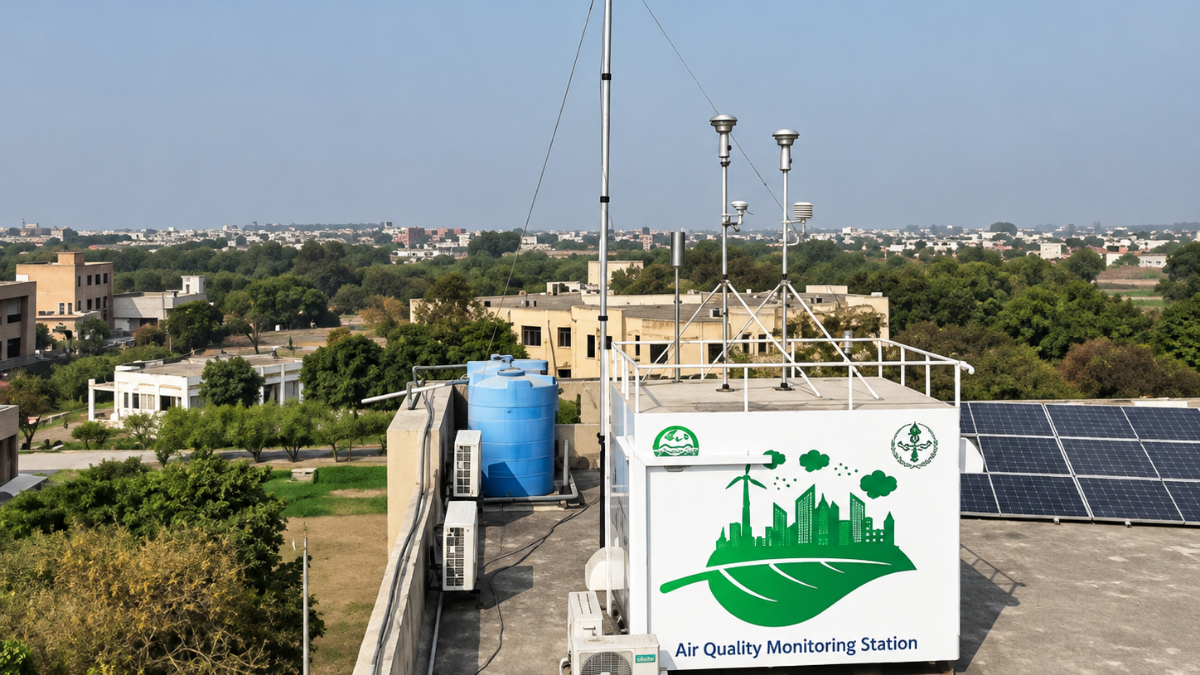
LAHORE, September 9, 2026: Punjab has upgraded its air quality monitoring system by integrating satellite data, weather information and pollution forecasting technology to identify pollution hotspots and predict changes in air quality across the province.
The Punjab Environment Protection and Climate Change Department (EP&CCD) launched the enhanced monitoring features in collaboration with the International Centre for Integrated Mountain Development (ICIMOD).

The upgraded AQI Punjab Dashboard now combines information from 59 air quality monitoring stations, satellite observations and weather systems, providing authorities with real-time pollution data as well as air quality forecasts.
59 Monitoring Stations Across Punjab
According to EPA Punjab Director General Abdullah Nayyar Sheikh, Punjab has significantly expanded its air quality monitoring network, increasing the number of stations from only three in Lahore in 2024 to 59 stations across the province.
The department plans to further expand the network to 100 monitoring stations, strengthening its ability to track air pollution across urban and industrial areas as well as other pollution-prone locations.
The integration of satellite and weather data is expected to provide a more comprehensive picture of pollution patterns, enabling authorities to identify areas experiencing high pollution levels and better understand the factors contributing to deteriorating air quality.
Faster Response to Pollution Hotspots
Officials said the upgraded system will help authorities identify major pollution sources and respond more quickly to severe air pollution episodes.
The data can support targeted action against pollution sources including dust and industrial emissions, allowing enforcement measures to be directed towards areas and sectors contributing significantly to poor air quality.
Authorities are already using measures such as mist cannons and sector-wise enforcement as part of efforts to control pollution.
Technology to Strengthen Air Quality Management
The integration of real-time monitoring, satellite observations and forecasting capabilities represents an important step towards more data-driven air quality management in Punjab.
Instead of relying solely on measurements from individual monitoring stations, the upgraded system can help authorities assess pollution trends across wider areas and anticipate potential deterioration in air quality.
The technology is expected to strengthen Punjab’s capacity to monitor pollution, identify hotspots, improve forecasting and support faster government responses to protect public health and the environment.
With the planned expansion to 100 monitoring stations, the province is seeking to build a broader and more responsive air quality monitoring network capable of supporting long-term efforts to tackle air pollution and smog.