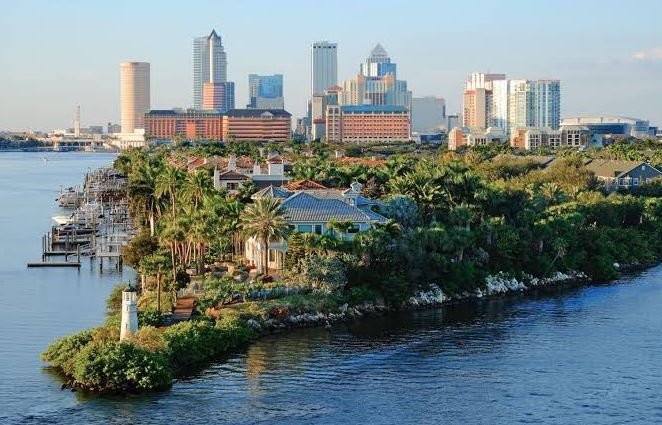
ISLAMABAD, September 9, 2026: The US city of Tampa has emerged as the world’s leading city for visible street-level tree cover, recording a 36.1 percent Green View Index (GVI), according to Treepedia data.
Tampa’s score is 6.8 percentage points higher than Breda and Singapore, which follow it in the ranking. Eight cities globally have a Green View Index of more than 25 percent, including Oslo, Sydney, Vancouver, Montreal and Cambridge.
The Green View Index offers a different way of measuring urban greenery by assessing cities from the perspective of pedestrians. Rather than simply counting parks or measuring total green space, the index examines the proportion of tree canopy visible to people walking or standing along city streets.
What Is the Green View Index?
Developed through Treepedia, the system uses data associated with the MIT Senseable City Lab and the World Economic Forum to compare visible street-level tree cover across major cities around the world.
The GVI essentially indicates how much tree canopy a person can see while walking along a city’s streets. This makes the measure particularly relevant to everyday urban experiences, where trees can influence how shaded, comfortable and green a neighbourhood feels.
Urban trees provide benefits extending well beyond aesthetics. Street trees can help reduce urban temperatures, provide shade for pedestrians, contribute to stormwater management and improve the overall quality of public spaces.
The index therefore provides a useful perspective on urban greening by looking at greenery that residents and pedestrians actually encounter in their daily lives.
Tampa Leads Global Ranking
The top 34 cities in the Green View Index ranking include:
Tampa, Breda, Singapore, Oslo, Sydney, Vancouver, Montreal, Cambridge, Xalapa, Durban, Johannesburg, Sacramento, Frankfurt, Geneva, Veracruz, Amsterdam, Seattle, Toronto, Miami, Boston, Tel Aviv, Guadalajara, Lyon, Turin, Los Angeles, Buenos Aires, Franca, New York, Cape Town, London, São Paulo, Quito, Kobe and Paris.
Tampa leads the list with a GVI of 36.1 percent, highlighting the importance of extensive street-level tree canopy in creating greener and more comfortable urban environments.
Islamabad Absent From Top 34
Despite Islamabad’s reputation as one of Pakistan’s greener cities, the federal capital does not appear among the 34 cities listed in the ranking.
The finding offers an important reminder that having parks, forests and large landscaped areas does not necessarily translate into a high street-level tree canopy score.
For cities such as Islamabad, the result underscores the importance of maintaining and expanding trees along roads, pedestrian routes and other frequently used public spaces. A stronger focus on connected street-tree networks could help make urban greenery more visible and accessible to residents.
As cities worldwide face rising temperatures, increasing urbanisation and growing pressure on water and drainage systems, street-level tree cover is becoming an increasingly important component of climate-resilient urban planning.
The Green View Index provides a pedestrian-centred lens through which cities can assess whether their urban greening efforts are being experienced where people live, work and move every day.