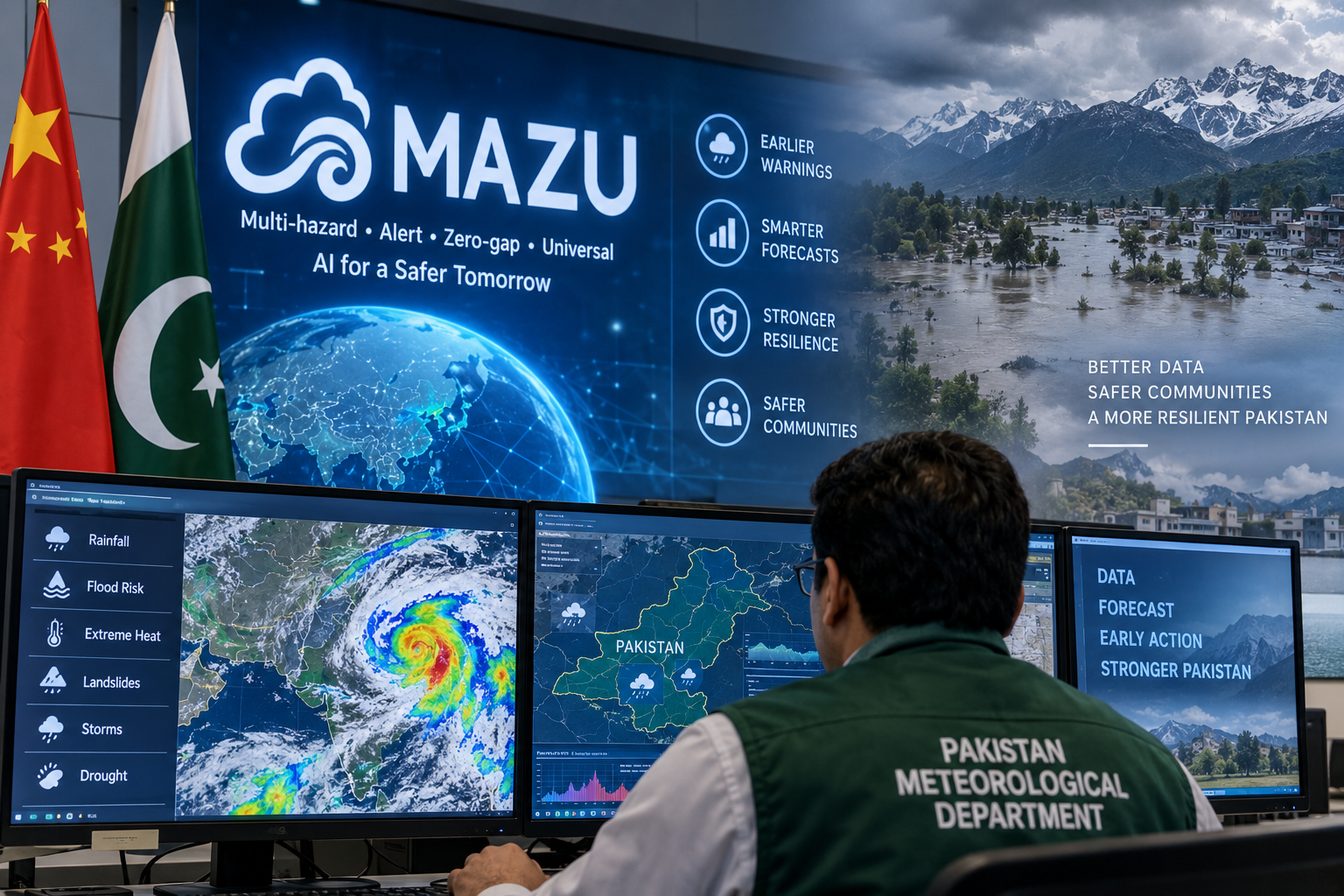
The system combines meteorological observations, satellite and radar data, ground-station information and AI-based analysis to help forecasters detect potential hazards earlier.
But experts stress that AI alone cannot prevent disasters. Its effectiveness depends on accurate local data, proper calibration, reliable communication of warnings and the ability of governments and communities to respond quickly.

Pakistan has been using a locally tailored version of MAZU since October 2025, alongside other forecasting and satellite-based tools.
As extreme weather becomes an increasing challenge, the bigger question is not simply whether AI can predict hazards—but whether better forecasts can translate into faster warnings, stronger preparedness and fewer losses.