ISLAMABAD (06 July 2026): Pakistan’s Resilience and Sustainability Facility (RSF) with the International Monetary Fund (IMF) represents an important shift in recognizing climate change as a macroeconomic challenge, but substantial reforms are still needed to ensure global climate finance genuinely supports resilience and sustainable development.
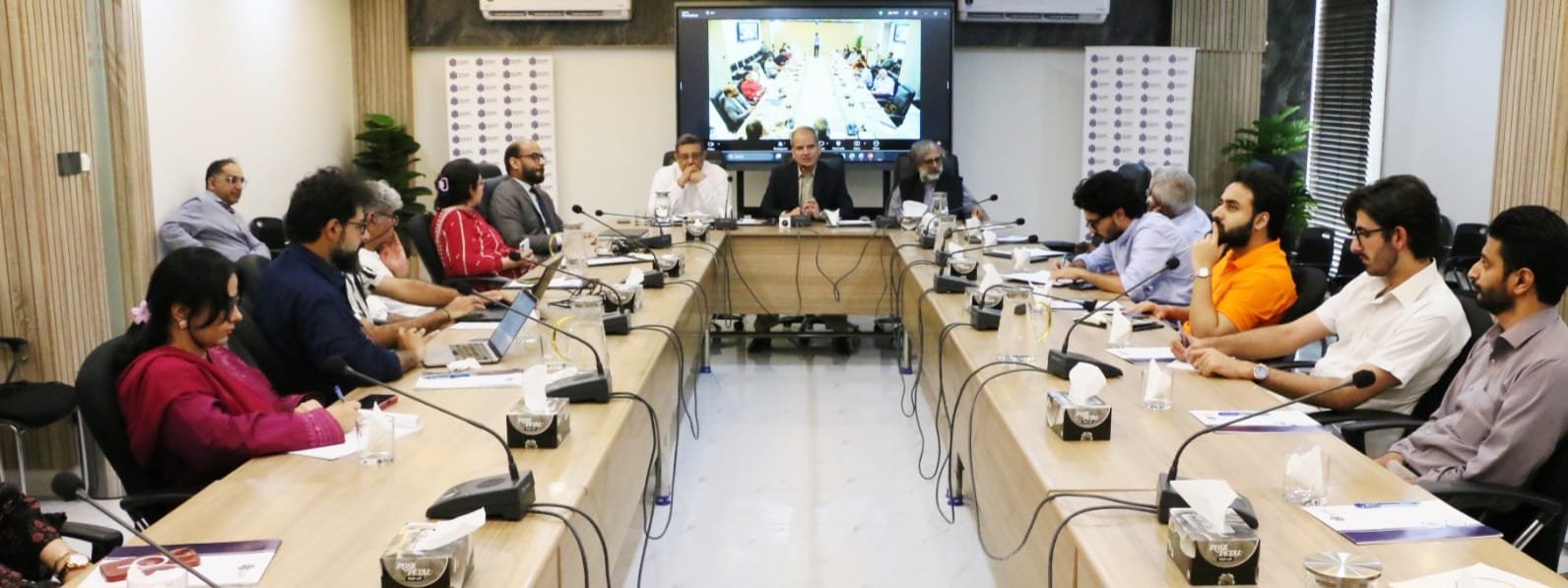
This was the crux of a discussion at the launch of a policy study conducted jointly by Dr Asad Sayeed, Executive Director of Collective for Social Science Research (CSSR), Karachi, and Dr Khalid Waleed, Research Fellow at Sustainable Development Policy Institute (SDPI) here.The studycritically assessed Pakistan’s $1.4 billion IMF Resilience and Sustainability Facility and its relationship with the IMF’s Extended Fund Facility (EFF).
Opening the discussion, Dr Sajid Amin Javed, SDPI’s Deputy Executive Director (Research), said the study fills an important policy gap by critically examining Pakistan’s first engagement with the IMF’s climate financing facility. He noted that although the government primarilyviewed the RSF as an additional source of external financing during any foreign exchange crisis, the facility carries broader implications for climate resilience and sustainable development that require careful assessment.
Dr. Sajid observed that it was encouraging to see international financial institutions, particularly the IMF, introducing initiatives such as the RSF, which reflects the growing recognition that climate change has far-reaching macroeconomic implications, from public debt sustainability to long-term development planning. However, he stressed that considerable work remains to ensure such initiatives genuinely strengthen resilience rather than merely extending conventional stabilization programmes. This also underscores the need to reconfigure the global financial architecture to effectively respond to climate challenges, he said.
He further argued that climate-related financing initiatives should be harmonized with existing IMF programmes to avoid contradictory policy outcomes. According to him, while climate resilience is being promoted through one financing window, other IMF-supported reforms, including taxes on solar energy and fiscal measures, may simultaneously discourage renewable energy adoption and weaken long-term sustainability objectives.
Presenting the study findings, Dr Asad Sayeedsaid Pakistan’s recurring balance-of-payments crises, climate vulnerability and energy transition challenges have converged, making climate finance a critical policy issue. He said the study finds that the IMF’s RSF is primarily designed to reinforce macroeconomic stabilization rather than finance genuine climate adaptation and resilience.
Dr. Asad noted that although Pakistan fallsamong the countries most vulnerable to climate change, the financial support available under the RSF remains insignificant compared to the country’s adaptation and energy transition requirements. He maintained that climate financing should move beyond liquidity support and address the structural drivers of climate vulnerability.
Commenting on recent fiscal measures, Dr Asad criticized the newly introduced carbon levy, saying it places a disproportionate burden on motorcycle users and public transport commuters while lacking any dedicated mechanism to ensure that revenues are invested in climate adaptation or mitigation projects. He also questioned the taxation of imported solar equipment, arguing that such policies discourage Pakistan’s transition towards renewable energy and contradict the country’s climate commitments.
Dr Khalid Waleedsaid the study identified significant contradictions between the IMF’s Extended Fund Facility and the Resilience and Sustainability Facility. While both programmes emphasize macroeconomic reforms, measures such as higher electricity tariffs, subsidy rationalization and taxation of renewable energy technologies undermine affordability and energy justice, he said.
Dr Khalid observed that the burden of these reforms falls disproportionately on low- and middle-income households despite Pakistan contributing only a negligible share of global greenhouse gas emissions. He added that negotiations and implementation of the RSF have largely doneunder the Ministry of Finance, while the Ministry of Climate Change, the Climate Change Authority and provincial governments have had only limited involvement despite being central stakeholders in climate policy.
He noted that the study found little evidence of comprehensive distributional impact assessments examining how IMF-supported reforms affect urban middle-income households, small farmers and other vulnerable groups, raising concerns over the social equity of the reform package.
The study recommends that revenues generated through the carbon levy should be ring-fenced exclusively for climate adaptation and mitigation projects rather than being absorbed into the general revenue pool. The researchers argue that such a mechanism would improve transparency and ensure climate-related taxes directly finance climate action.
The study also recommends removing fiscal barriers to renewable energy, particularly taxes on imported solar equipment, which the researchers believe discourage Pakistan’s transition to clean energy. It further calls for treating solar technologies and battery storage as strategic capital goods to accelerate renewable energy adoption and improve long-term energy security.