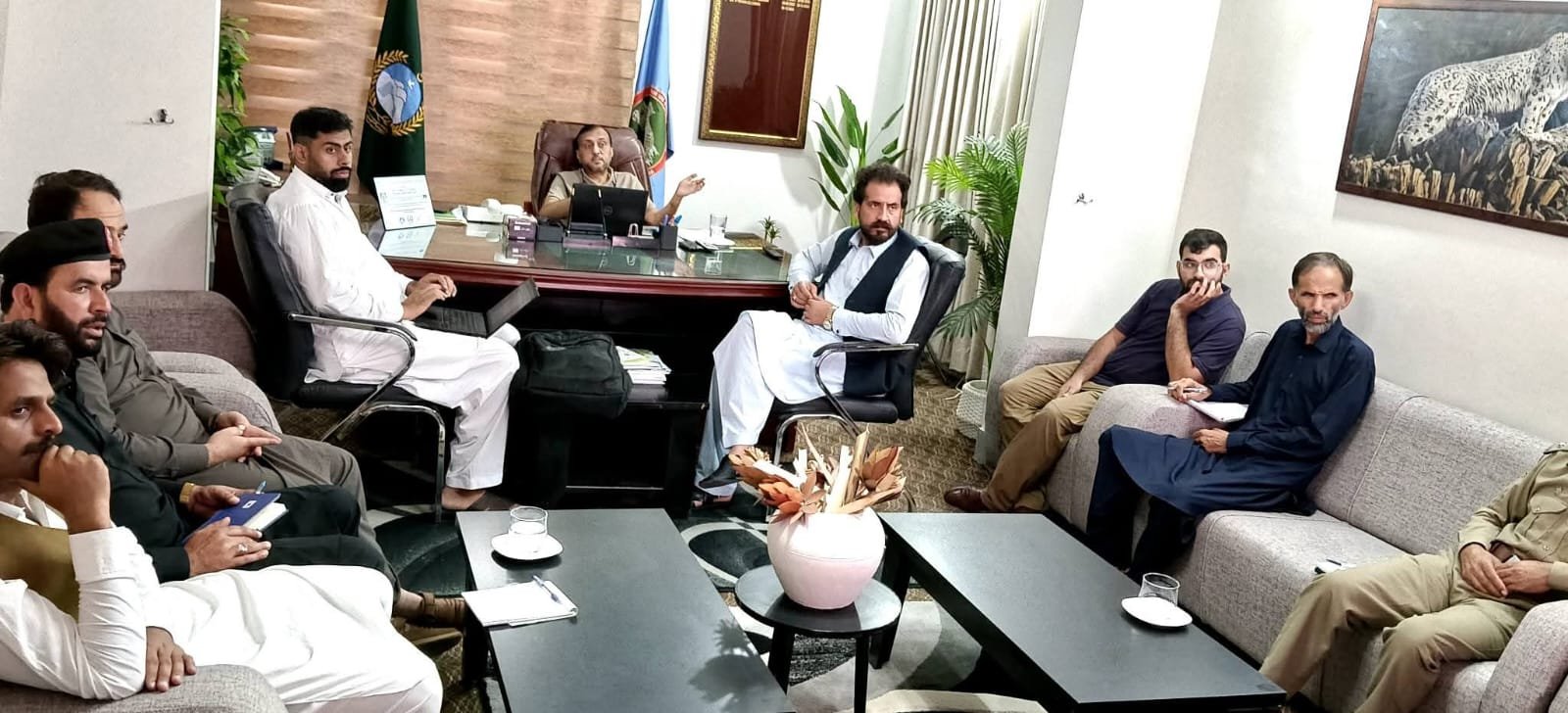
ABBOTTABAD: A meeting chaired by the Conservator Wildlife, Hazara Circle was held to discuss the systematic collection, verification and analysis of data related to human-wildlife conflict in Abbottabad and Mansehra districts.
SDFO Ayubia National Park Mr. Wasim Ullah attended the meeting, which was also participated in by Research Scholars Mr. Mohibullah and Mr. Tayyab.

The meeting focused on developing a scientifically robust framework for documenting human-wildlife conflict, particularly incidents involving the Common Leopard and Asiatic Black Bear, two important wildlife species found in the Hazara landscape.
The proposed data collection framework will cover incidents of livestock depredation, human injuries and fatalities, retaliatory actions and other relevant factors. It will also examine the spatial, temporal, ecological and socio-economic dimensions associated with human-wildlife interactions.
The Conservator Wildlife emphasized the importance of collecting standardized, accurate and verifiable field data to identify conflict hotspots, understand emerging patterns and determine the underlying factors contributing to increasing encounters between communities and wildlife.
The initiative is expected to strengthen the scientific evidence available to wildlife authorities for developing targeted mitigation measures, improved management responses and long-term strategies for human-wildlife coexistence.
Officials emphasized that better understanding of conflict patterns can help protect both local communities and wildlife while supporting sustainable conservation across Abbottabad, Mansehra and the wider Hazara region.
Understanding conflict today can help build safer communities and a future where people and wildlife coexist.
Also Read: Forest Department Launches Major Crackdown on Illegal Sawmills in Rajanpur