SARGODHA, September 9, 2026: A ceremony marking International Literacy Day was organized in Sargodha through a joint collaboration between the National Commission for Human Development (NCHD) Sargodha, Child Protection and Welfare Bureau Sargodha and the Institute of Education, University of Sargodha.
Saeedullah Gondal, Deputy Inspector General of Prisons, Sargodha Region, was the chief guest at the event, which was attended by educationists, government officials, NCHD field officers, representatives of the media, faculty members and a large number of students from the University of Sargodha.
Among the distinguished participants were Professor Dr Muhammad Uzair-ul-Hassan, Director, Institute of Education, University of Sargodha; Mehr Umar Daraz Jhawari, Deputy Director NCHD Sargodha; Syed Ali Abid Naqvi, District Officer, Child Protection and Welfare Bureau Sargodha; Chaudhry Muhammad Yar Talla, Director Elementary School Education Department, Sargodha Division; Dr Uzma Shehzadi, Director Academics, University of Sargodha; Asif Ali Tarrar, Assistant Director Education, NCHD Sargodha; Muhammad Iqbal, Assistant Director Finance, NCHD Sargodha; Professor Dr Syeda Zainab Shirazi and other faculty members and officials.
Education Must Be a National Priority
Speaking at the ceremony, Professor Dr Muhammad Uzair-ul-Hassan said International Literacy Day should not be treated as merely a ceremonial occasion for Pakistan but as an important national reminder of the country’s educational challenges.
He said Pakistan had made some progress in literacy over the years, but the overall situation remained concerning. He stressed that education must be made a national priority, with continued investment required in the quality of public schools, teacher training, curriculum, basic facilities and access to education.
He particularly highlighted the need for nearby schools, safe transport, scholarships and greater parental support for girls in rural areas.
NCHD Highlights Grassroots Literacy Initiatives
Asif Ali Tarrar said NCHD Sargodha was actively working at the grassroots level to improve literacy and promote non-formal education.
He called on citizens to contribute to efforts aimed at eliminating illiteracy, stressing that educated societies are better positioned to achieve progress and prosperity.
He said practical measures were being undertaken through the H1T1 (Each One, Teach One) programme to provide educational opportunities to individuals who remain outside the formal education system.
Mehr Umar Daraz Jhawari said International Literacy Day provided an opportunity to consider how Pakistan could accelerate progress in education and build a society where every child attends school, young people have access to quality education and skills, women can acquire literacy and citizens are able to understand and use modern information in their daily decision-making.
He said NCHD, in collaboration with the University of Sargodha, was working on an H1T1 initiative aimed at improving literacy, expressing confidence that the programme would produce long-term results.
Focus on Vulnerable Children and Adult Education
Syed Ali Abid Naqvi said children were the country’s most valuable future asset and called for greater efforts to protect and educate vulnerable children, including those involved in begging.
He emphasized that Pakistan has a large pool of hardworking and talented people, whose potential can be fully realized through education and literacy.
He said the country’s objective should go beyond simply increasing literacy rates and should include promoting education that develops awareness, character, responsibility and the ability to adapt to changing social and technological demands.
Chaudhry Muhammad Yar Talla said International Literacy Day is observed every year on September 8 to remind the world that the ability to read, write and understand is not merely an educational skill but a fundamental human right.
He described literacy as a foundation for empowering individuals and building stronger societies.
Dr Uzma Shehzadi noted that modern literacy extends beyond basic reading and writing and increasingly includes digital, financial and health literacy. She said mobile phones and the internet had made access to information easier, while NCHD was playing an important role in improving literacy at the district level through the H1T1 programme.
Education Can Drive National Development
Chief guest Saeedullah Gondal said education and literacy were fundamental guarantees of social development and prosperity.
He stressed that all relevant institutions must play an effective role in eliminating illiteracy and promoting quality education. Enrolling children in schools, providing adequate educational facilities and raising public awareness about the importance of education were essential steps towards improving the country’s literacy rate.
Gondal also highlighted NCHD’s adult education programme in prisons, saying that efforts to educate illiterate prisoners could help equip them with knowledge and skills and support their rehabilitation as productive members of society.
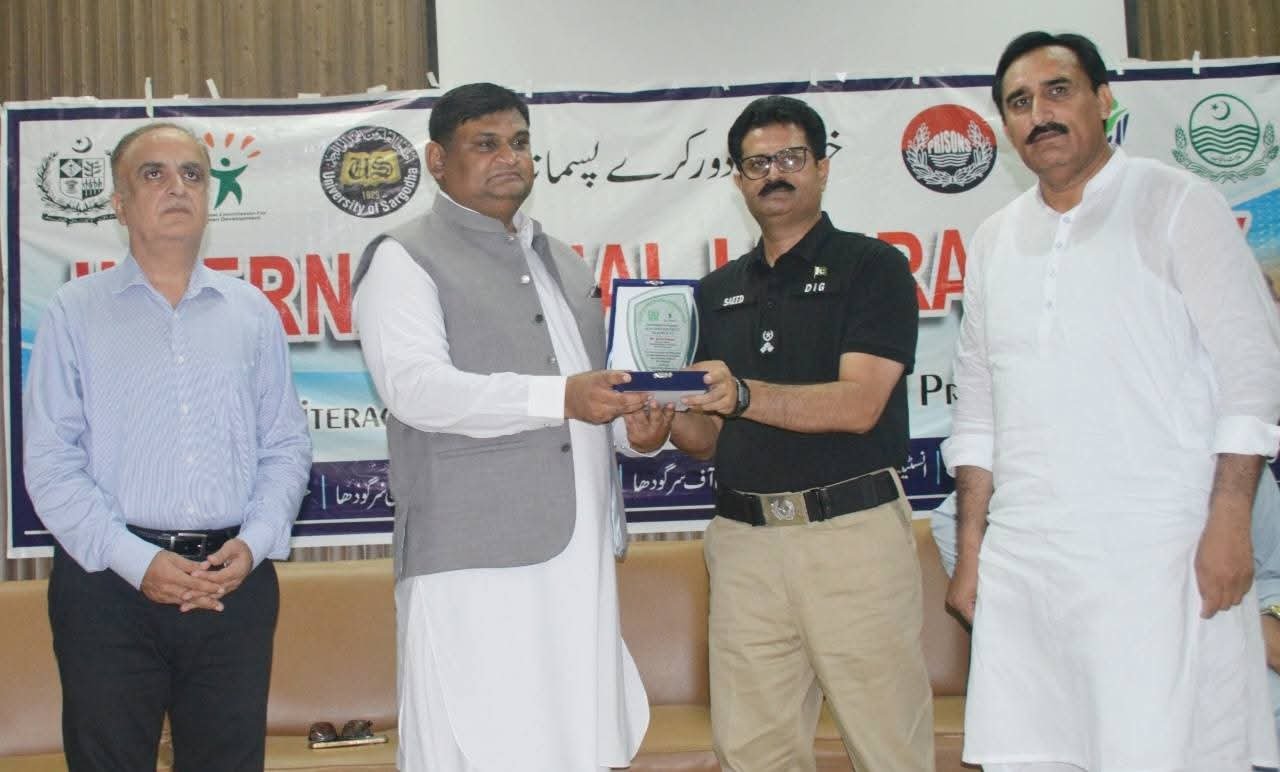
The ceremony concluded with the presentation of special shields to distinguished guests in recognition of their contributions to improving literacy. Certificates of appreciation were also distributed among volunteers supporting the Adult Education Programme and the H1T1 initiative.