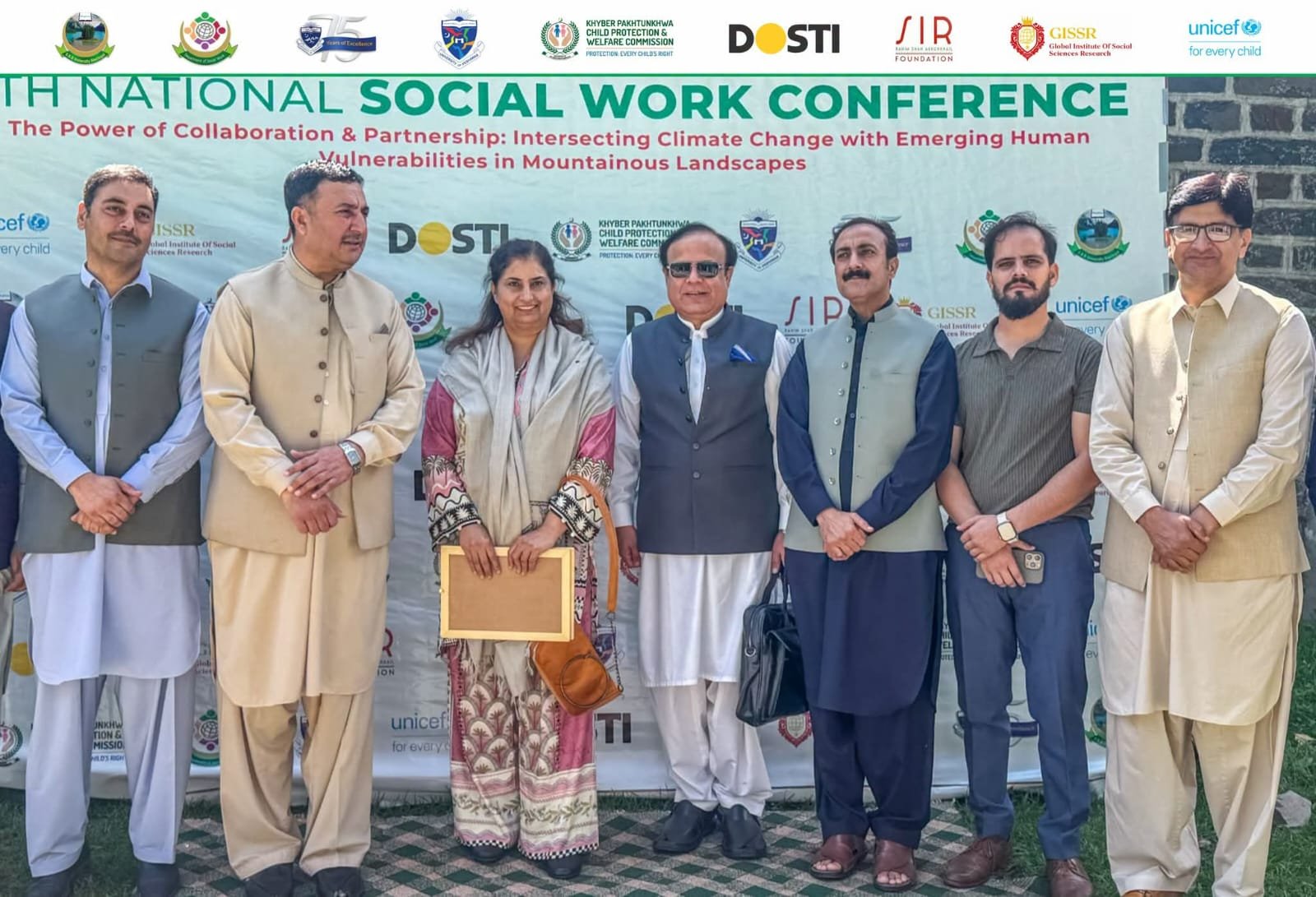
BARA GALI, September 9, 2026: The 4th National Social Work Conference was held at the Bara Gali Summer Camp of the University of Peshawar, bringing together academic and social development stakeholders for discussions on the growing intersection between climate change and emerging human vulnerabilities in mountainous landscapes.
Themed “The Power of Collaboration & Partnership: Intersecting Climate Change with Emerging Human Vulnerabilities in Mountainous Landscapes,” the conference provided a platform for academic exchange, dialogue and the sharing of potential solutions to climate-related challenges confronting mountain communities.

Participants discussed the complex social and environmental impacts of climate change in mountainous regions, where communities can face heightened vulnerability due to geographical isolation, fragile ecosystems and changing climatic conditions.
The conference highlighted the importance of collaboration and partnerships among academic institutions, civil society organisations and communities in addressing these emerging challenges.
The event featured discussions focused on strengthening understanding of climate-induced vulnerabilities and exploring approaches that can support more resilient and inclusive mountain communities.
The conference was organized by the Department of Social Work, Shaheed Benazir Bhutto University Sheringal, and the Department of Social Work, University of Peshawar, in collaboration with DOSTI Welfare Organization.
The gathering provided an opportunity for academics, social workers and development practitioners to exchange perspectives and promote collaborative approaches to climate resilience and human welfare in mountainous landscapes.
The discussions also underscored the need to integrate social dimensions into climate action, ensuring that adaptation and resilience-building efforts address not only environmental risks but also the changing needs and vulnerabilities of people living in mountain ecosystems.