ISLAMABAD (23 August 2026): Experts and industry representatives have demanded of the government to liberalize Pakistan’s gas and electricity markets, rationalize distorted industrial tariffs, and build a granular, sector-specific roadmap to decarbonize the hard-to-abate industries.
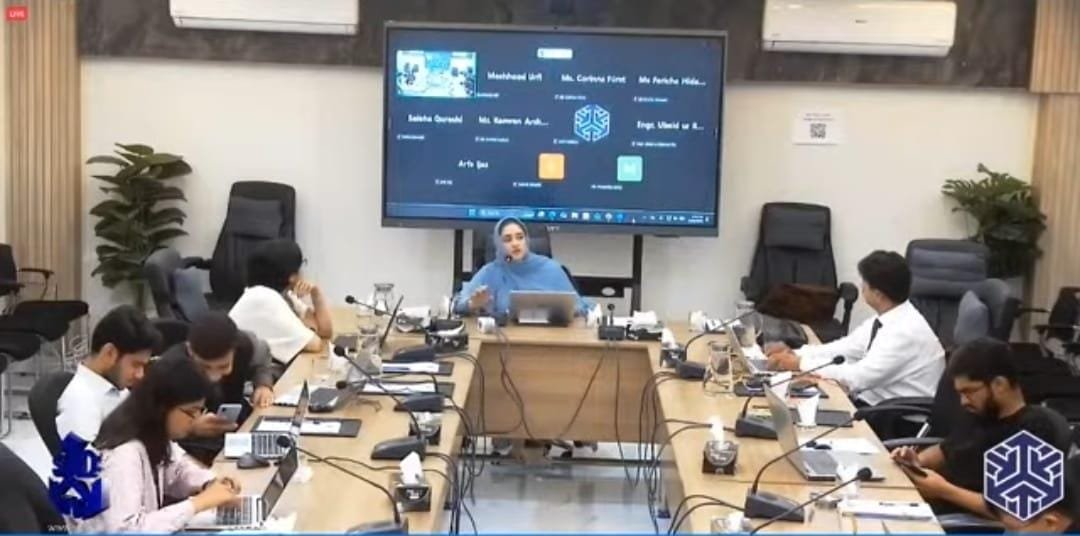
The demand was made at a webinar on “International Pathways to a Low Carbon Transition for Hard-to-Abate Sectors,” convened by the Sustainable Development Policy Institute (SDPI) here on Thursday. The webinar brought together energy economists, industry representatives and policy experts from Pakistan and abroad to examine how cement, steel and textiles, the country’s most emissions-intensive and trade-exposed industries, can chart a pathway towards decarbonization without sacrificing competitiveness.

Opening the session, Dr Khalid Waleed, Energy Economist at SDPI, framed electricity market liberalization as central to the debate. He argued that the Competitive Trading Bilateral Contracts Market (CTBCM) mechanism could allow industrial consumers to contract renewable power directly, rather than relying solely on the traditional grid, and described this as potentially transformative for hard-to-abate sectors that lack their own electricity suppliers. He also pointed to emerging concepts such as distributed generation, battery storage and virtual power plants built from aggregated rooftop solar as tools that could extend cleaner electricity to industry. He, however, warned that financing remained “the elephant in the room,” and situated the discussion within the broader context of carbon border adjustment mechanisms, export competitiveness and the upcoming COP31 negotiations, framing Pakistan’s challenge as building an integrated energy and industrial system rather than pursuing emissions cuts in isolation.
Corinna Furst, Industry Lead at the International Network of Energy Transition Think Tanks (INET), introduced the webinar as part of an industry-decarbonization grant cycle launched in 2026, under which SDPI was selected as one of six recipients from Latin America, South America, and South and Southeast Asia to develop nationally grounded decarbonization frameworks.
Arfa Ijaz, SDPI researcher, noted that decarbonization is increasingly a determinant of trade competitiveness and capital access, and not merely an environmental obligation. She said Pakistan’s textile sector, the country’s largest export earner, which accounts for 57 per cent of exports and heavily concentrated in EU markets, faces mounting exposure to carbon border adjustments and risks to its GSP+ preferential trade status. She added that while Pakistan’s NDCs target a 35-million-ton reduction in economy-wide emissions by 2030, existing frameworks remain fragmented, with gaps in finance, tariff certainty, technology access and monitoring, reporting and verification (MRV) systems.
Asim Riaz, Energy Advisor at the All Pakistan Textile Mills Association (APTMA), said textiles have a comparatively viable decarbonization pathway through cogeneration. Citing more than 400 co-generation plants already installed nationwide, he argued that distorted gas and electricity pricing, including steep tariff hikes since 2023 and arbitrary administrative pricing, had undermined the economics of these existing low-carbon assets. He also called for gas market liberalization and full CTBCM implementation to unlock further decarbonization.
Offering an international comparison, Faricha Hidayati of the World Resources Institute Indonesia presented her country’s industrial net-zero roadmap, which prioritizes nine sub-sectors, including cement, steel and textiles, and estimates a cumulative investment requirement of roughly $290.5 billion between 2025 and 2050. She outlined structural barriers common to both countries, including limited financing, weak green-product demand, infrastructure gaps and fragmented policy certainty, and recommended building government buy-in through competitiveness-linked roadmaps and reforming fossil fuel subsidies.
Subayyal Najeeb of Carbon Craft argued that Pakistan’s textile sector needs global recognition and a unified industry voice. Pointing to Bangladesh’s more consolidated manufacturers’ association as a contrast, he said that firms spend a large part of the year on compliance audits.
Mashood Urfi of Alternative Development Services called for restructuring industrial power tariffs, including marginal pricing and phasing out cross-subsidies, to avoid trading a “carbon penalty for a fiscal one.”
Muqaddas Ashiq of Policy Research Institute for Equitable Development highlighted transmission and distribution bottlenecks as a major obstacle to industrial decarbonization under Pakistan’s generation capacity expansion plans.
Engineer Ubaid Ur Rehman Zia of SDPI thanked participants for a wide-ranging discussion, noting convergence among experts on the need for an integrated energy policy and a granular, sector-specific decarbonization roadmap. He said SDPI is currently engaged with the government on related policy processes, including industrial policy, hydrogen policy and broader economic reforms.
Also Read: Illegal Bird Captor Fined After Wildlife Rescue Operation in Islamabad