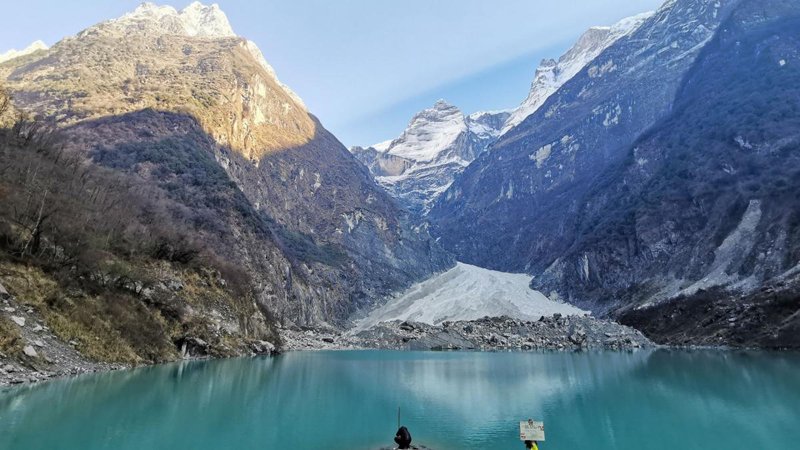
ISLAMABAD: The National Disaster Management Authority’s (NDMA) National Emergencies Operation Centre (NEOC) has issued a comprehensive alert warning of potential glacial lake outburst floods (GLOFs), flash floods, debris flows and landslides in vulnerable mountainous areas of Gilgit-Baltistan, Khyber Pakhtunkhwa and Azad Jammu and Kashmir from August 17 to 23.
According to the alert, rising temperatures, accelerated glacier and snow melt, and ongoing monsoon rains could trigger sudden flooding and debris flows in vulnerable mountain valleys.

Districts including Ghizer, Hunza, Nagar, Shigar, Gilgit, Rondo, Tangir, Darel, Diamer, Astore, Skardu, Ghanche, Kharmang and Neelum Valley have been identified as areas requiring particular caution.
Several glacial areas and valleys have also been classified as sensitive to GLOF risks, including Badswat, Ishkoman, Hunarche, Tarsat Hindur, Ultar, Chhantar, Gupis, Yasin, Sost, Arandu, Roshan, Haks, Chati Boi, Thalo 1 and 2, Reshun, Brap, Boni, Sardar Gol, Lasht, Pandoro Chat, Khaplu, Hesper-Hoper, Gilgit, Gulmit, Batura, Shishper, Songhur, Roshan and Shimshal.
Landslide warning for Gilgit-Baltistan
The NEOC has separately issued a landslide and rockfall alert for August 22 to 24, warning that vulnerable mountainous areas of Gilgit-Baltistan could experience landslides and falling rocks.
In Hunza, Hassanabad, Murtazabad, Attabad, Shishkat, Gulmit, Gulkin, Hussainabad, Passu and Khairabad have been identified as vulnerable locations.
In Nagar, Hoper, Kinjokshal, Gutas, Sumiayar, Miyachar, Pissan, Minapin, Ghulmet, Thol Nala and Hesper are considered at risk.
In Astore, Tarshing, Rupal Valley and the Tarshing-Rupal Road are among the sensitive locations. In Diamer, the Raikot-Tattu corridor, Fairy Meadows Road, Thalechi-Jalipur route and the northern and northwestern mountain slopes of Nanga Parbat have been identified as vulnerable.
The Skardu Road between RD-20 and RD-80 has also been classified as particularly susceptible to landslides.
The NDMA warned that landslides and rockfalls could block roads, disrupt traffic and cut off communities in mountainous areas, including along the Karakoram Highway.
Flash flood threat amid continued monsoon rains
The alert said monsoon rains are expected to continue in upper parts of the country from August 17 to 21, with thunderstorms and occasional heavy rainfall forecast in Gilgit-Baltistan, Khyber Pakhtunkhwa and Azad Kashmir.
Several areas of Punjab, including Narowal, Sialkot, Gujrat, Jhelum, Rawalpindi, Islamabad, Chakwal, Mandi Bahauddin, Hafizabad, Gujranwala, Sheikhupura, Lahore, Kasur, Faisalabad, Chiniot and Attock, could also experience urban flooding.
Heavy rainfall may increase water levels in rivers, trigger flash floods in mountainous areas and cause sudden rises in streams and nullahs.
In Khyber Pakhtunkhwa, vulnerable areas include Upper and Lower Dir, Swat, Shangla, Buner, Bajaur, Malakand, Mardan, Charsadda, Nowshera, Kohat, Battagram, Mansehra, Abbottabad, Haripur, Swabi, Mohmand, Kurram, Hangu, South Waziristan, Karak and Lakki Marwat.
Sudden increases in flows are also possible in tributaries of the Kabul River. Parts of Azad Kashmir, including Bagh, Haveli, Poonch, Hattian, Sudhanoti, Kotli, Mirpur and Bhimber, as well as Hunza and Astore in Gilgit-Baltistan, have been identified as vulnerable to flooding.
River flows expected to rise
The NEOC has also warned of increasing water flows in the country’s major rivers as the current monsoon system continues.
Medium-level flows are expected at Kalabagh, Chashma and Taunsa on the Indus River, while increased flows are also anticipated in the upper catchment of the Jhelum and at Marala, Khanki and Qadirabad on the Chenab River.
Low to medium flows are expected at Balloki and Sidhnai on the Ravi River and at Nowshera on the Kabul River. Low to medium flows are also possible in streams and nullahs connected to the Ravi and Chenab rivers.
The NDMA has directed relevant authorities to keep emergency response teams and rescue resources on standby, while ensuring the identification of evacuation routes and safe locations for vulnerable communities.
Public urged to avoid risky travel
The NDMA has advised citizens to avoid unnecessary movement near glaciers, glacial streams, rivers, nullahs and other hazardous locations. People have also been urged to immediately report any unusual increase in water flow or sudden rise in water levels.
The authority advised the public to check the latest weather forecasts and road conditions before travelling, particularly in mountainous areas. Unnecessary travel should be avoided whenever severe weather or other hazard warnings are issued.
Citizens have been strongly cautioned never to attempt to cross floodwater or fast-flowing streams on foot or by vehicle. Even apparently shallow water can be powerful enough to sweep away people and vehicles.
Tourists visiting mountainous areas during the monsoon have also been advised to remain away from fast-flowing water channels and remain alert to sudden debris flows and flash floods.
Travellers are advised to carry essential supplies, including drinking water, dry food, a flashlight, first-aid equipment and a power bank, along with emergency contact information.
The NDMA urged citizens to follow instructions issued by local authorities and avoid travelling on roads that have been closed for safety reasons.
The public can also receive timely weather and disaster-related information through the official Pak NDMA Disaster Alert mobile application.