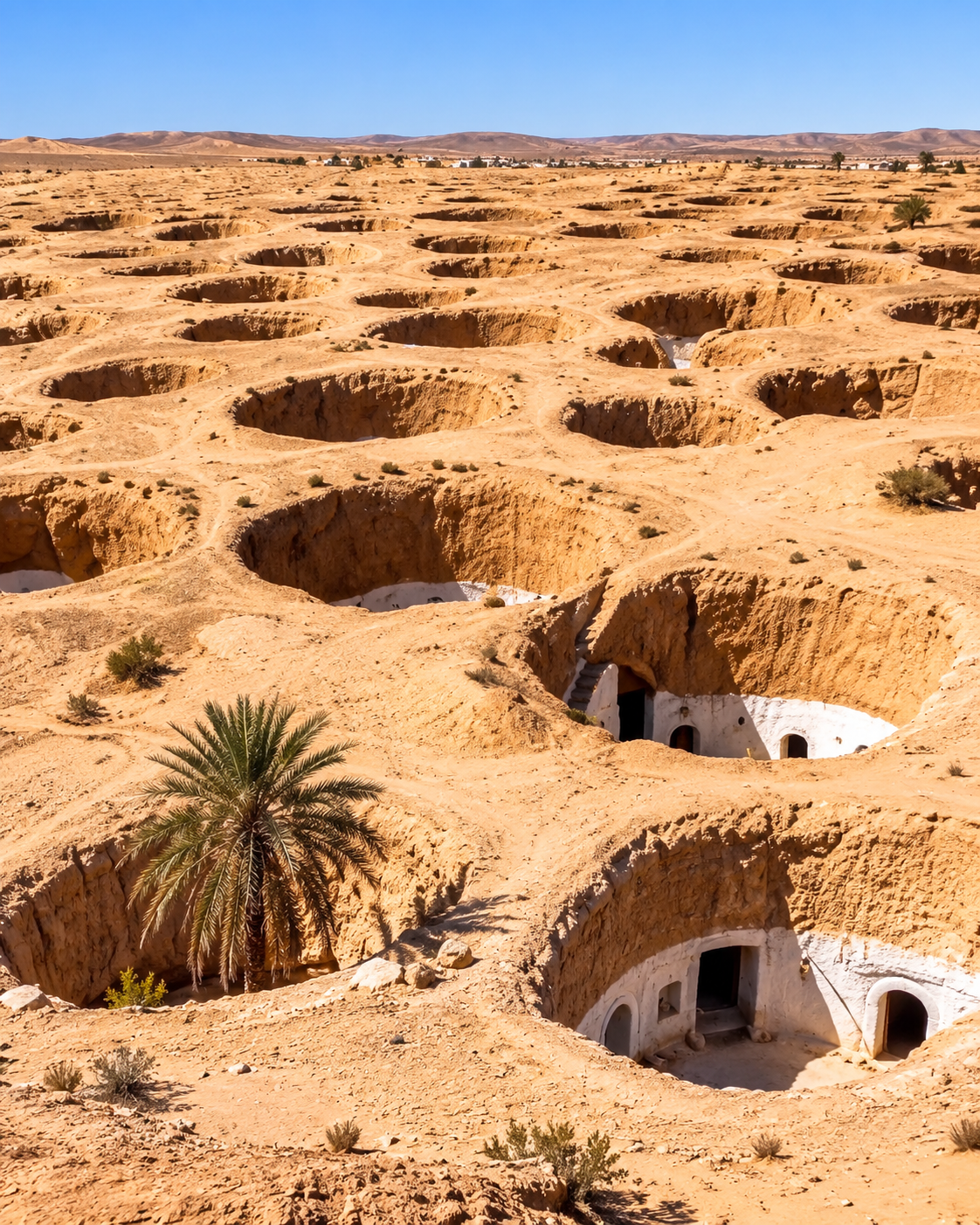
MATMATA, TUNISIA: Deep beneath the surface of southern Tunisia lies a remarkable form of traditional architecture where the earth itself becomes part of the home.
In Matmata, generations of residents have lived in underground “troglodyte” houses created by digging large circular pits into the ground and carving living spaces into the surrounding earth. The central pit functions as a courtyard, while rooms open around it and are often connected through tunnels and passageways.

Far from being simply an architectural curiosity, these homes represent an ingenious response to the region’s harsh climate. The surrounding earth provides natural thermal insulation, helping keep the underground spaces cooler during the intense summer heat while offering protection from colder conditions.
The design also makes clever use of the landscape. Rooms can serve as bedrooms, kitchens, storage areas and animal shelters, with the central courtyard providing light and access to the underground spaces. UNESCO describes the traditional settlements of Matmata as an example of how communities adapted their way of life to a difficult natural environment.
The underground architecture of Matmata has also gained international attention through popular culture. One traditional dwelling, now known as Hotel Sidi Driss, was used as the Lars family home in the Star Wars films, helping turn the unusual landscape into a global attraction.
Today, these extraordinary homes offer more than a glimpse into Tunisia’s architectural heritage. They demonstrate how traditional communities used local materials, passive climate control and thoughtful design to create comfortable living spaces without modern cooling systems.
In an era increasingly focused on climate resilience and sustainable architecture, Matmata’s centuries-old underground homes offer a striking reminder that some of the most innovative ideas may already be hidden beneath our feet.