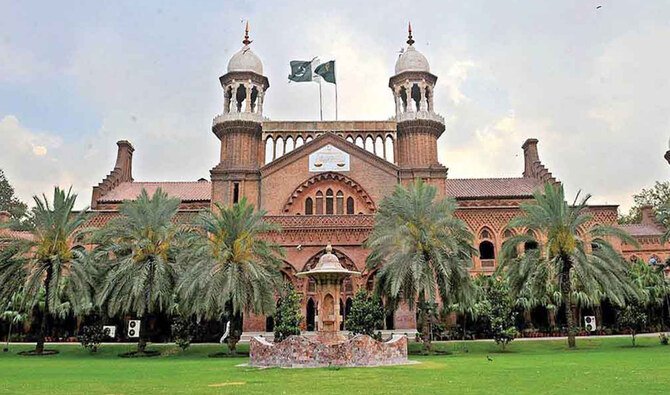
LAHORE: The Lahore High Court (LHC) has issued its final judgment in an eight-year-old public interest litigation concerning smog, environmental degradation and water conservation in Punjab, reaffirming a series of landmark measures introduced during the prolonged proceedings.
Justice Shahid Karim, who authored the judgment, described it as the “last judgment in the trilogy,” following two earlier rulings in 2023 and 2025 arising from the same continuing proceedings.

The judge, who is due to retire on August 19, said the case had resulted in significant progress in environmental governance and had laid the groundwork for future climate resilience and adaptation policies.
Justice Karim observed that although the environmental challenges facing Punjab had not been completely resolved, governments had gradually adopted policies and measures in response to the court’s directions.
He said a stronger culture of decision-making had emerged, with environmental protection and water conservation increasingly placed at the centre of public policy.
Key Environmental Measures
The judgment reaffirmed and consolidated several major measures implemented during the proceedings:
Smog declared a calamity: Smog was formally declared a calamity, with the Punjab Disaster Management Authority (PDMA) tasked with operating a dedicated control room for enforcement during the smog season.
Brick kilns converted to cleaner technology: All operational brick kilns in Punjab have been converted to Zig-Zag Technology to reduce emissions. Each kiln has also been assigned a Unique Identification Number for digital monitoring by the Environment Protection Agency.
Stricter action against stubble burning: The court increased the penalty for stubble-burning violations to Rs200,000 per acre and directed uniform enforcement across Deputy Commissioners’ offices.
School transport: Private schools have been directed to arrange buses or vans for at least 50 percent of their students as a condition for renewal of registration, with implementation to take place in phases.
Rainwater harvesting: Amendments to the LDA Building and Zoning Regulations made rainwater harvesting mandatory for new construction.
Greywater recycling: Greywater treatment plants have been made compulsory for new commercial and residential building plans, with building approvals linked to compliance.
Water Conservation and Groundwater Protection
The judgment highlighted substantial progress in water conservation initiatives in Lahore.
A total of 563 service stations are now operating water-recycling plants, reducing fresh water consumption per car wash from around 400 litres to approximately 120 litres.
Ablution-water recycling tanks have also been installed at more than 194 mosques, including a facility at Data Darbar with a capacity of around 60,000 to 70,000 gallons.
Meanwhile, WASA Lahore has collected more than Rs3.35 billion in aquifer charges from bulk groundwater users since 2018.
The court also noted the installation of 117 groundwater recharge wells across Lahore. Rainwater storage facilities, including a four-million-gallon tank at Gaddafi Stadium, have also been established to help reduce urban flooding and replenish groundwater.
Protection of Green Spaces
The court reaffirmed its directions to protect public playgrounds and open spaces from commercial use, including their use for weddings and other events.
Authorities including DHA, LDA and the School Education Department were directed to protect and maintain green spaces and urban tree cover.
The judgment also referred to earlier environmental rulings arising from the broader litigation, including the 2023 decision to quash the Lahore Division Master Plan 2050 over violations of LDA Master Plan Rules.
Another ruling struck down land acquisition for a proposed Gujrat Divisional Complex that would have required the removal of more than 594 kanals of forest land.
Justice Karim described these developments as significant environmental outcomes achieved through the broader public interest litigation.
The judge also acknowledged the contributions of members of the Judicial Water and Environment Commission, including retired Justice Ali Akbar Qureshi, Syed Kamal Ali Haider, Hina Hafeezullah Ishaq and Ch. Zulfiqar Ali, who served pro bono during the proceedings.
He recommended that the commission members and several government officials involved in implementing the court’s directions be considered for civil awards.
The court subsequently disposed of the main petition filed by Haroon Farooq in 2018, along with around a dozen related petitions concerning environmental and water-related matters.
In concluding the judgment, Justice Karim emphasized that the case should not be viewed as the end of environmental efforts but as a foundation for continued action, resilience and adaptation in the face of Punjab’s growing environmental challenges.