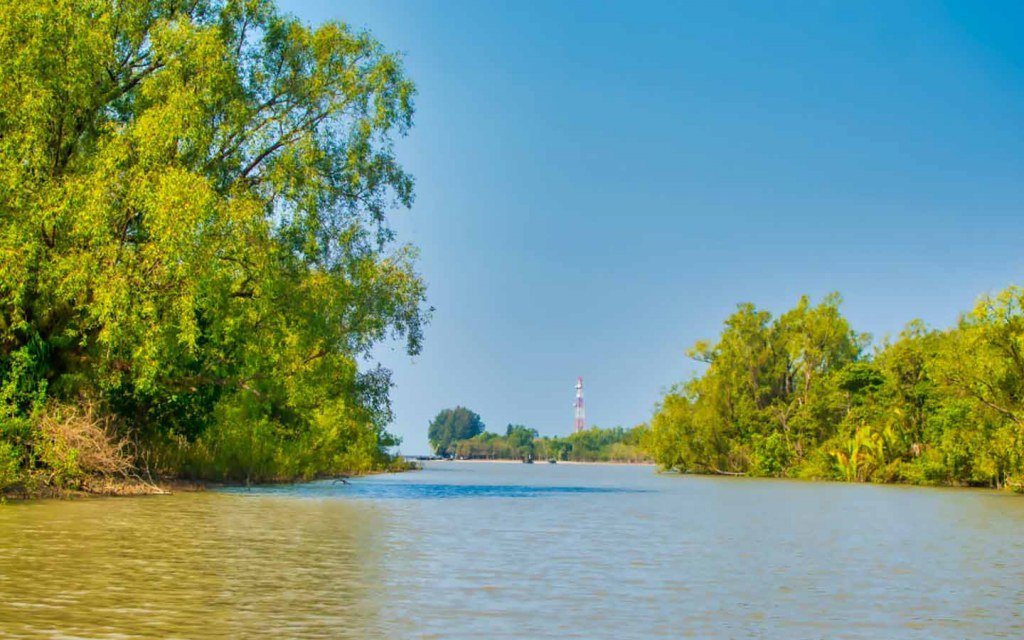
PESHAWAR: Forestry and environmental experts have warned that any prolonged disruption in the natural flow of the Indus, Jhelum and Chenab rivers due to India’s suspension of the Indus Waters Treaty (IWT) could seriously threaten Pakistan’s riverine, or bela, forests, particularly in Sindh and Punjab.
These naturally occurring forests, also known as Kacho forests, rely on seasonal flooding rather than artificial irrigation for their survival. Experts say regular river overflow is essential for forest regeneration, wildlife habitats and the livelihoods of communities living along the riverbanks.

Former Conservator of Forests Khyber Pakhtunkhwa Touheed Khan said the annual flooding of the western rivers serves as the lifeline of bela forests.
“Bela forests require natural floodwaters for regeneration and growth. If river flows remain disrupted for a prolonged period, these forests will face serious ecological damage,” he said.
Sindh contains Pakistan’s largest riverine forest area, covering about 241,000 hectares along the Indus River, while Punjab has around 54,000 hectares of riverine forests spread across the Indus, Jhelum, Chenab and Ravi rivers.
Experts said these forests play a critical role in stabilising riverbanks, reducing soil erosion, recharging groundwater and acting as natural flood buffers. They also provide habitat for wildlife, including hog deer, wild boar, jackals and numerous resident and migratory bird species.
They warned that reduced flooding would weaken the regeneration of key tree species such as babul, bahan and tamarix, threatening biodiversity and affecting honey production, fisheries and grazing resources that support thousands of families.
Former Director of Non-Timber Forest Products Iftikhar Khalil said declining freshwater flows would also reduce the forests’ ability to absorb carbon dioxide and increase the environmental stress on Pakistan’s fragile ecosystems.
He cautioned that lower freshwater flows into Sindh could also affect the Indus Delta, accelerating seawater intrusion, increasing soil salinity and putting additional pressure on mangrove forests that protect coastal communities from cyclones and storm surges.
Former Khyber Pakhtunkhwa Wildlife Chief Conservator Mubarak Ali warned that shrinking freshwater supplies downstream of Guddu and Kotri barrages could threaten globally important species, including the endangered Indus River dolphin, while weakening climate resilience in coastal areas.
The experts noted that the Indus Waters Treaty, signed in 1960 with the World Bank as guarantor, allocates the waters of the Indus, Jhelum and Chenab rivers to Pakistan, while India has rights over the Ravi, Sutlej and Beas.
They argued that the treaty cannot be suspended unilaterally under international law and urged that any disputes should be resolved through the treaty’s established mechanisms, including bilateral dialogue, neutral experts and international arbitration.
The experts also stressed that access to water is recognised internationally as a fundamental human right and warned that using water as a political tool could have serious humanitarian, environmental and legal consequences.
They said climate change, growing water scarcity and rising populations make adherence to international water-sharing agreements more important than ever, adding that preserving the natural flow of the Indus River system is essential for protecting forests, biodiversity, agriculture, food security and the livelihoods of millions of Pakistanis.
Also Read: Raja Pervez Ashraf Says Pakistan Will Defend Water Rights, Calls for National Unity