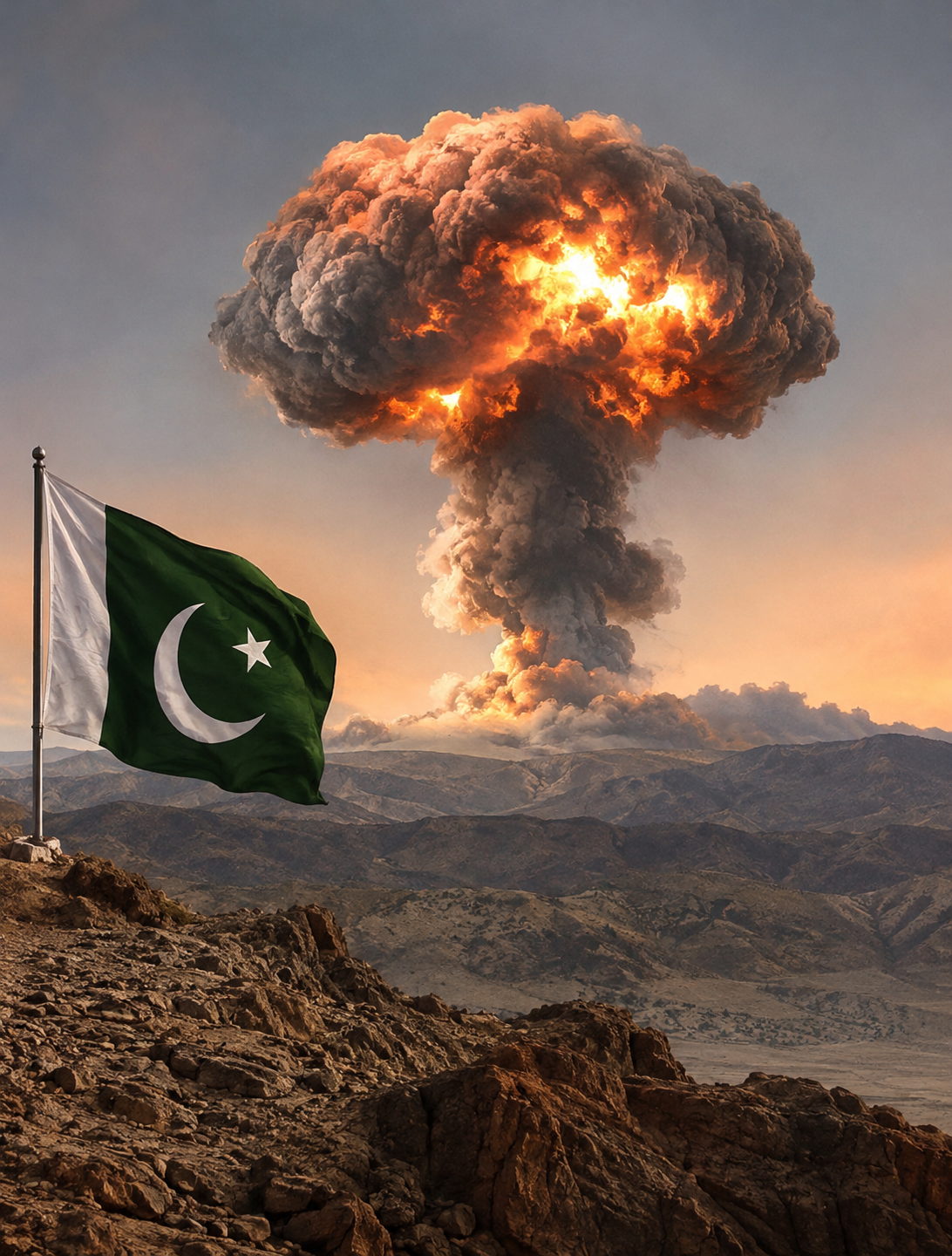
ISLAMABAD, November 4, 2026 — A potential nuclear strike on an underground facility in Iran could pose environmental and public health risks for Pakistan, depending on the extent of radioactive material released, prevailing wind patterns and weather conditions, according to a report published by Aaj News.
The report examines the possible consequences of a hypothetical attack on Pickaxe Mountain, an underground facility in Iran’s Isfahan province, near the country’s Natanz nuclear complex. It highlights concerns that radioactive particles released into the atmosphere could travel across Afghanistan and reach parts of Pakistan.

However, the extent of any potential impact would depend on several factors, and the report does not establish that radioactive contamination would occur in Pakistan.
Balochistan and Khyber Pakhtunkhwa Could Face Greater Exposure
Pakistan’s western and northern regions could be among the areas potentially exposed if radioactive material travelled eastward from Iran.
Balochistan shares a border with Iran, while parts of Khyber Pakhtunkhwa could be affected if airborne particles moved through Afghanistan. Under certain atmospheric conditions, radioactive material could travel farther east towards Punjab and, potentially, Sindh.
The report stresses that these are hypothetical scenarios rather than definitive forecasts. Actual contamination patterns would depend on the nature of the explosion, the amount of radioactive material released, wind direction and rainfall.
Underground Facility Could Limit Radioactive Release
Pickaxe Mountain is described in the report as a heavily protected underground site believed to be associated with Iran’s nuclear programme. Satellite assessments cited in the report indicate that construction activity has been taking place at the facility.
The depth of an underground installation can influence how much radioactive material escapes into the atmosphere. If radioactive material remains contained underground following an explosion, the amount released into the air could be substantially reduced.
Conversely, damage that allows radioactive material to escape could increase the risk of contamination beyond the immediate site.
Potential Risks to Human Health
Radioactive fallout can travel considerable distances under suitable atmospheric conditions. Fine particles may remain airborne for extended periods, while rainfall can bring radioactive material down onto the ground, creating concentrated areas of contamination.
Exposure risks would depend on the type and quantity of radioactive material and the duration of exposure. Potential routes include inhaling contaminated particles, contact with contaminated surfaces, and consuming affected food or water.
High levels of radiation exposure can damage body tissues and organs, while certain forms of exposure may increase the risk of cancer over time. The report notes that the presence of radioactive particles does not automatically mean everyone in an affected area would become ill.
Agriculture, Food and Water Supplies Could Be Affected
Radioactive contamination could also create challenges for Pakistan’s agriculture and food supply if particles settled over farming areas.
Crops, livestock feed, milk and other food products might require testing before being considered safe for consumption. Confirmed contamination could affect farmers’ incomes, agricultural trade, food distribution and market prices.
Water supplies could also require monitoring if radioactive particles reached rivers, reservoirs, irrigation canals or groundwater sources.
The report cautions against assuming that a hypothetical nuclear incident in Iran would automatically contaminate the Indus River or all Pakistani water reservoirs. Any actual risk would need to be assessed using environmental measurements and relevant scientific data.
Weather Conditions Would Determine the Extent of Fallout
Wind patterns at different atmospheric levels, rainfall and the amount of radioactive material released would play a critical role in determining whether fallout could reach Pakistan.
A reliable assessment following any such incident would require radiation monitoring, meteorological information and testing of potentially affected food and water supplies.
The report presents a hypothetical risk assessment, not confirmation of an impending nuclear attack or evidence of radioactive contamination in Pakistan. The actual consequences would depend on the circumstances of any incident and the extent to which radioactive material escaped into the environment.