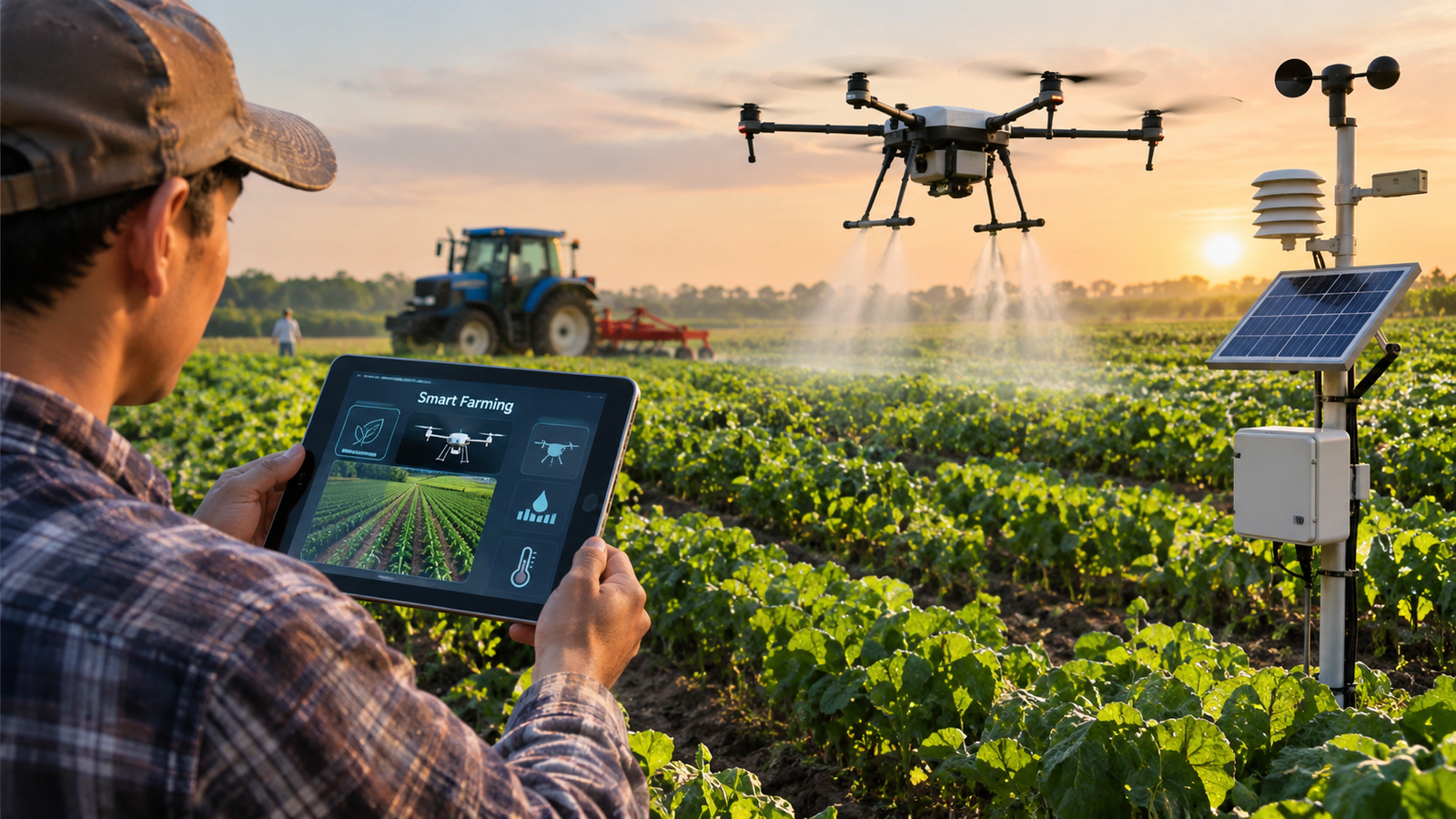
INTERNATIONAL, November 4, 2026 — Advances in agricultural technology, crop genetics, artificial intelligence and sustainable farming are reshaping the global agriculture sector, with new innovations targeting food security, crop resilience and farm productivity.
A monthly roundup published by AgNavigator highlights several developments attracting attention across the agricultural industry, from concerns over declining crop nutrient levels to emerging technologies designed to improve crop protection and farming efficiency.
Concerns Grow Over Nutrient Levels in Crops

One of the featured stories examines research suggesting that the nutrient concentrations of some crops have declined since the 1960s. Researchers point to factors including crop breeding priorities, soil degradation and climate change, raising questions about the nutritional quality of food and the challenge of addressing hidden hunger.
AI and Genetics Drive Agricultural Innovation
Artificial intelligence is increasingly being applied to crop research and disease resistance. One highlighted collaboration between Heritable Agriculture and Japan’s Kagome aims to identify genes associated with resistance to a major tomato disease, potentially supporting the development of more resilient crop varieties.
Another development involves Hamburg-based Soilytix, which has introduced genomic AI models intended to help agricultural companies identify promising biological crop-protection candidates more efficiently.
Robotics and New Crop Technologies
The roundup also highlights agricultural robotics and emerging crop technologies. Saga Robotics’ Thorvald autonomous vineyard robot, which uses ultraviolet-C light to control powdery mildew, was recognised in TIME’s 2026 Best Inventions list.
Other developments include advances in light-activated seed technology, gene editing, agricultural biotechnology and improved crop genetics.
Investment and Sustainability Remain Key Priorities
The report also explores changing investment strategies in agricultural technology. Industry experts argue that agtech startups need realistic business models and investment expectations, with biological crop protection, robotics and water management among the areas offering potential opportunities.
Meanwhile, research into farmers’ needs points to growing demand for climate-resilient crops, automation, biological crop protection and AI-supported decision-making.
These developments reflect a broader shift towards agricultural systems that can maintain productivity while responding to climate pressures, resource constraints and evolving food-security needs.
As the sector continues to innovate, collaboration among researchers, startups, established companies and farmers will remain essential to translating promising technologies into practical solutions for agriculture.