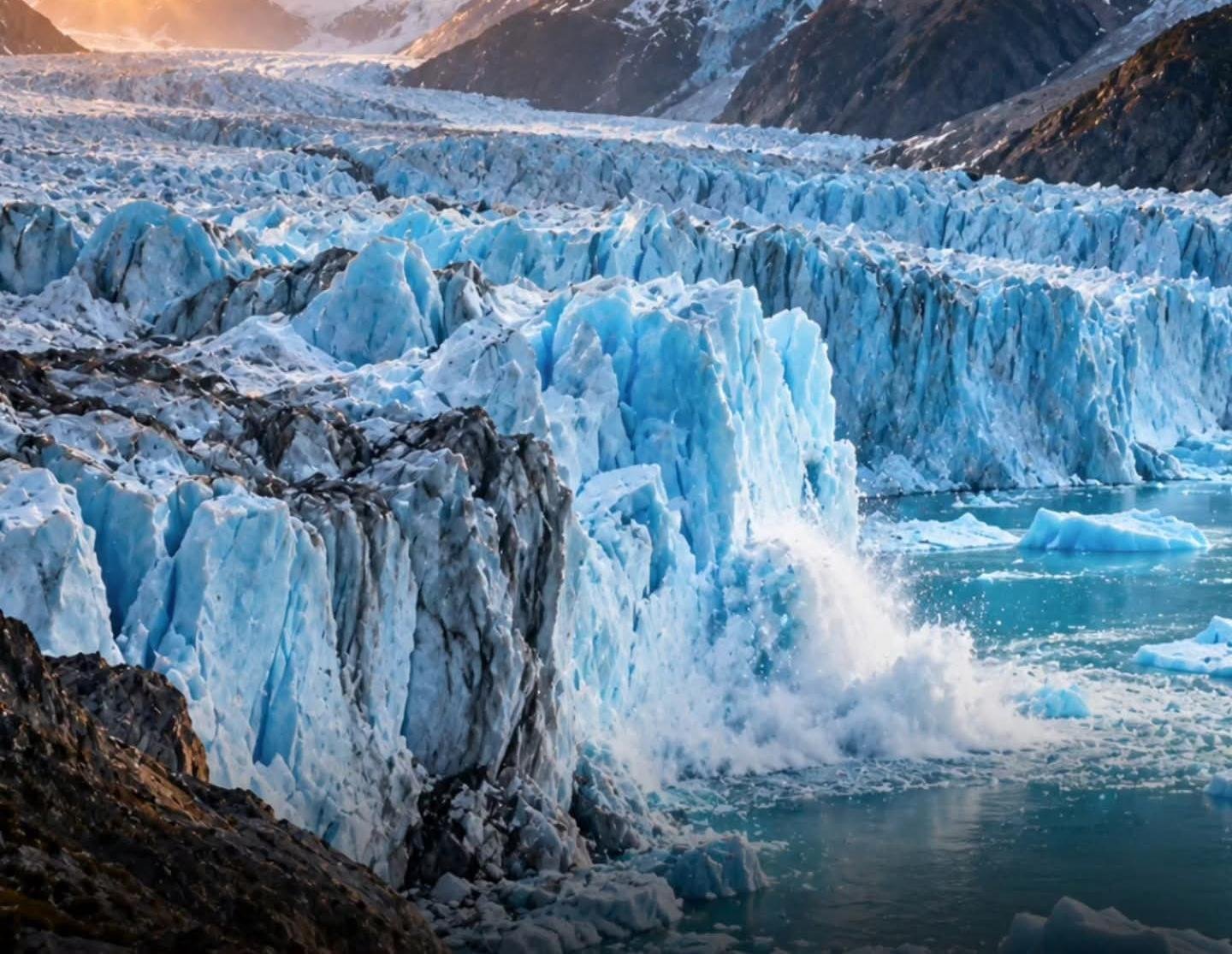
BERN: Switzerland’s glaciers are shrinking at an alarming rate, losing nearly one-fifth of their total ice volume between 2021 and 2026, according to systematic measurements by the Swiss Glacier Monitoring Network (GLAMOS) and the Swiss Academy of Sciences (SCNAT).
The latest findings show that glacier loss has accelerated sharply in recent years. Successive winters with low snowfall left glaciers with less protective snow cover, while prolonged summer heatwaves caused intense melting, including at higher elevations.

In the hydrological year ending in September 2026, more than 5 percent of the remaining glacier ice disappeared, making it the second-largest annual loss on record after 2022.
Average ice thickness on monitored glaciers fell by around 2.5 to 4 metres, while some lower glacier tongues retreated by as much as 10 metres during the warmer months.
Several smaller glaciers have disappeared completely, including Bella Tola in Valais and Griessfirn in Glarus, permanently changing the landscapes around them. Larger glacier systems, including the Great Aletsch, Rhône and Clariden glaciers, also recorded exceptionally high ice losses.
The monitoring data show that the rate of melting during the five-year period was more than twice that recorded during any previous comparable period. Between July and September 2026 alone, glacier melt released an estimated 2.2 trillion litres of water, more than four times Switzerland’s annual household drinking-water consumption.
The additional meltwater can temporarily support rivers and hydropower production during dry summer periods. However, scientists warn that this short-term increase in water availability comes at the cost of long-term water security. As glaciers continue to shrink, their ability to provide water during future dry periods will decline.
The rapid loss is also affecting Alpine ecosystems and permanently changing some of Switzerland’s iconic mountain landscapes.
Scientists attribute the decline overwhelmingly to human-driven climate warming and warn that Alpine glaciers face severe long-term pressure under current climate conditions.
The latest measurements underline the importance of continued glacier monitoring and stronger efforts to reduce greenhouse gas emissions. Slowing global warming remains critical to limiting further ice loss and protecting mountain ecosystems and water resources.
Source: Swiss Glacier Monitoring Network (GLAMOS) and Swiss Academy of Sciences (SCNAT), Annual Report 2026