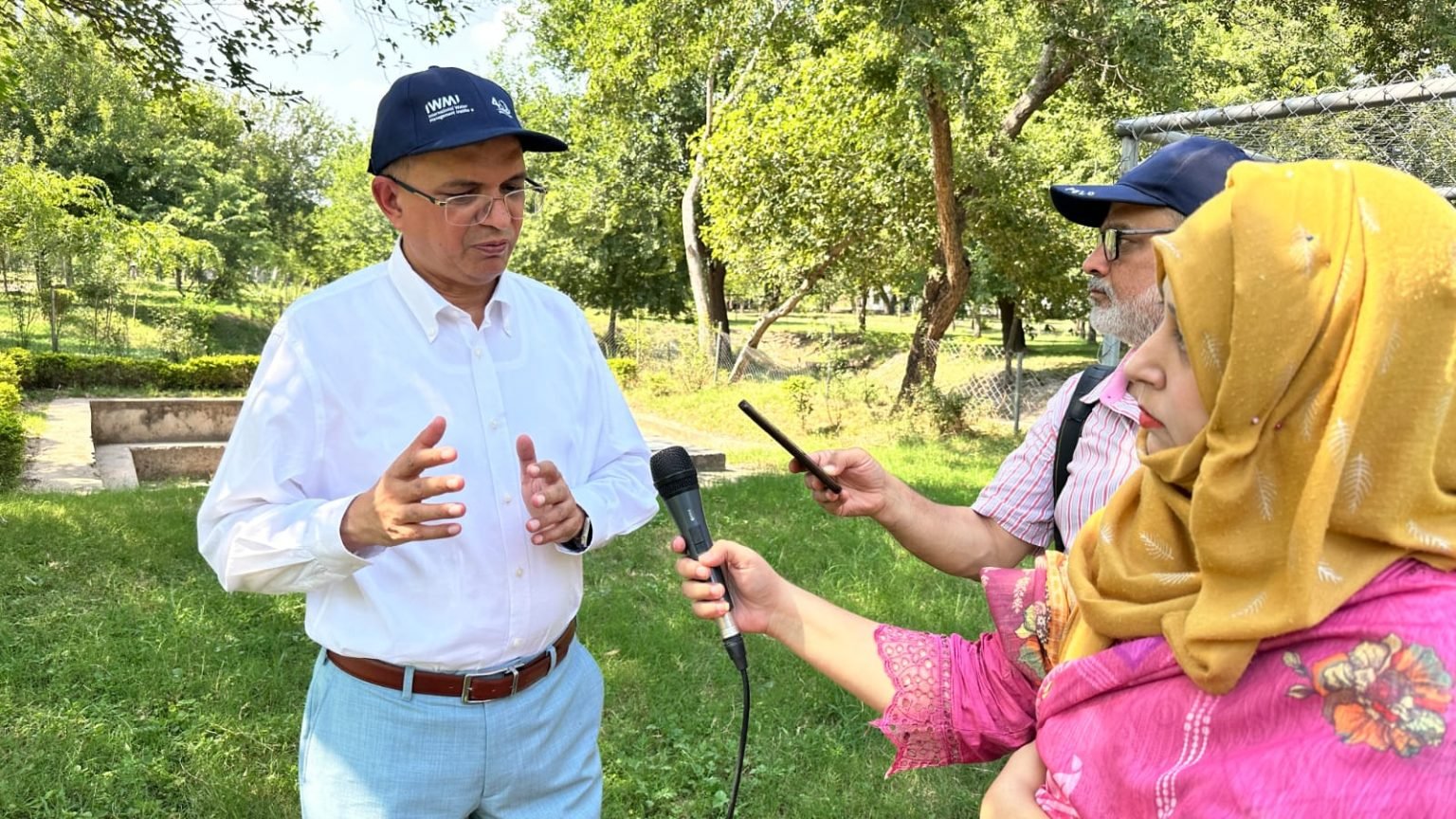
ISLAMABAD: Harvesting just 25 percent of Islamabad’s annual rainfall could significantly reduce groundwater depletion and help control urban flooding, according to Dr. Mohsin Hafeez, Global Director for Water, Food and Ecosystems at the International Water Management Institute (IWMI).
In an interview with APP, Dr. Hafeez said IWMI has successfully demonstrated an innovative groundwater recharge model at Kachnar Park in Sector I-8, where more than 566,000 litres of rainwater have been stored over the past four years, resulting in measurable improvements in both groundwater levels and water quality.

The pilot project was established at a flood-prone location where monsoon runoff from a nearby parade ground regularly inundated surrounding areas. A specially designed recharge pond captures rainwater, which passes through natural filtration layers of sand and stones before gradually replenishing the underground aquifer.
To generate scientific evidence, the site has been equipped with a real-time rain gauge, water-flow monitoring instruments and groundwater sensors. Monitoring data collected since June 2022 shows the project has recharged over 566,000 litres of water, raising the local groundwater table by approximately 4.5 millimetres without compromising groundwater quality.
Encouraged by the project’s success, the Capital Development Authority (CDA) approved the construction of 100 groundwater recharge sites across Islamabad in 2024, later expanding the programme with another 100 sites. Around 200 recharge sites are now operational throughout the capital.
Dr. Hafeez said the initiative has not only enhanced groundwater recharge but has also reduced monsoon flooding and eased pressure on stormwater drainage systems. Residents living near the recharge sites have reported reduced flooding during the rainy season and improved water availability from household boreholes.
He noted that IWMI’s research indicates that harvesting just one-quarter of the city’s annual rainfall would be sufficient to stabilise groundwater depletion in Islamabad.
The project’s success has also influenced national policy. The CDA has incorporated groundwater availability assessments into its building regulations, making them mandatory before approving new housing schemes.
In collaboration with the Pakistan Engineering Council (PEC), the Pakistan Council of Research in Water Resources (PCRWR) and other stakeholders, IWMI also contributed to the development of Pakistan’s Green Building Code, which requires rainwater harvesting systems in new buildings.
Dr. Hafeez said the Federal Cabinet approved the Green Building Code of Pakistan and Rainwater Harvesting Provisions on July 30, 2025, while the Pakistan Engineering Council formally launched the code on December 23, 2025, paving the way for wider adoption of sustainable construction practices nationwide.
He noted that the pilot project cost only around US$15,000, demonstrating that relatively modest investments can deliver substantial environmental, social and climate resilience benefits.
“We don’t conduct research for the sake of research. We generate evidence that helps shape policy and improve people’s livelihoods through practical, climate-resilient solutions,” Dr. Hafeez said.
Also Read: Punjab to Plant 31 Million Trees Under Major Forest Expansion Drive