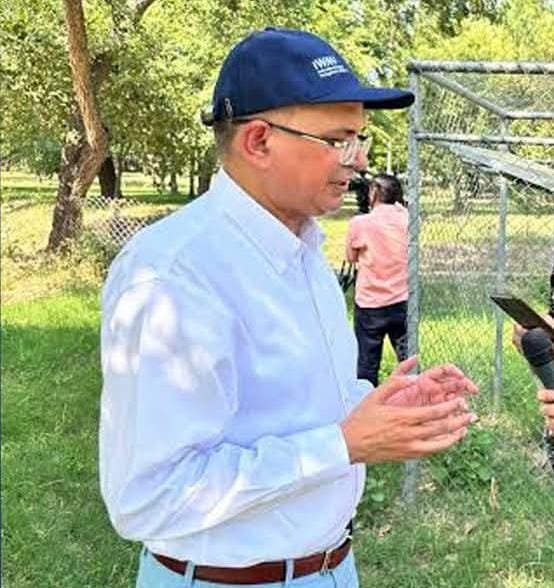
ISLAMABAD: Harvesting just 25 percent of annual rainfall could significantly reduce groundwater depletion and help control urban flooding in Islamabad, according to Dr Mohsin Hafeez, Global Director for Water, Food and Ecosystems at the International Water Management Institute (IWMI).
Speaking to APP, Dr Hafeez said IWMI had demonstrated a groundwater recharge model at Kachnar Park in Sector I-8, Islamabad, where more than 566,000 litres of rainwater had been stored at a single site over the past four years.

The pilot project was developed at a flood-prone location where runoff from a nearby parade ground regularly caused flooding during the monsoon season.
A small recharge pond was constructed to capture rainwater runoff. The water passes through natural filtration layers of sand and stones before gradually entering the underground aquifer.
The project is also equipped with a real-time rain gauge, water-flow monitoring instruments and groundwater sensors. These systems allow researchers to monitor rainfall, recharge and groundwater quality and collect scientific data on the effectiveness of the model.
According to monitoring data collected since June 2022, the project has recharged more than 566,000 litres of water and raised the local groundwater table by around 4.5 millimetres without compromising groundwater quality.
The findings highlight the potential of rainwater harvesting and managed groundwater recharge as practical approaches to addressing two growing urban challenges: declining groundwater resources and flooding during heavy rainfall.
Expanding such measures at suitable locations could help Islamabad make better use of rainwater while reducing pressure on underground water reserves and improving urban resilience to intense rainfall.