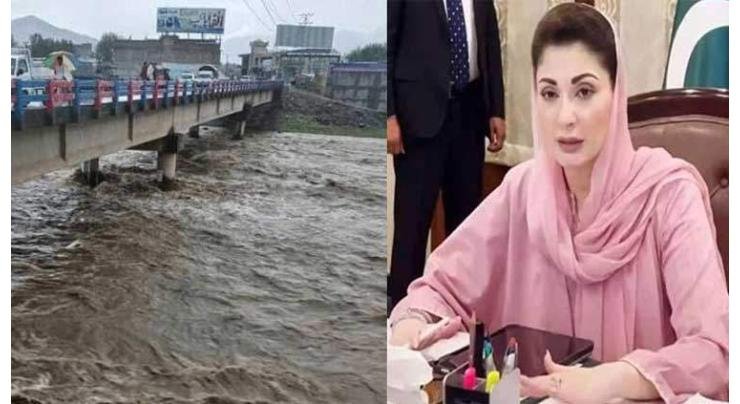
LAHORE: Punjab Chief Minister Maryam Nawaz has warned that temperatures could rise significantly during July, August and September, while the risk of urban flooding remains high, directing all relevant departments to maintain complete preparedness for the ongoing monsoon season.
Chairing a high-level meeting on monsoon preparedness, the chief minister said climate change is now a reality and warned that temperatures in some cities could climb as high as 52°C, while above-normal rainfall is also expected in several parts of the province.

She said the Punjab government has activated its early warning system to ensure timely weather forecasts, rapid dissemination of alerts and an effective emergency response.
Maryam Nawaz instructed all departments to remain on high alert for possible flooding and directed Rescue 1122 and other emergency services to continue mock exercises to strengthen disaster preparedness and response capacity.
She said the government had incorporated lessons learned from last year’s devastating floods into its planning and had also made arrangements to ensure adequate fodder supplies for livestock in vulnerable areas.
The chief minister further directed authorities to issue timely public advisories on heatwaves and weather conditions, urging citizens, particularly the elderly, women and children, to avoid unnecessary outdoor exposure during periods of extreme heat.
She said Punjab had completed all necessary preparations to deal with heatwave conditions and claimed that rainwater drainage systems across the province were functioning efficiently to minimise urban flooding.
Separately, Chief Minister Maryam Nawaz met Federal Minister for Climate Change and Environmental Coordination Dr. Musadik Malik in Lahore to review climate resilience and disaster preparedness measures.
The meeting, attended by Senior Minister Marriyum Aurangzeb, the Chief Secretary, Chairman NDMA, Senior Member Board of Revenue (SMBR) and senior officials of the Punjab Disaster Management Authority (PDMA), received a detailed briefing on the Punjab Climate and Disaster Resilience Plan 2026.
Participants agreed to strengthen coordination between the federal and provincial governments through an integrated early warning system for severe weather events. Both sides also agreed to establish coordination mechanisms at least six hours before any extreme weather event to facilitate timely response.
The meeting reviewed proposals to establish centralised climate and flood information screens across all districts and tehsils of Punjab in collaboration with the federal government, aiming to improve public awareness and emergency communication during severe weather events.