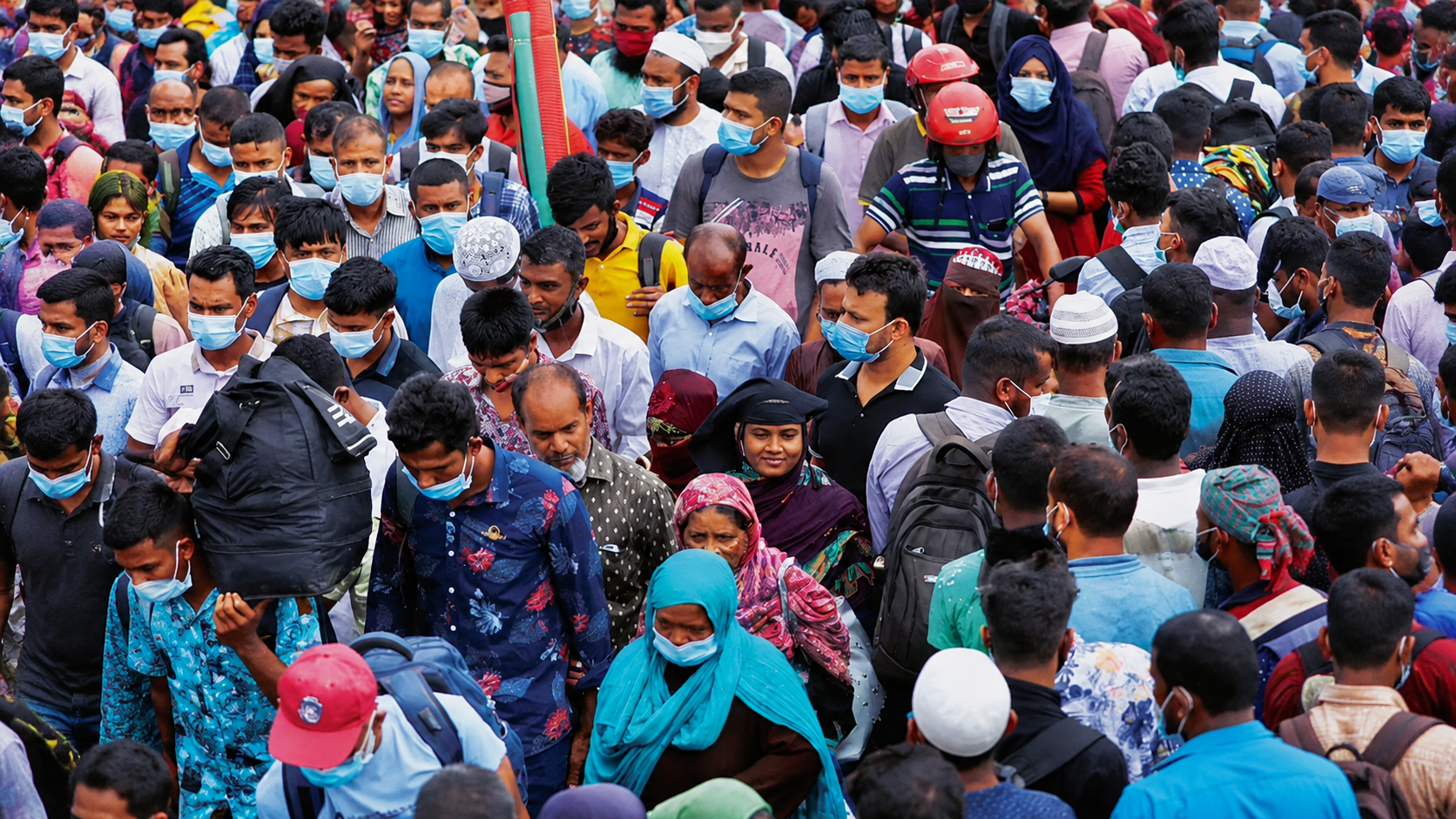
ISLAMABAD: Rapid population growth has become one of Pakistan’s biggest challenges to achieving climate resilience and environmental sustainability, with the government stressing the need for integrated policies that address demographic pressures alongside climate adaptation and sustainable development.
The remarks came as Pakistan joined the global community in observing World Population Day on July 11. This year’s United Nations theme, “Realizing the hopes and aspirations of young people: today and for the future,” highlights the importance of empowering youth through better education, healthcare, employment opportunities and informed reproductive choices.
Speaking on the occasion, Mohammad Saleem Shaikh, climate policy advocacy expert and media spokesperson for the Ministry of Climate Change and Environmental Coordination, said the government was committed to promoting voluntary, rights-based family planning, women’s empowerment, reproductive healthcare and sustainable resource management as part of its broader climate resilience agenda.
He noted that Pakistan’s population has reached around 259 million and is growing at an annual rate of approximately 2.55 percent, making it the world’s fifth most populous country. If current trends continue, the population is expected to exceed 300 million within five years and approach 400 million by 2050, placing increasing pressure on water resources, healthcare, education, housing, infrastructure and employment.
According to official estimates, Pakistan records nearly 6.7 million births every year. Studies suggest that expanding access to voluntary family planning could reduce annual population growth by around 1.5 million people, easing pressure on public services while improving maternal and child health.
Shaikh described population growth as a major climate risk multiplier, saying rising demand for water, food, land and energy coincides with increasing floods, droughts, heatwaves and glacier-related disasters.
“Every additional million people requires more water, food, energy, housing, schools, hospitals, transport infrastructure and employment opportunities. At a time when climate change is reducing water availability and degrading ecosystems, unchecked population growth further increases Pakistan’s climate vulnerabilities,” he said.
He pointed out that although Pakistan contributes less than one percent of global greenhouse gas emissions, it remains among the countries most vulnerable to climate change, making efficient management of natural resources and population growth essential for long-term resilience.
Citing assessments by the World Bank and the Asian Development Bank, he said rapid population growth, urbanisation and climate change were placing additional pressure on public finances, infrastructure and essential services, making it more difficult to achieve the Sustainable Development Goals, particularly those related to water, sanitation, health, education and food security.
Pakistan’s total fertility rate remains the highest in South Asia at 3.6 children per woman. Nearly 40 percent of children under five are stunted, while around 11,000 women die annually from pregnancy-related causes and nearly 140,000 infants die before reaching their first birthday. Health experts believe many of these deaths could be prevented through improved access to reproductive healthcare and voluntary family planning.
Population Council estimates indicate that Pakistan will require an additional 57,000 primary schools, 15.5 million houses and nearly 104 million new jobs by 2050 if current population trends continue.
Shaikh said climate adaptation alone would not be enough unless accompanied by greater investment in human development.
“Climate resilience is not only about building flood protection infrastructure or planting forests. It also requires investing in voluntary family planning, girls’ education, women’s empowerment, reproductive healthcare, clean water, sanitation and sustainable urban planning,” he said.
He added that the government was working with federal and provincial institutions, development partners and civil society to explore policy options that promote balanced population growth while strengthening environmental sustainability and climate resilience.
He also warned that rapid population growth is accelerating groundwater depletion, deforestation, land degradation, biodiversity loss, waste generation and air pollution, further reducing Pakistan’s environmental carrying capacity.
Calling for a whole-of-government approach, Shaikh said population stabilisation, climate action and sustainable development should be pursued together to build a more resilient and environmentally sustainable Pakistan.