ISLAMABAD: Pakistan is facing mounting pressure on its wheat supply as water shortages threaten irrigation availability ahead of the Rabi planting season, raising concerns over crop yields, food prices and the country’s reliance on costly wheat imports.
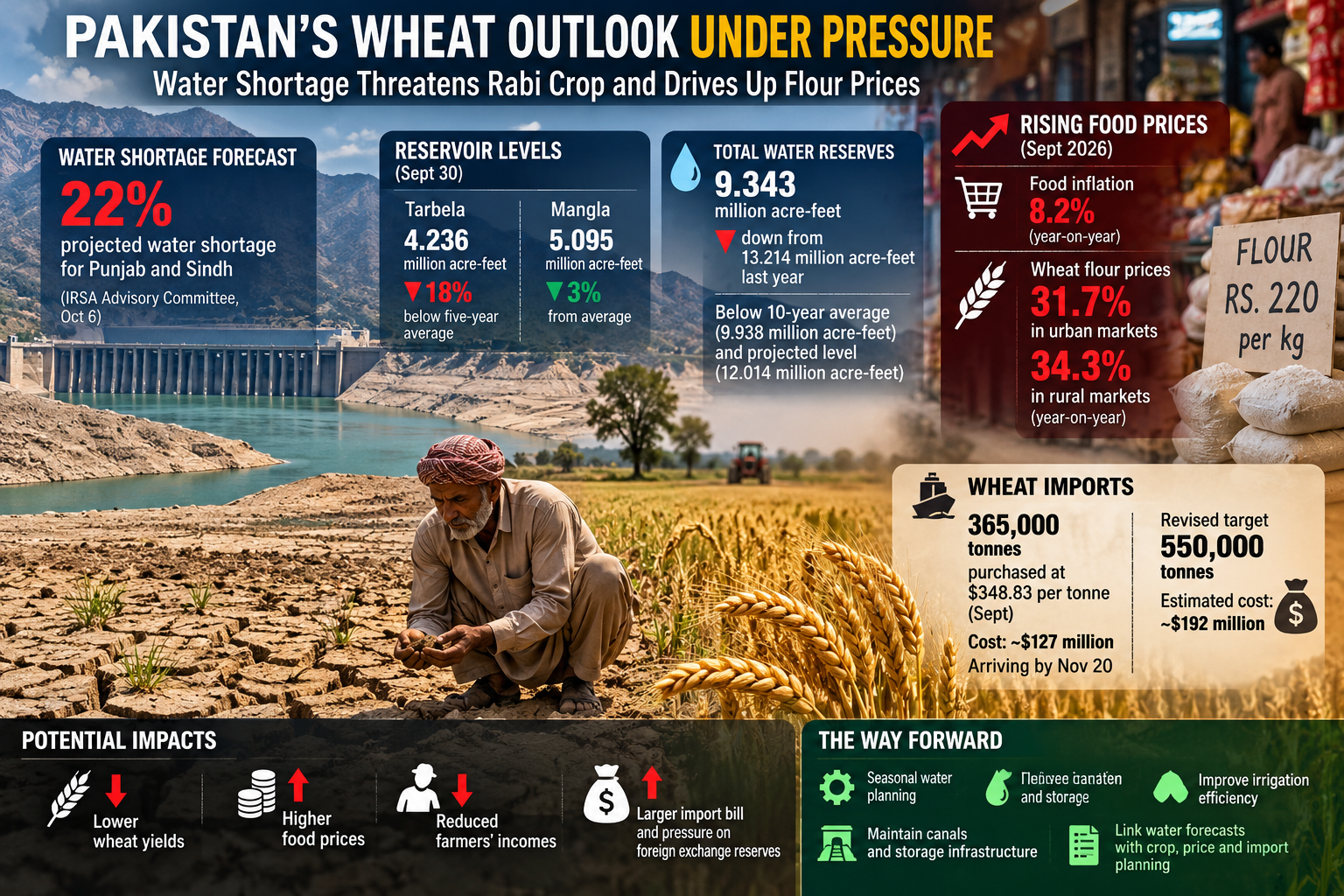
On October 6, the Indus River System Authority (IRSA) Advisory Committee projected a 22% water shortage for Punjab and Sindh, based on expected inflows of 21.268 million acre-feet at the river rim stations. The projected shortfall has heightened concerns about irrigation supplies for wheat, a staple crop central to Pakistan’s food security.

The country’s water reserves have also declined significantly compared with last year. On September 30, Pakistan’s reservoirs held 9.343 million acre-feet of water, down from 13.214 million acre-feet recorded on the same date in 2025. The available storage was also below the ten-year average of 9.938 million acre-feet and the committee’s projected level of 12.014 million acre-feet.
The situation varies across the country’s major reservoirs. Tarbela held 4.236 million acre-feet, approximately 18% below its five-year average, while Mangla stored 5.095 million acre-feet, keeping its reserves within 3% of its average. These differences highlight the importance of careful reservoir management and irrigation planning as agricultural demand increases.
Punjab and Sindh, which account for most of Pakistan’s wheat production, depend heavily on reliable irrigation to support crop growth. If canal supplies fall short, farmers may face difficult choices, including spending more on groundwater pumping, reducing irrigation or risking lower yields after investing in seeds, fertiliser and labour.
Water scarcity also poses environmental challenges. Greater reliance on groundwater can increase pressure on underground reserves, while inefficient irrigation and poor water management can compound the effects of drought and changing climate conditions. Improving water-use efficiency and maintaining irrigation infrastructure are therefore important for both agricultural productivity and long-term resource sustainability.
The pressure on water supplies comes as consumers face rising food costs. According to the Pakistan Bureau of Statistics, annual food inflation reached 8.2% in September 2026. Wheat flour prices rose much faster, increasing 31.7% year-on-year in urban markets and 34.3% in rural markets, according to the figures provided.
A weaker domestic wheat harvest could intensify these pressures by reducing supplies to flour mills and increasing competition for available grain. The country is already dealing with the consequences of last season’s disappointing harvest, with estimates indicating that production fell more than two million tonnes below the target.
The government initially planned to import one million tonnes of wheat but later reduced the target to 550,000 tonnes after provincial authorities revised their requirements. In September, the Trading Corporation of Pakistan received bids ranging from $348.83 to $369.95 per tonne and finalised the purchase of 365,000 tonnes at the lowest bid price. The contracted wheat is scheduled to arrive by November 20.
The contracted quantity is expected to cost approximately $127 million in foreign exchange, while the full revised import programme of 550,000 tonnes could cost nearly $192 million. Additional imports may be required if domestic production fails to meet demand, exposing the country to further costs linked to international prices, shipping charges and exchange-rate movements.
The developing situation highlights the close relationship between water security, agricultural production, food affordability and economic stability. A shortage of irrigation water can affect farmers’ incomes and crop yields while increasing the government’s import bill and placing additional pressure on foreign exchange reserves.
To reduce these risks, Pakistan needs coordinated seasonal water planning, timely maintenance of canals, improved irrigation efficiency and investment in water storage and distribution infrastructure. Authorities can also strengthen links between water availability forecasts, crop production estimates, food-price monitoring and import planning to identify potential supply gaps earlier.
As the Rabi season progresses, the availability and effective management of irrigation water will remain critical to protecting the wheat crop. Better planning and sustainable water use could help limit production losses, strengthen food security and reduce the economic consequences of future water shortages.