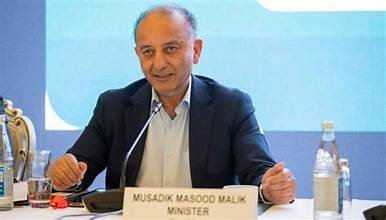
ISLAMABAD — Federal Minister for Climate Change Dr Musadik Malik has said that around 40 million people in Pakistan have been affected by climate change, warning that floods, heatwaves and other climate-related disasters are driving displacement and destroying livelihoods across the country.
Speaking at the formal launch of the Civil Society Alliance on Migration (C-SAM), Malik said climate disasters were forcing millions of Pakistanis from their homes, yet much of this displacement remained outside conventional migration narratives.

He said that across Pakistan’s last five floods, around 6,000 people had lost their lives while another 19,000 had been injured or left with disabilities as a result of disasters.
“These are all unnamed stories and do not fall under any migration account,” Malik said, highlighting the human impact on families whose breadwinners were killed, injured or otherwise left unable to support their children and parents.
The minister also pointed to the growing threat posed by extreme heat, saying that around 500 people had died in a single city during one heatwave.
Malik said Pakistan contributes less than one percent of global pollution but continues to bear a disproportionate cost of climate change. He added that successive floods had displaced communities on a large scale, while such movements were often not recognised internationally as migration.
The event marked the formal launch of C-SAM, an alliance bringing together more than 50 civil society organisations working to promote safe and dignified migration in Pakistan.
The ceremony was attended by the Canadian High Commissioner, representatives of the International Organization for Migration (IOM) and Overseas Employment Corporation (OEC), civil society leaders and other participants.
IOM Head of Program Darius Pamparas said civil society’s close connection with communities was one of its greatest strengths.
He said individual organisations often encounter only one part of a migrant’s journey and that C-SAM had been established to bridge those gaps by bringing different stakeholders together.
C-SAM Chairman Mubarak Ali Sarwar said the alliance’s success would ultimately be determined by the collective action its members take following its launch rather than by the inaugural ceremony itself.
OEC Managing Director Nasir Khan Kashani stressed the importance of evidence-based policymaking, saying civil society organisations could strengthen the process by bringing facts and experiences from communities directly into policy discussions.
The C-SAM secretariat is based at the OxDev Initiative in Islamabad. The alliance has technical support from IOM and financial support from Canada.
The initiative seeks to strengthen coordination among civil society organisations and other stakeholders working on migration while promoting safer and more dignified migration practices in Pakistan.