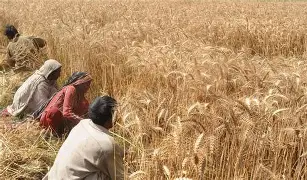
ISLAMABAD, Apr 20 (ABC): Pakistan has expanded its efforts in high-yield hybrid wheat research as agricultural institutions in Punjab collaborate to develop more productive and climate-resilient crop varieties, aiming to meet future food demand and address environmental challenges.
What is hybrid wheat?
Talking to Wealth Pakistan,Hybrid wheat is a type of crop developed by cross-breeding different wheat lines to produce higher yields and improved resistance to stress factors such as heat, drought, and disease.

Unlike conventional wheat,hybrid wheat varieties are designed to benefit from “hybrid vigor,” a biological effect that can enhance productivity and stability. However, developing hybrid wheat is technically complex, especially because wheat naturally self-pollinates.
Who is leading the research in Pakistan?
The initiative is a joint hybrid wheat project involving several institutions in Punjab. It is led by Muhammad Nawaz Sharif University of Agriculture in Multan, with participation from the University of Agriculture Faisalabad and the Wheat Research Institute (WRI) in Faisalabad.
The hybrid wheat programme also includes technical collaboration with international experts, including support from the University of Sydney.
Researchers are using Australian Blue Aleurone (BLA) technology,hybrid wheat which introduces specific genetic traits to control breeding and enable cross-pollination without relying on genetically modified methods.
Why does it matter?
Wheat is a staple food in Pakistan, and demand is expected to increase with population growth. Improving yield per acre is seen as a key way to strengthen food security without expanding farmland.
could also offer better resistance to pests and diseases, while tolerating heat and water stress—factors that are becoming more significant due to climate change.
Scientists note that crop varieties tend to lose effectiveness over time as pests evolve and environmental conditions shift, making continuous research necessary.
What are the challenges?
Despite ongoing research, Pakistan has not yet developed a commercially viable hybrid wheat variety.
Legal and regulatory constraints also limit the use of genetically modified crops, which can affect the pace and direction of research.
Globally, no country has yet introducedfor large-scale commercial cultivation, although several are at advanced stages of development.
What is happening globally?
Countries including China, the United States, Australia, and France are leading research in hybrid wheat.
International researchers are working on methods to overcome wheat’s natural self-pollination barrier. One such approach involves non-GMO systems that prevent self-pollination, allowing controlled cross-breeding and potentially increasing yields by more than 20%.
What happens next?
Researchers expect continued progress as both public institutions and private companies invest in hybrid wheat development.
While commercial release timelines remain uncertain, experts say global efforts are moving closer to practical application. If successful, could represent a significant shift in crop production, similar to earlier advances in high-yield crop varieties.