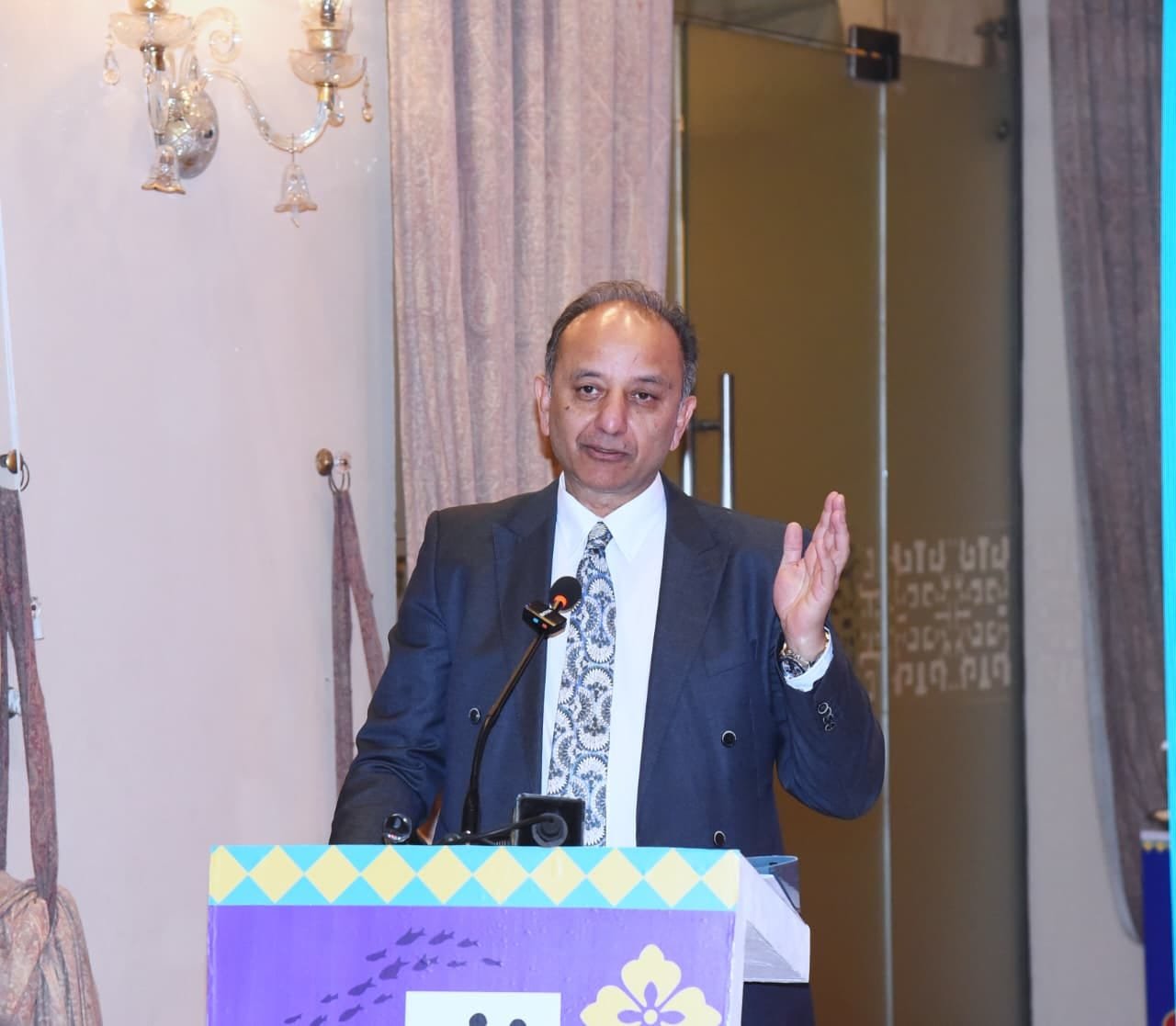
ISLAMABAD: Federal Minister for Climate Change and Environmental Coordination Dr. Musadik Malik on Tuesday said climate change is a global challenge that is accelerating glacier melt and increasing the frequency of extreme weather events, while countries like Pakistan are suffering the most despite contributing very little to global greenhouse gas emissions.
Speaking at a joint media briefing during a visit to the National Disaster Management Authority (NDMA) headquarters alongside other federal ministers, Dr. Malik said Pakistan would continue to pursue its case for climate justice at international forums.

He said Pakistan is not among the world’s major greenhouse gas emitters, yet it remains one of the countries most severely affected by climate change. According to the minister, three countries account for nearly 57 percent of global greenhouse gas emissions, while the top ten countries produce around 70 percent, leading to rising temperatures, rapid glacier melting, floods, and other climate-related disasters.
Dr. Malik said recent floods in Pakistan have claimed around 6,000 lives, injured 20,000 people, and displaced nearly 40 million people, highlighting the devastating impact of climate change on vulnerable communities.
He said the government, under the leadership of Prime Minister Shehbaz Sharif, has adopted a coordinated strategy to address climate challenges by bringing together key sectors, including food security, finance, planning, information, and water management.
“The government is working as one team to address climate-related challenges and protect the lives and livelihoods of the people,” he said.
The minister added that Pakistan is increasingly using artificial intelligence, data science, drones, satellite technology, and water-related data to improve disaster forecasting, planning, and decision-making.
Referring to the current weather outlook, Dr. Malik said northern regions, particularly Gilgit-Baltistan and Khyber Pakhtunkhwa, are expected to receive heavier rainfall, while southern and plain areas may face below-normal rainfall, increasing the risks of both floods and drought.
He said separate and targeted strategies have been prepared for mountainous, urban, agricultural, and plain regions to address their specific climate-related risks. He also noted that the government is working with provincial authorities to tackle urban heat island effects and rising temperatures in cities.
Highlighting the importance of water management, the minister stressed the need to improve water storage in dams and regulate water supplies efficiently to ensure adequate availability for Rabi and Kharif crops.
He said the government is committed to improving water regulation, telemetry systems, and reservoir management while also promoting better zoning and construction regulations to reduce losses during natural disasters.
Dr. Malik noted that, following the 18th Constitutional Amendment, many of these responsibilities fall under provincial governments, but the federal government will continue to provide technical assistance and full support.
He reaffirmed the federal government’s commitment to working closely with the provinces to strengthen climate resilience, improve water management, expand the use of modern technology, and protect lives and property from the growing impacts of climate change.
Also Read: Climate Minister Chairs First Review Meeting on PM’s Directives for NITB Reforms