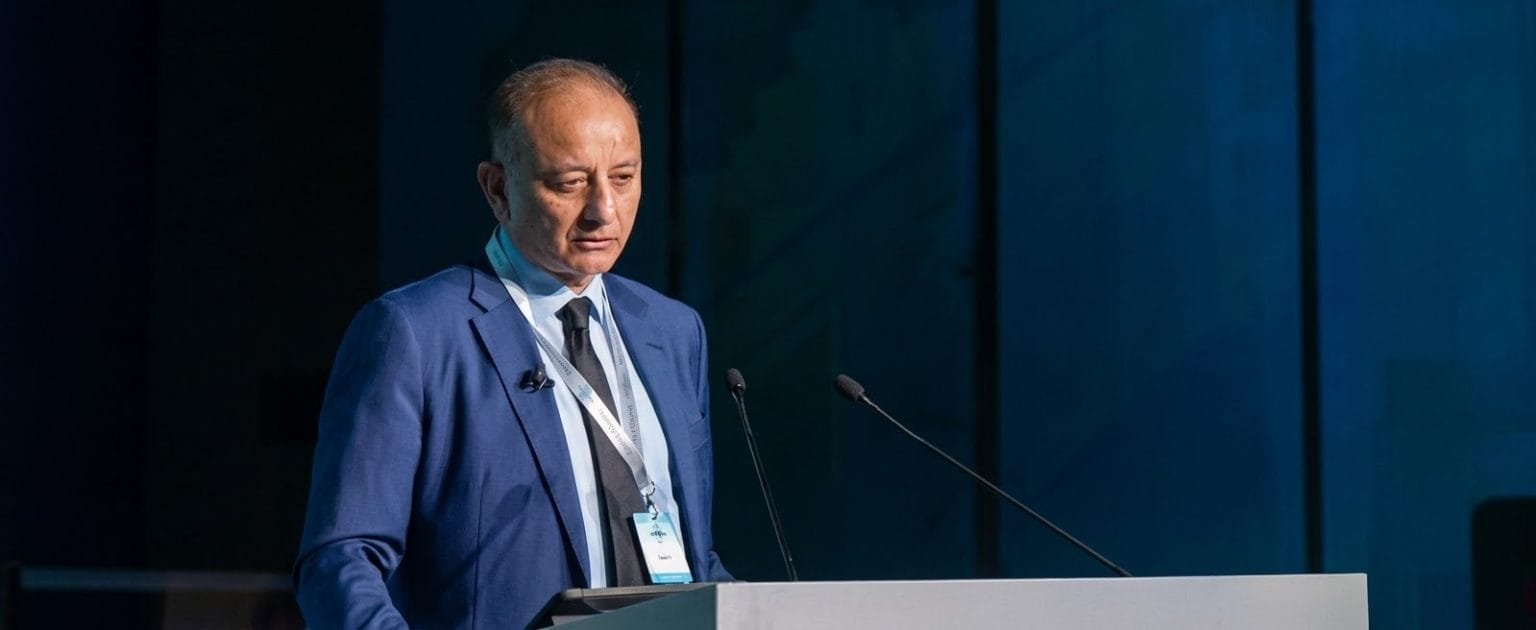
ICELAND, October 14, 2026: Pakistan’s Federal Minister for Climate Change, Dr. Musadik Malik, has called for stronger international cooperation to develop practical climate solutions, proposing a virtual green university, a green innovation platform and shared access to publicly funded information technology to strengthen climate resilience.
Addressing the Arctic Circle Assembly 2026 in Iceland, the minister highlighted the devastating effects of glacial melting and climate-related disasters on vulnerable communities, particularly in Pakistan’s northern mountain regions. He urged world leaders, researchers and innovators to move beyond commemorating environmental losses and focus on collaborative research and practical action.

According to the Associated Press of Pakistan, Dr. Malik also announced that his ministry had established a $10 million fund for start-ups developing innovative climate solutions.
Glacial Disasters Threaten Mountain Communities
The minister described how rising temperatures and glacial hazards can destroy homes, livelihoods and essential infrastructure, leaving communities vulnerable to renewed poverty.
Recalling the 2022 Shisper Glacier disaster in Hassanabad, Hunza, he shared the story of Zara, whose family escaped when the glacier broke and water and boulders swept through the area. Although her husband helped save the lives of their family members, their house, livestock and essential community facilities, including schools and clinics, were lost, according to the minister.
Dr. Malik said such disasters could undo generations of progress in a matter of hours. He also highlighted the psychological consequences for children who had once viewed the surrounding mountains with wonder but had come to associate them with danger and fear.
The minister drew parallels with glacial disasters in other mountain regions, including Nepal, saying communities across the world were confronting similar climate-related threats. He expressed solidarity with affected populations and stressed the need for shared knowledge and coordinated responses.
Pakistan Faces Disproportionate Climate Impacts
Highlighting Pakistan’s vulnerability to climate change, Dr. Malik referred to the human cost of major floods and other climate-related disasters. He said the country had experienced five major floods over 15 years, resulting in thousands of deaths, injuries and widespread displacement.
He emphasised that the consequences extend well beyond immediate loss of life and physical damage, affecting livelihoods, maternal and infant health, and children’s education.
The minister said millions of displaced people had been school-aged children, warning that prolonged displacement could result in enormous losses of learning time.
He also underlined the disparity between Pakistan’s relatively small contribution to global greenhouse gas emissions and the severe climate impacts experienced by its population.
“We only emit 1% of the carbon but we bear 100% of our national grief,” he said.
Three Proposals to Accelerate Green Innovation
Dr. Malik outlined three proposals aimed at strengthening international research, supporting climate-focused entrepreneurs and making existing technological resources more accessible.
- Virtual green university
The minister proposed establishing a virtual green university to connect researchers and enable them to share research infrastructure and expertise. The initiative would focus on understanding changes in mountain environments and the cryosphere—the interconnected system of Earth’s frozen regions, including glaciers, ice sheets and snow-covered areas.
He said research in mountain regions could help scientists better understand the effects of warming and improve models for assessing wider climate risks.
- $10 million fund for green start-ups
The minister said his ministry had established a $10 million fund to support start-ups developing innovative climate solutions.
He called for a green innovation ecosystem that could help young entrepreneurs and researchers turn ideas into practical technologies and approaches to improve resilience. He stressed the importance of supporting solutions to environmental challenges rather than focusing solely on commercially driven start-up models.
- Shared digital cloud for innovation
In a further proposal, Dr. Malik suggested making information technology developed using public-sector funds available through a shared digital cloud.
Such access, he said, could allow young innovators in Iceland and other countries to use existing publicly funded technological resources to develop new climate solutions instead of duplicating work and infrastructure.
Together, the proposals would create a framework linking research, entrepreneurship and digital resources to accelerate climate innovation.
Call for Action Beyond Climate Discussions
Explaining the relevance of Pakistan’s mountain experience to an assembly focused on the Arctic, Dr. Malik said glaciers in the Himalayas and Karakoram and ice systems in Greenland and other polar regions were interconnected components of the global cryosphere.
He urged policymakers and researchers to listen to communities living in mountain and polar regions, whose experiences offer valuable insights into environmental changes and their consequences.
The minister also referred to the extensive loss of old ice in polar regions, while acknowledging that some of the figures he cited might not be precise.
Concluding his address, Dr. Malik urged participants to turn discussions into practical measures before leaving the assembly. He stressed that international cooperation, scientific research and green innovation must deliver tangible outcomes as communities face mounting climate risks.