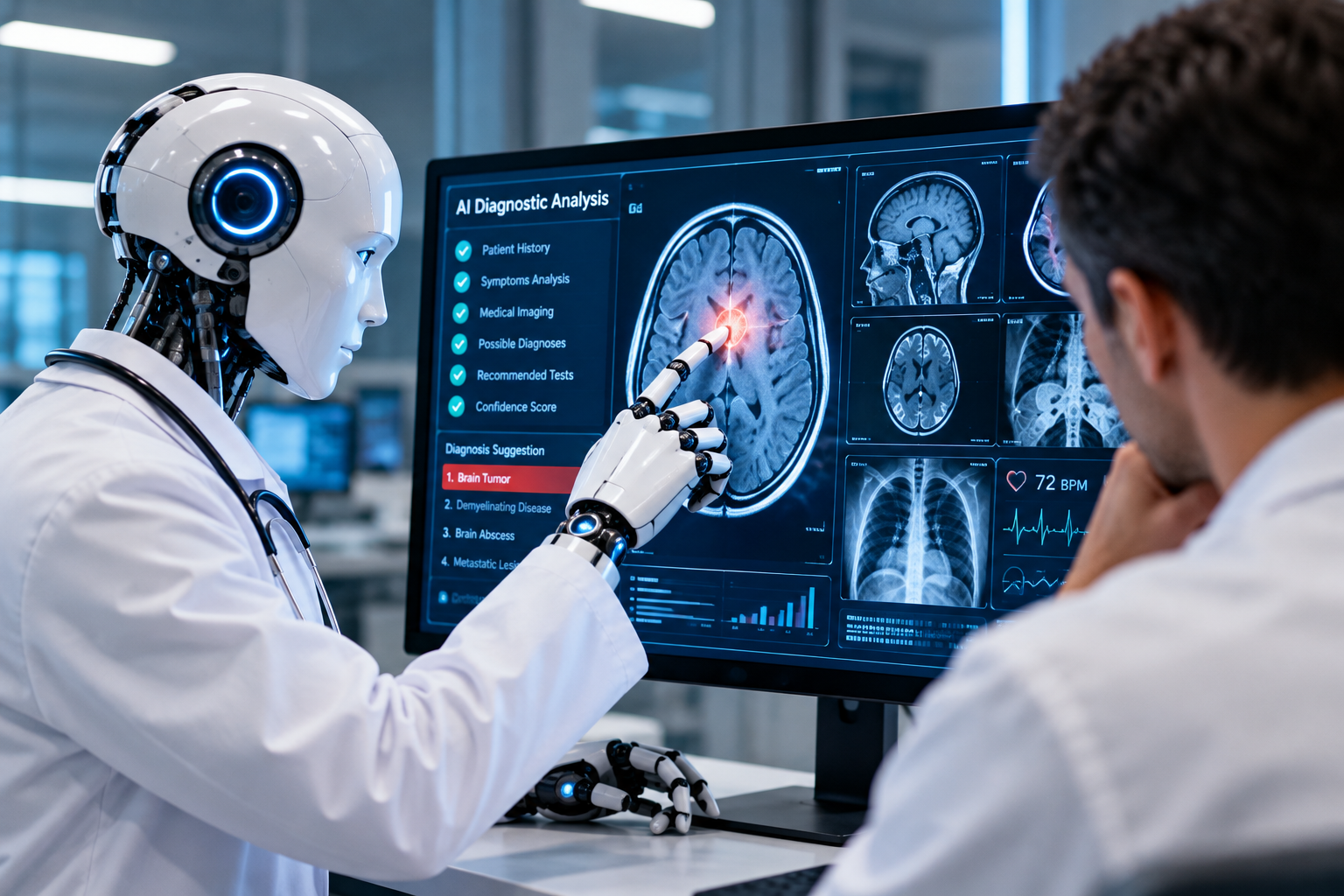
New AI system reportedly achieves higher diagnostic accuracy while using fewer tests and reducing medical costs
NEW YORK: Artificial intelligence is making significant advances in healthcare, with a new medical AI system developed by Microsoft reportedly outperforming human doctors in diagnosing complex medical conditions during research tests.

The system, known as MAI-DxO, is designed to help doctors analyse complicated medical cases, assess symptoms and medical histories, compare possible diagnoses, and determine which tests may be necessary.
According to a report published by ARY News on October 28, 2026, the system demonstrated substantially higher diagnostic accuracy than human physicians in evaluated medical cases.
AI Shows Higher Diagnostic Accuracy
The report states that MAI-DxO achieved an accuracy rate of 83.2% in diagnosing conditions in the study, compared with 36.1% for human doctors in the same evaluation.
In a separate assessment involving emergency department cases, the AI system reportedly achieved 80.3% accuracy, while human physicians recorded approximately 46.8%.
These findings suggest that AI could become a valuable tool for helping clinicians evaluate complicated cases, particularly when symptoms overlap or a diagnosis requires careful consideration of several possibilities.
Fewer Tests and Lower Costs
Beyond diagnostic accuracy, the system was also evaluated on its ability to reach a diagnosis while limiting unnecessary medical tests and expenses.
According to the report, MAI-DxO was able to identify certain conditions at substantially lower costs than doctors, sometimes using approximately half or even one-third of the expenditure.
Reducing unnecessary investigations could help healthcare providers manage resources more efficiently and potentially ease financial pressure on patients.
Could AI Change the Future of Healthcare?
Researchers believe systems like MAI-DxO could support doctors by organising clinical information, comparing potential illnesses, and suggesting appropriate next steps during the diagnostic process.
However, strong performance in research evaluations does not automatically establish that an AI system is ready for routine clinical use. Further validation in real-world healthcare settings is important to assess its reliability, safety, and effectiveness across different patient populations.
The technology is intended to assist medical professionals rather than replace them. Doctors would still need to consider individual patient circumstances, verify findings, and make final clinical decisions.
If further testing confirms its benefits, AI-assisted diagnostic tools could become an important part of future healthcare, helping clinicians make better-informed decisions while reducing unnecessary testing and costs.