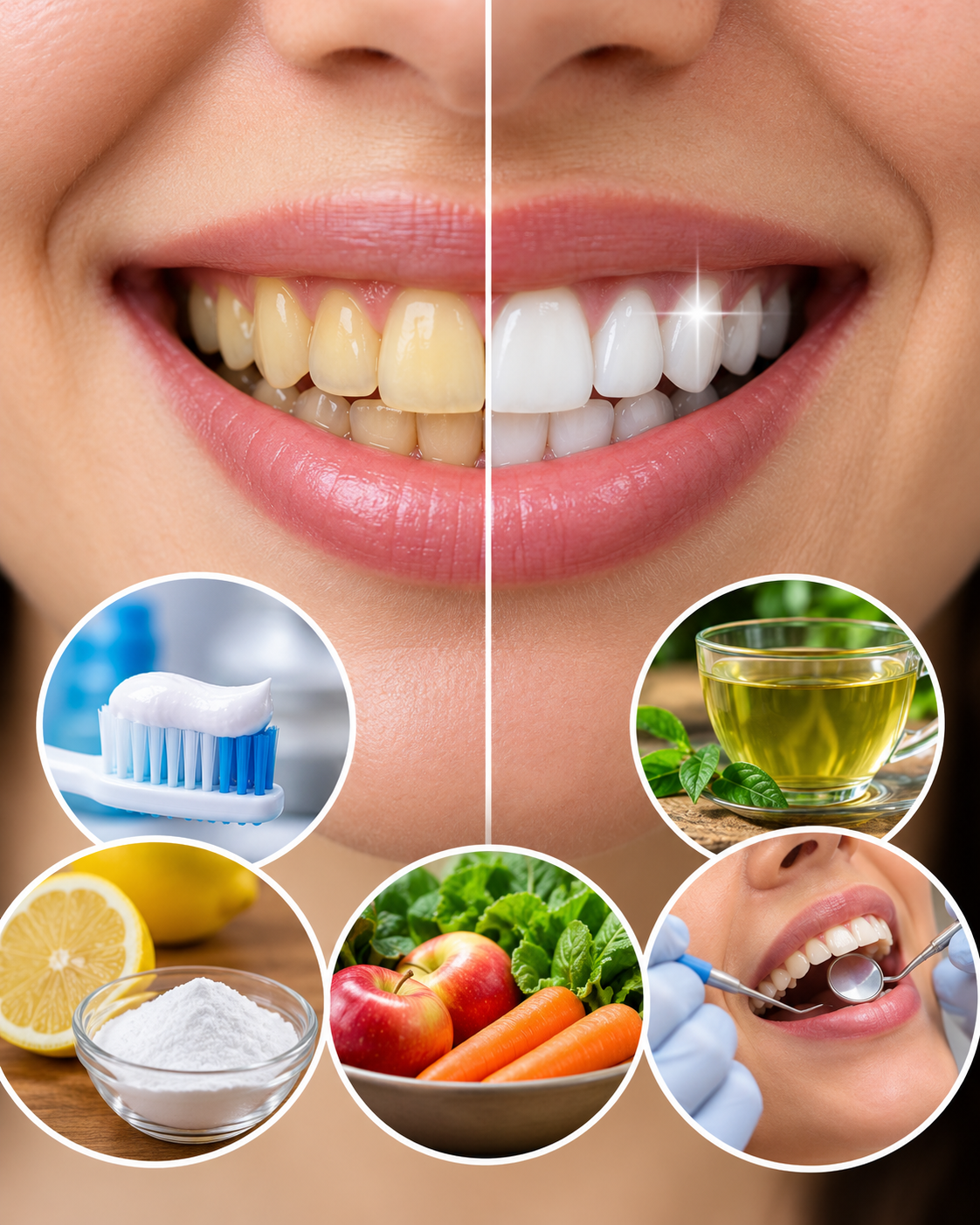
Yellow or stained teeth can affect the appearance of a smile, but maintaining good oral hygiene and making a few daily lifestyle changes can help keep teeth clean and healthy. From brushing correctly to limiting stain-causing drinks, several simple steps can improve the appearance of teeth without risking damage to their protective enamel.
Tooth discolouration is common and can occur for several reasons, including ageing, plaque buildup, smoking, and frequent consumption of tea, coffee and other dark-coloured beverages. In some cases, yellowing may also result from the gradual thinning of enamel, which exposes the naturally yellowish layer underneath. <Cite refs={[“turn173617search1″,”turn173617search5”]}/>
1. Brush Your Teeth Twice a Day

Brushing regularly is one of the most effective ways to remove plaque and prevent surface stains from accumulating.
Dentists generally recommend brushing twice daily for two minutes using fluoride toothpaste and a soft-bristled toothbrush. Gentle brushing along the gumline and across all tooth surfaces helps maintain oral hygiene while reducing the risk of enamel damage.
Brushing too aggressively should be avoided because it can contribute to gum irritation and tooth wear.
2. Reduce Tea, Coffee and Tobacco Stains
Tea, coffee and tobacco products can contribute to yellow or brown stains on teeth. Reducing exposure to these substances can help prevent further discolouration.
Drinking water after consuming tea or coffee can help rinse away some residue. People who smoke or use other tobacco products may also benefit from stopping, which supports both oral and general health.
3. Consider Whitening Toothpaste
Whitening toothpastes can help remove certain surface stains when used as directed. However, they may not change the natural colour of teeth or remove deeper discolouration.
Choose a product designed for dental use and follow its instructions. People with sensitive teeth or existing dental problems should consult a dentist before trying whitening products.
For more noticeable whitening, a dental professional can recommend an appropriate treatment based on the cause of the discolouration.
4. Be Careful With Home Whitening Remedies
Baking soda, lemon juice, apple cider vinegar, fruit peels and activated charcoal are often promoted as natural ways to whiten teeth. However, evidence for many of these remedies is limited, and some may damage enamel or irritate the gums.
In particular, acidic substances such as lemon juice and vinegar can erode enamel when used on teeth. Charcoal products may also be abrasive, and their whitening benefits are not well established.
Avoid scrubbing teeth with acidic ingredients or using untested mixtures as substitutes for proper dental care.
5. Maintain a Healthy Oral Hygiene Routine
A consistent oral care routine helps prevent plaque buildup and supports healthy teeth and gums. In addition to brushing twice daily, clean between your teeth every day with dental floss or another suitable interdental cleaner.
Regular dental check-ups can help identify plaque, tartar, cavities and gum problems that may affect the appearance of teeth. Professional cleaning may also help remove stains that cannot be eliminated through brushing alone.
6. When Should You See a Dentist?
If teeth remain yellow despite good oral hygiene, a dentist can help identify the cause and discuss suitable options.
Sudden discolouration, a single tooth becoming darker, persistent sensitivity or tooth pain should be evaluated professionally rather than treated with home whitening remedies.
It is also important to remember that healthy teeth are not necessarily pure white. Natural tooth colour varies, and protecting enamel and maintaining healthy gums are more important than achieving an artificially bright smile.
Conclusion
A brighter smile begins with consistent oral hygiene, fluoride toothpaste, gentle brushing and limiting habits that cause staining. Whitening toothpaste or professional treatment may help in suitable cases, but harsh home remedies can do more harm than good.
For safe and lasting results, consult a dentist before using whitening treatments, especially if you have sensitive teeth, gum problems or existing dental conditions.