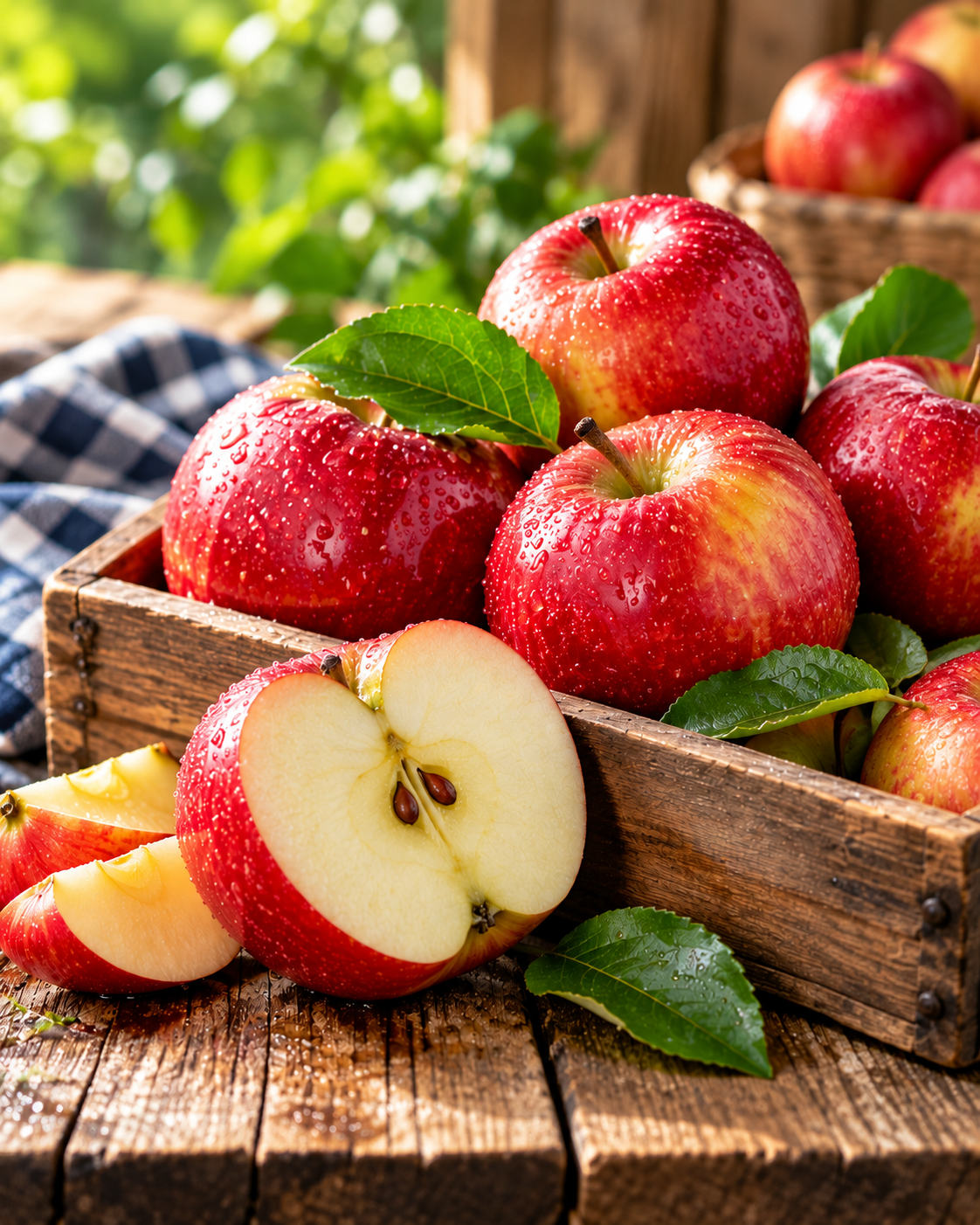
Apples are among the most popular fruits and are often kept at home for days or weeks. But how long can they actually remain fresh, and when should an apple be thrown away?
The answer depends largely on how the apples are stored, whether they have been cut and the temperature at which they are kept. Proper refrigeration can significantly extend their shelf life.
How Long Do Apples Stay Fresh?

Under typical home-storage conditions, whole apples can generally last:
- Room temperature: Around 5–7 days
- Pantry or cool cupboard: Up to about 3 weeks
- Refrigerator: Around 4–6 weeks
- Cut apples in the refrigerator: About 3–5 days
- Frozen cut apples: Up to around 8 months for best quality
Storage times can vary depending on the apple variety, how fresh the fruit was when purchased and the conditions in which it is stored.
Why Refrigeration Keeps Apples Fresh Longer
Cold temperatures slow the natural ripening process and help apples retain their firmness and juiciness. Harvard’s Nutrition Source recommends storing apples in the refrigerator’s crisper drawer, where they can remain fresh for at least one to two months under suitable conditions.
Apples also naturally release ethylene, a gas that promotes ripening. Because of this, storing apples separately from other fruits and vegetables can help slow the ripening of nearby produce.
Should Apples Be Washed Before Storage?
Experts generally recommend washing apples shortly before eating them rather than before long-term storage. Keeping whole apples unwashed can help preserve their natural protective coating and reduce deterioration.
It is also better to keep apples whole until they are ready to be eaten. Once cut, the exposed flesh begins to oxidise and the fruit deteriorates more quickly.
How to Keep Apples Fresh for Longer
A few simple storage habits can help extend the life of your apples:
- Refrigerate whole apples when you want to keep them fresh for several weeks.
- Use the crisper drawer to maintain suitable humidity and temperature.
- Avoid washing apples before storage.
- Keep apples away from other produce because of the ethylene they release.
- Remove bruised or damaged apples quickly, as decay can spread to nearby fruit.
- Keep cut apples covered and refrigerated and consume them within a few days.
When Should You Throw Away an Apple?
An apple that has simply developed a small bruise may still be usable if the damaged portion is removed. However, apples showing clear signs of spoilage should be discarded.
Warning signs include:
- Visible mould
- Extensive soft or mushy areas
- Leaking liquid
- Severe discoloration or deterioration
- An unpleasant or unusual smell
Mouldy or significantly spoiled apples should not be eaten because mould can be associated with potentially harmful toxins such as patulin.
How Apples Are Stored Before Reaching Shops
The long shelf life of commercially sold apples is partly due to sophisticated storage systems. Apples can be kept for months in controlled environments where temperature, humidity and atmospheric gases are carefully regulated.
Commercial facilities may also use 1-methylcyclopropene (1-MCP) to slow the effects of ethylene and delay ripening. Once apples are removed from controlled storage, however, the normal ripening process resumes.
If you plan to eat apples within a few days, keeping them at room temperature can be convenient. But for longer storage, the refrigerator is the better option, with whole apples generally lasting around four to six weeks under suitable conditions.
Checking apples regularly and removing any fruit showing mould or significant spoilage can also help prevent other apples from deteriorating.