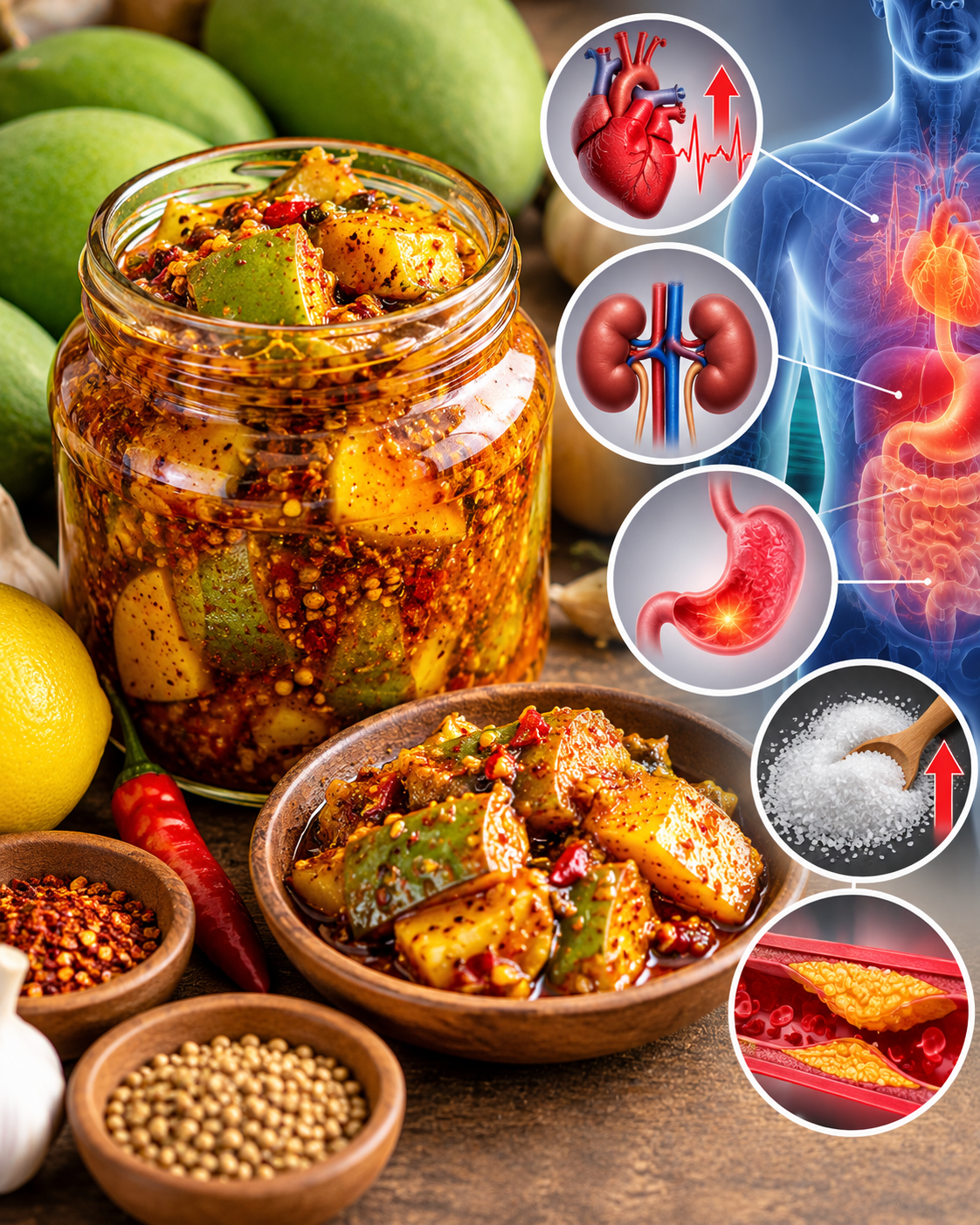
Pickles are a popular addition to meals, adding a tangy, spicy flavour that many people enjoy. However, eating too much pickle regularly may affect health, particularly because some varieties contain high amounts of salt and oil.
According to a report published by Express News on October 27, 2026, the health effects of pickles depend on their ingredients, preparation methods and the quantity consumed. While pickles can add flavour to food, experts recommend eating them in moderation rather than in large amounts every day.
1. Excessive Salt May Raise Blood Pressure

Many varieties of pickles contain significant amounts of salt, which increases sodium intake. Consuming too much sodium can contribute to high blood pressure, increasing the risk of heart disease and stroke over time.
People who already have high blood pressure should pay particular attention to their salt intake and consider choosing lower-sodium alternatives.
2. Too Much Sodium Can Affect Kidney Health
The kidneys help regulate fluid balance and remove excess sodium from the body. A diet consistently high in salt can increase blood pressure and place additional strain on the kidneys.
People with existing kidney problems may need to limit sodium more carefully, following advice from their healthcare professional.
3. Pickling May Affect Some Nutrients
Pickles are commonly prepared from vegetables and fruits using salt, vinegar, oil and spices. Depending on the ingredients and preparation process, some sensitive vitamins may decrease during drying or other processing stages.
However, this does not mean that pickles lose all their nutritional value. Their nutrient content varies according to the ingredients and how they are prepared.
4. Oil-Based Pickles May Contain Additional Fat
Some traditional pickles are prepared using substantial amounts of oil. Their overall nutritional impact depends on the type of oil used and the quantity consumed.
Certain unhealthy fats, including trans fats, can raise LDL, commonly known as bad cholesterol, and lower HDL, or good cholesterol. However, not every oil-based pickle contains trans fats, and the type of oil matters.
5. Should You Stop Eating Pickles Completely?
Pickles do not necessarily need to be eliminated from your diet. A few simple steps can help you enjoy them while managing your overall salt and fat intake:
- Keep portions small: Use pickles as a side dish rather than eating large quantities with every meal.
- Choose lower-sodium options: Check nutrition labels when purchasing packaged pickles.
- Watch the oil content: Prefer varieties made with suitable oils and avoid excessive amounts.
- Maintain a balanced diet: Include fresh fruits, vegetables and other nutritious foods in your daily meals.
Some naturally fermented pickles may contain beneficial bacteria, but not all pickles are fermented. Products prepared with vinegar alone generally do not provide the same live cultures as properly fermented varieties
Conclusion
Pickles can make everyday meals more flavourful, but eating too much may increase sodium intake and contribute to health problems over time. Moderation, smaller portions and lower-sodium choices can help reduce these risks.
People with high blood pressure, heart disease or kidney conditions should discuss appropriate dietary limits with a healthcare professional.