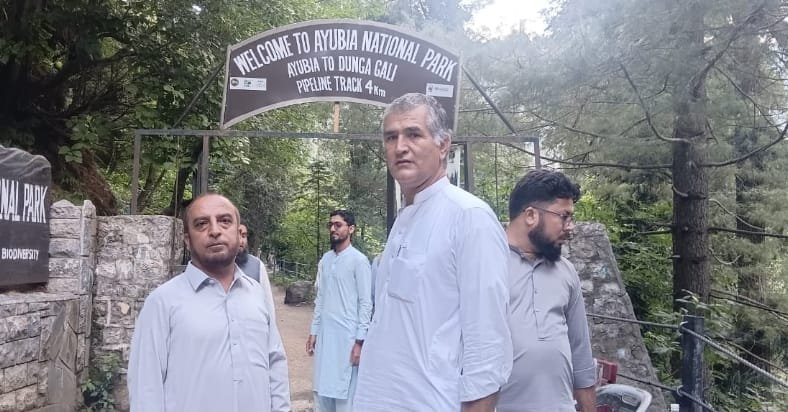
PESHAWAR, July 30: Ayubia National Park has emerged as one of Pakistan’s leading eco-tourism destinations, playing a vital role in promoting environmental awareness, biodiversity conservation, scientific research, and sustainable livelihoods.
Spread over 3,312 hectares in Abbottabad District, the protected area attracts between 900,000 and 1.2 million tourists annually, including students, trekkers, researchers, and nature enthusiasts. One of its most popular attractions is the scenic Pipeline Walking Track, which winds through the Himalayan temperate forests between Ayubia and Dunga Gali, offering visitors panoramic views and a unique nature experience.

Speaking to journalists during an awareness tour of the Northern Forest Region, Divisional Forest Officer (DFO) Ayubia National Park, Sardar Muhammad Nawaz, said the park serves as a natural outdoor classroom where visitors learn about the importance of forests in climate regulation, water conservation, soil protection, and biodiversity preservation.
He said awareness signboards, educational campaigns, and interactions with wildlife officials encourage visitors to adopt environmentally responsible practices, including reducing plastic waste, avoiding littering, and respecting wildlife habitats.
The DFO noted that the park protects around 757 plant species, 33 species of wild mammals, and more than 200 bird species, including endangered wildlife such as the leopard, barking deer, rhesus macaque, and several pheasant species.
Beyond conservation, Ayubia National Park has also become an important centre for scientific research. Around 42 PhD and MPhil scholars from universities across Pakistan conduct field research in the park each year on subjects including forest ecology, biodiversity, wildlife behaviour, climate change, and ecosystem conservation.
Sardar Muhammad Nawaz said eco-tourism has significantly contributed to the local economy by creating employment opportunities for nearby communities through hotels, restaurants, transport services, tour guides, and handicraft businesses.
He emphasized that Ayubia National Park demonstrates how conservation, education, responsible tourism, and sustainable economic development can complement one another, while reinforcing the shared responsibility of protecting Pakistan’s natural heritage for future generations.