Researchers at Mass General Brigham in the United States have developed an artificial intelligence system that can analyze a single facial photograph to identify patterns associated with biological age and survival outcomes among cancer patients.
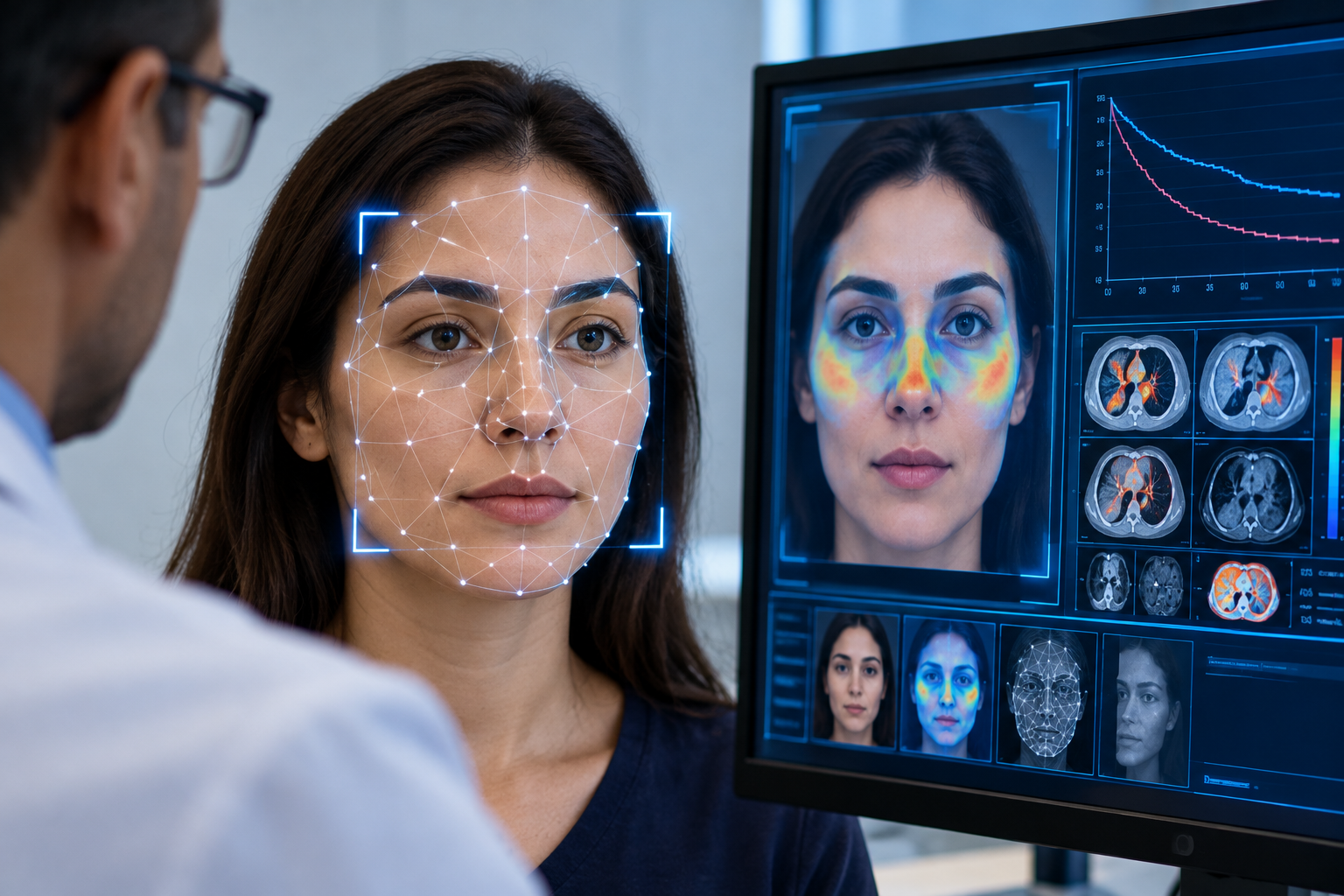
The system, known as FAHR-Face, was developed using more than 40 million facial images. Researchers adapted the model into two tools: FAHR-FaceAge, which estimates biological age from facial appearance, and FAHR-FaceSurvival, which directly assesses survival risk among people already diagnosed with cancer.
How the Technology Works

FAHR-FaceAge examines subtle facial characteristics to estimate how old a person’s body appears biologically compared with their actual age. Researchers found that patients whose estimated biological age was at least five years older than their chronological age had a higher mortality risk, while those who appeared biologically younger showed comparatively lower risk.
The survival model works differently. FAHR-FaceSurvival analyzes facial features directly to identify patterns associated with survival outcomes. Researchers found that the system paid particular attention to areas beneath the eyes and around the bridge of the nose, while the biological-age model focused more on areas such as the forehead, temples and folds around the nose and mouth.
Tested on Thousands of Cancer Patients
The research involved large groups of cancer patients. The survival model was trained using photographs from more than 34,000 patients and tested on a separate group of 3,820 patients. The findings were also assessed using an external group of nearly 4,900 patients in the Netherlands.
In the test group, patients placed in the highest-risk category by the survival model experienced mortality at more than three times the rate of those in the lowest-risk group. Researchers also found that combining the biological-age and survival assessments provided additional predictive information.
Lifestyle Factors Also Reflected in Facial Age
The study found associations between an older estimated biological appearance and certain lifestyle factors. Smoking showed a particularly strong relationship with older-looking faces, while heavy alcohol consumption and drug use were also associated with signs of accelerated facial ageing.
However, researchers stress that the technology does not diagnose cancer and cannot determine exactly how long an individual patient will live. Instead, it identifies statistical patterns associated with different survival outcomes among cancer patients.
Potential Role in Future Cancer Care
Researchers believe the technology could eventually provide doctors with an additional, relatively simple way to assess a patient’s physical condition and resilience before intensive treatments such as radiation, surgery or systemic therapy.
The findings were published in The Lancet Digital Health and represent an emerging area of research into facial images as potential health biomarker
The aim is to support clinical judgment rather than replace doctors. Experts have also cautioned that the technology requires further validation, particularly across larger and more diverse populations, before it can be incorporated into routine medical care.