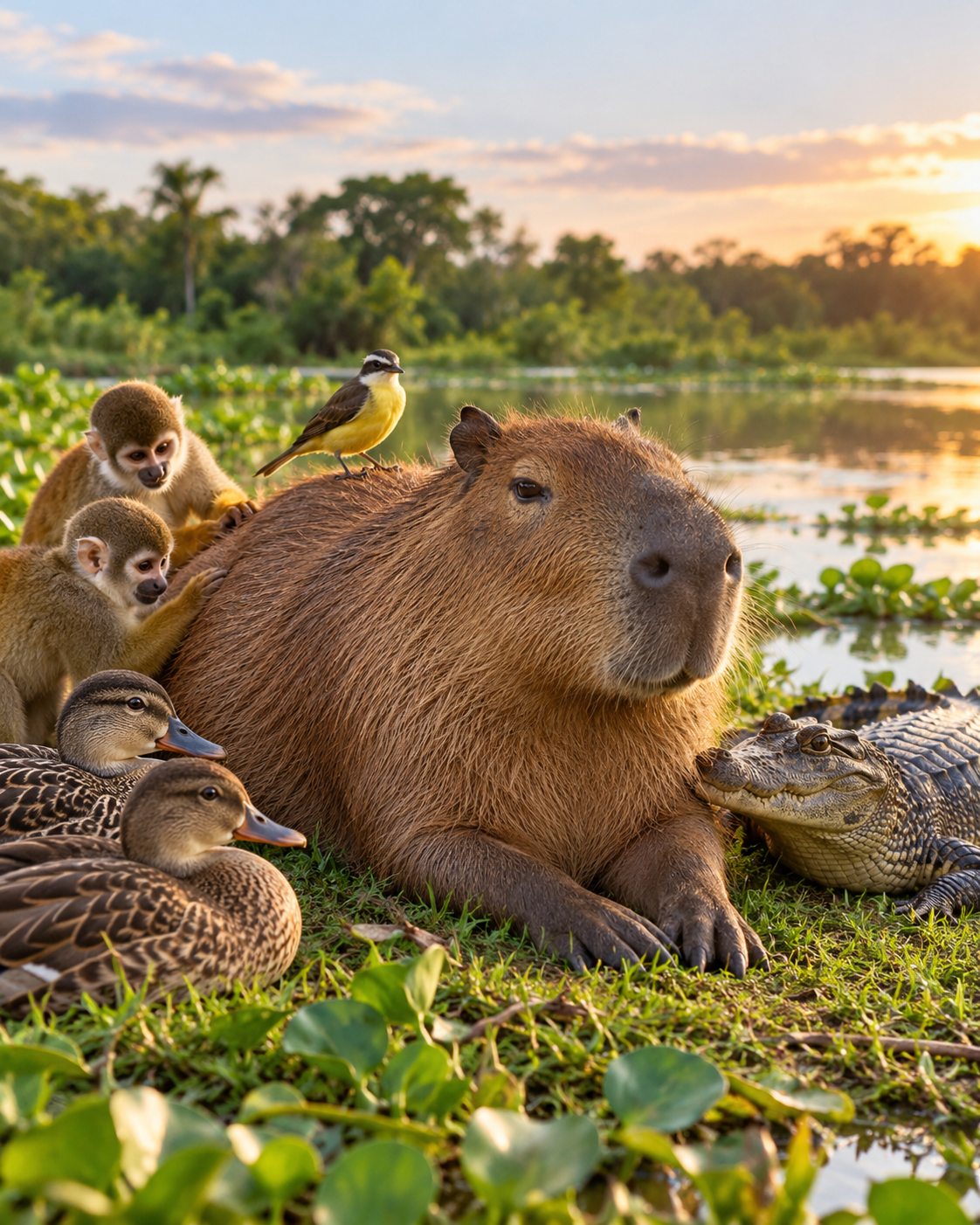
The capybara, native mainly to the wetlands and waterways of South America, is the world’s largest rodent. Despite belonging to the rodent family, it looks far removed from the small rodents people commonly associate with the group. With its calm expression and relaxed nature, the capybara often resembles a giant puppy.
An adult capybara can reach the size of a medium-sized dog and weigh up to around 60 kilograms. Its large body, short legs and distinctive face have made it one of the most recognizable animals on social media.
A Natural Swimmer

Capybaras are highly adapted to life around water. Their toes are partially webbed, helping them swim efficiently through rivers, lakes and wetlands. They can reportedly remain underwater for several minutes, using water as a way to escape predators and cool themselves during hot weather.
They spend considerable time near water while grazing on grasses and aquatic vegetation. Their semi-aquatic lifestyle makes wetlands an essential part of their natural habitat.
Known For Their Friendly Nature
One of the capybara’s most fascinating characteristics is its social and peaceful temperament. Capybaras commonly live in groups and have also been observed resting alongside various other animals.
Their relaxed interactions with birds and other wildlife have contributed to their reputation as one of the most sociable animals in the wild. Images and videos of capybaras calmly sharing space with other species have become particularly popular online.
A Peaceful Herbivore
Capybaras are herbivores and primarily feed on grasses, aquatic plants and other vegetation. Their diet and generally non-aggressive behavior make them fascinating examples of wildlife adapted to life in wetland ecosystems.
With their gentle appearance, calm behavior and unusual social habits, capybaras have become a global internet sensation. Their popularity has also helped introduce millions of people to one of South America’s most distinctive wetland animals.