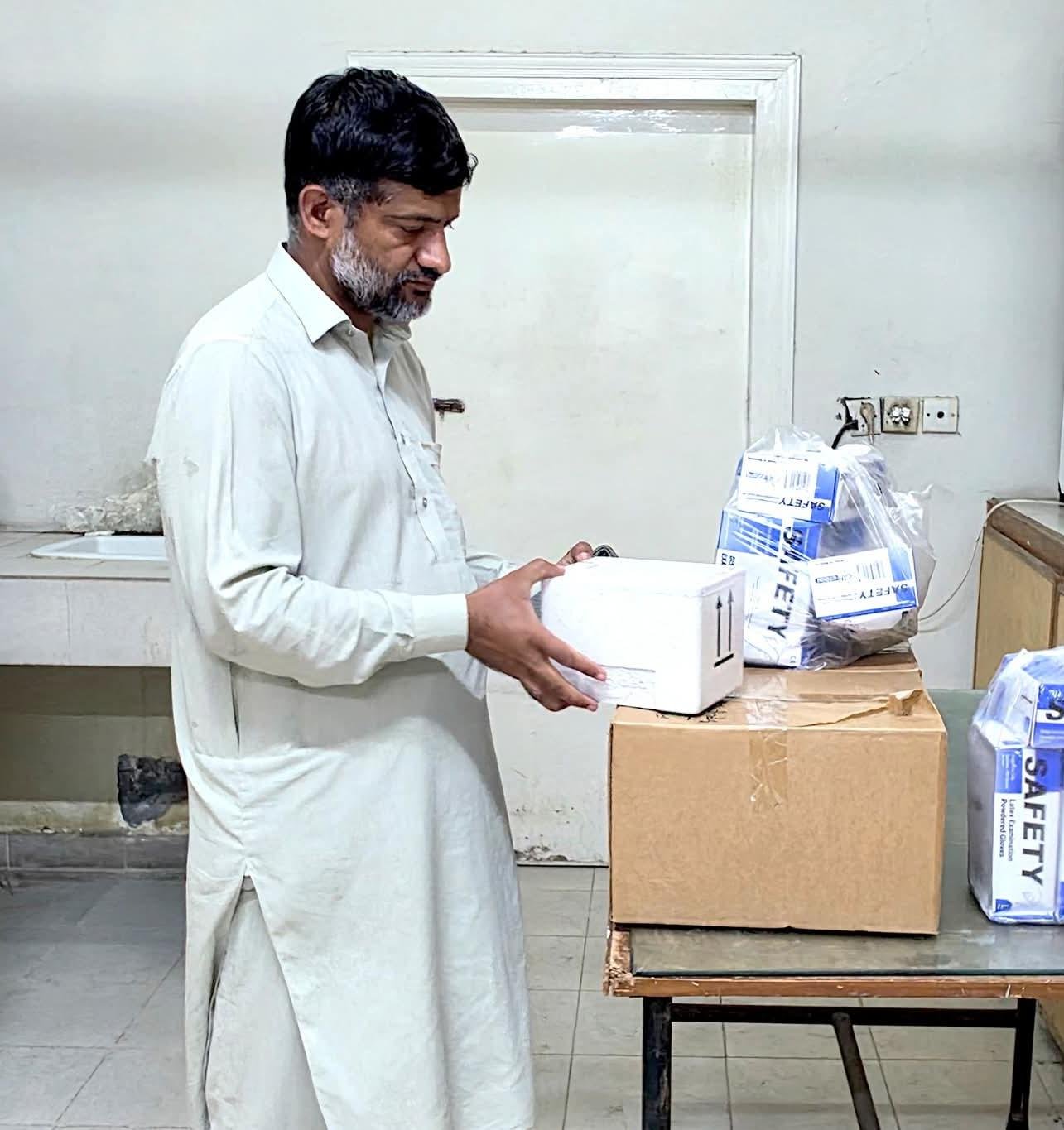
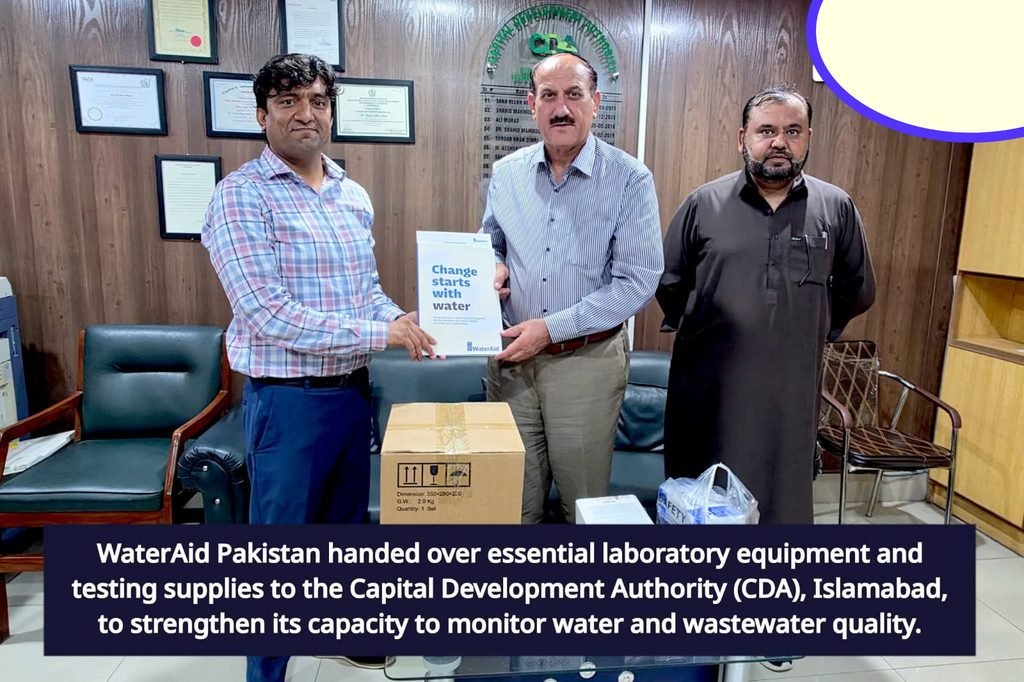
ISLAMABAD: WaterAid Pakistan has handed over essential laboratory equipment and testing supplies to the Capital Development Authority (CDA) to strengthen its capacity to monitor water and wastewater quality, supporting public health and environmental protection in the federal capital.
The equipment is expected to enhance the CDA laboratory’s testing capabilities, enabling more systematic monitoring and the generation of reliable data to identify potential water contamination, assess wastewater quality and inform water management decisions.

The handover forms part of a broader partnership between WaterAid Pakistan and CDA, formalised through a Letter of Understanding (LoU) to improve water and wastewater management across Islamabad.
Partnership Extends Beyond Laboratory Testing
Under the collaboration, the two organisations are working on several areas, including water quality monitoring, wastewater infrastructure, rainwater harvesting, groundwater management and the development of climate-resilient water resources.
Strengthened laboratory testing can help public institutions detect potential contamination, assess water quality and identify areas requiring corrective action. Regular wastewater monitoring can also improve environmental oversight and support more effective wastewater management.
The partnership’s focus on rainwater harvesting and groundwater management is particularly important as Islamabad faces growing water demand, pressure on groundwater supplies and changing rainfall patterns.
Integrating climate resilience into water resource planning can help the capital prepare for water-related risks while supporting the long-term sustainability of its water systems.
Supporting Sustainable Water Management
The equipment handover represents a practical step towards improving institutional capacity, strengthening environmental monitoring and supporting evidence-based water management decisions.
By combining laboratory resources with wider technical cooperation on water and wastewater systems, WaterAid Pakistan and CDA aim to contribute to better monitoring and more sustainable management of the capital’s water resources.
Effective implementation of the partnership will be essential to translate improved testing capacity and technical collaboration into lasting benefits for public health, environmental protection and urban water security.