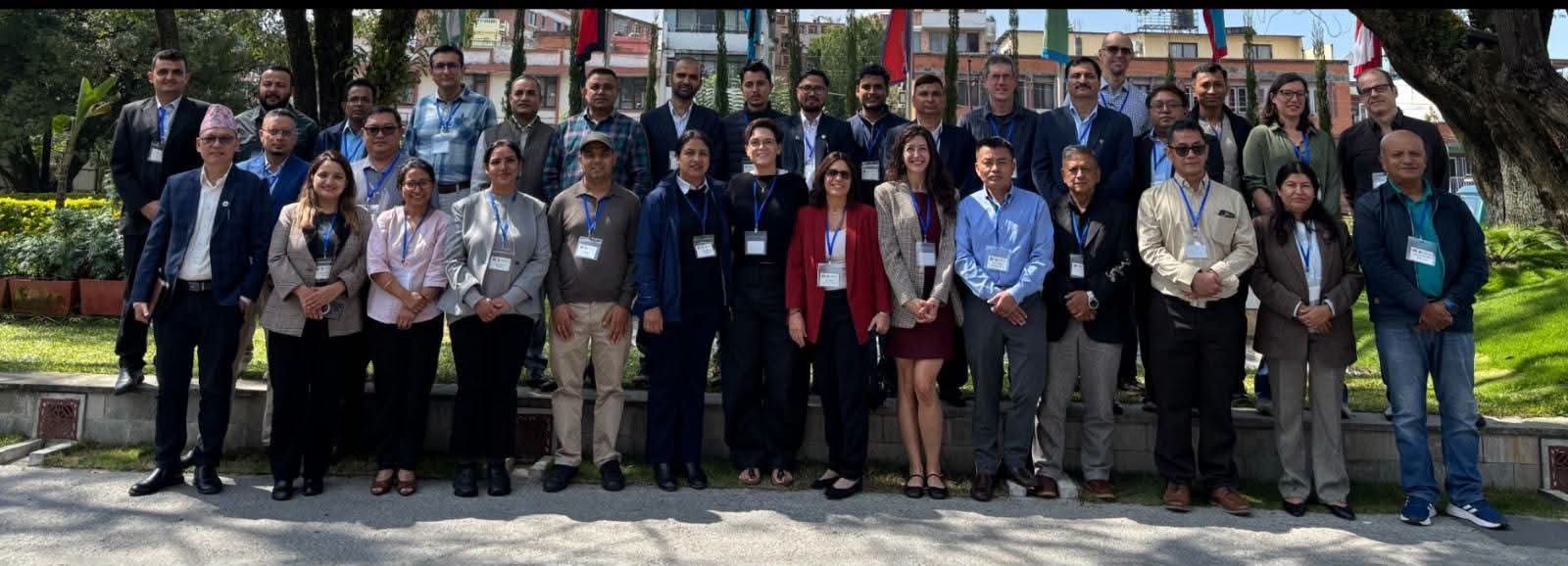
PESHAWAR, October 15, 2026 — Sardar Farhad Ali, Conservator of Forests, Forest Planning and Monitoring Circle, Peshawar, has represented Khyber Pakhtunkhwa at a South Asian regional workshop on scientific forest assessment, biomass measurement, wildfire impacts and satellite-based forest monitoring in Kathmandu, Nepal.
The workshop, held from October 12 to 16, 2026, brought together representatives from Pakistan, Nepal, Bhutan and Laos, alongside experts from the International Centre for Integrated Mountain Development (ICIMOD), universities and research institutions.

Participants exchanged knowledge and experiences on measuring forest biomass, assessing the impacts of forest fires, restoring forests after fires and improving forest monitoring through modern satellite technology, including Google Earth Engine.
Satellite Technology to Strengthen Forest Conservation
The workshop focused on improving scientific methods for assessing forest resources and bringing forest monitoring practices in line with modern international standards.
Accurate forest biomass measurements are important for estimating carbon stocks and understanding the role of forests in climate change mitigation. Satellite-based monitoring can also help track changes in forest cover, assess fire damage and support the planning of restoration activities.
For forest-rich areas such as Khyber Pakhtunkhwa, these approaches can strengthen evidence-based forest management, improve monitoring of natural resources and support efforts to protect ecosystems from degradation.
The use of digital mapping and satellite data can complement field assessments by helping forestry officials identify changes over time and make better-informed decisions about conservation and restoration priorities.
KP Emphasises Science-Based Forest Management
The participation of the Khyber Pakhtunkhwa Forest Department in the regional workshop reflects its stated focus on scientific forest management, accurate carbon-stock assessment, effective monitoring and the adoption of modern technologies.
According to the department’s announcement, the participation also aligns with the vision of Junaid Khan, Secretary of the Khyber Pakhtunkhwa Department of Climate Change, Forests, Environment and Wildlife, to promote scientific methods and evidence-based strategies for forest conservation and sustainable development.
The regional exchange provided an opportunity for forestry professionals to share technical knowledge and approaches that could contribute to stronger forest management and climate resilience across South Asia.