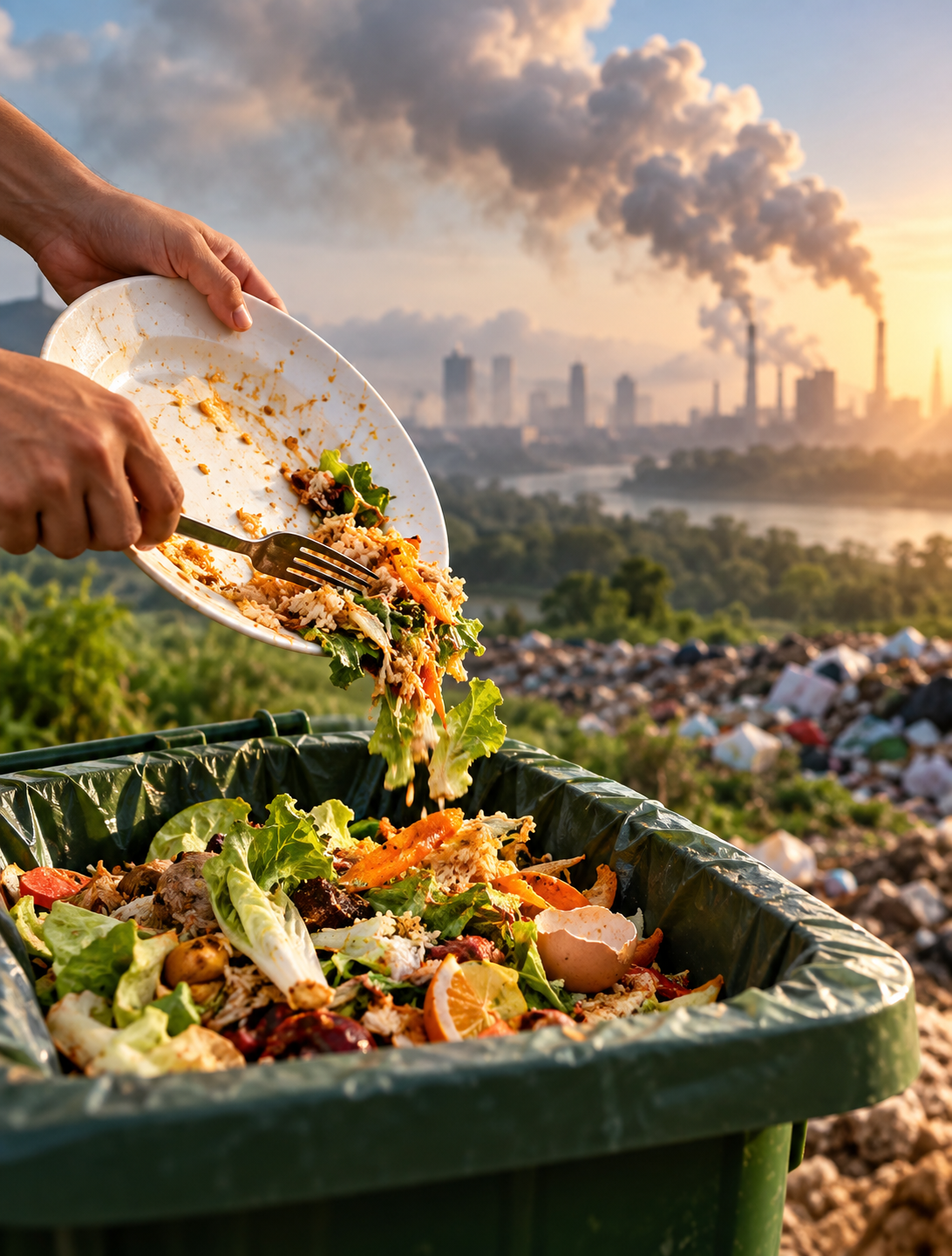
Every year, food loss and waste costs the global economy around US$1 trillion, but the real cost goes far beyond money. Wasted food is also a major source of avoidable greenhouse gas emissions.
Food loss and waste is estimated to account for around 8 to 10 percent of global greenhouse gas emissions. When food is thrown away and decomposes, it can produce methane, a powerful greenhouse gas that contributes to global warming.
But food waste also means wasting the resources used to produce it, including water, land, energy and human labour.
Reducing food waste can therefore bring environmental and economic benefits. It can help households save money, reduce greenhouse gas emissions and ease pressure on increasingly valuable land and water resources.
Simple actions such as buying only what is needed, storing food properly, using leftovers and sharing surplus food can help reduce unnecessary waste.
Cutting food waste is not only about saving food. It is also about using natural resources responsibly and reducing avoidable emissions.
Reducing food waste is a climate solution we cannot afford to ignore.