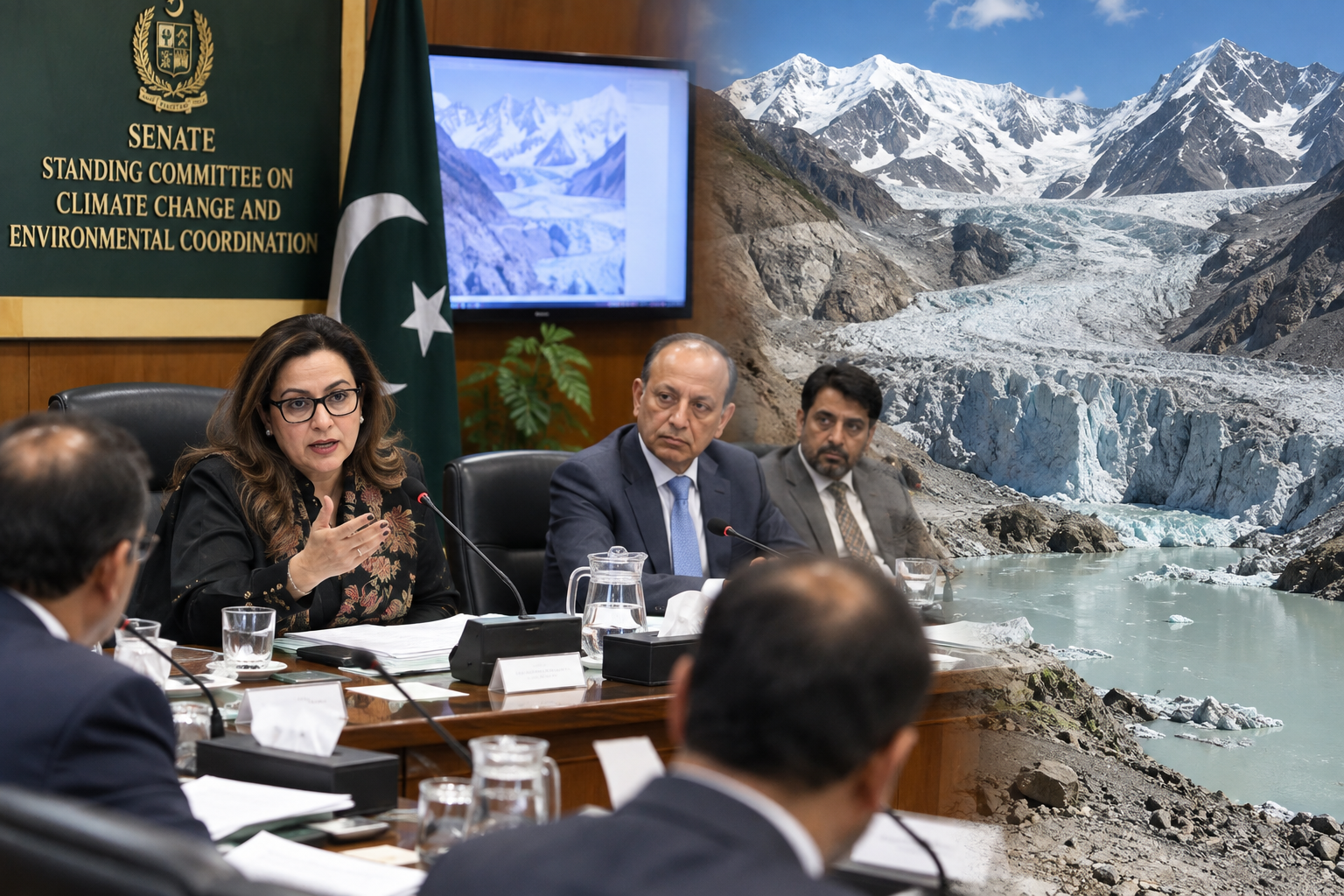
ISLAMABAD, September 22: The Senate Standing Committee on Climate Change and Environmental Coordination, chaired by Senator Sherry Rehman, has expressed concern over rapidly melting glaciers and the growing risks faced by communities and infrastructure in Gilgit-Baltistan.
During the committee meeting, Senator Sherry Rehman said the recent disaster in neighbouring Nepal was deeply distressing and stressed the need to learn lessons from such events. She said disasters do not respect borders and that Pakistan must strengthen preparedness for climate-related risks.

She noted that a large share of Pakistan’s water comes from the country’s northern mountainous areas and highlighted the importance of protecting communities living in areas exposed to Glacial Lake Outburst Floods (GLOFs).
The committee received an online briefing from Director General Gilgit-Baltistan Disaster Management Authority (GBDMA) Atta-ur-Rehman Kakar. Senator Rehman expressed concern that the briefing document had not been provided to committee members in advance and directed the authority to ensure that complete briefing material is shared before future meetings.
Minister for Climate Change and Environmental Coordination Musadik Masood Malik also briefed the committee on GLOF risks and preparedness.
He explained that GLOFs are different from ordinary flooding and can carry large rocks and debris downstream, creating serious risks for settlements and infrastructure. He stressed the need for safety zones in vulnerable areas of Gilgit-Baltistan and called for greater use of digital technology and training.
According to the minister, around 2,750 GLOF risks have been identified. He also said that establishing a digital laboratory and strengthening digital training were important, adding that installing early warning systems alone would not be enough to prevent losses.
During the briefing, DG GBDMA Atta-ur-Rehman Kakar said 174 early warning systems had been installed in Gilgit-Baltistan. He said some sensors do not work effectively once clouds arrive and rainfall begins, and the authority had requested real-time access to meteorological information.
Kakar also called for the Pakistan Meteorological Department (PMD), SUPARCO and the National Disaster Management Authority (NDMA) to develop a joint field validation plan.
He said the Gilgit-Baltistan government does not have a separate budget for maintaining the systems and added that 145 additional staff members were needed to form teams for disaster preparedness and response.
Senator Rehman stressed that preparedness must also focus on local communities, not only federal-level measures. She called for stronger attention to vulnerable settlements, infrastructure and active glaciers and urged authorities to clearly define their responsibilities.
She directed that the GBDMA agenda be placed before the committee again at its next meeting scheduled for September 29, with a detailed plan on the proposed digital training and other preparedness measures.
The committee’s discussion comes amid continued concern over Pakistan’s growing exposure to glacier melt and GLOF events. The Senate had also examined GLOF risks and early warning systems in an earlier August meeting, where officials highlighted accelerated glacier melt and the vulnerability of communities in high-mountain regions.
The meeting highlighted the need for stronger coordination among climate, disaster management, weather and space agencies, along with practical measures to protect communities living in high-risk mountain areas.