PESHAWAR: The Government of Khyber Pakhtunkhwa has officially launched Pakistan’s first-ever sub-national Disaster Risk Reduction (DRR) Policy, marking a major step towards building a more resilient, climate-adaptive and risk-informed province.
The high-level launching ceremony was held at the Chief Minister House, Peshawar, and jointly organized by the Provincial Disaster Management Authority (PDMA) and the Relief, Rehabilitation and Settlement Department, Government of Khyber Pakhtunkhwa.

The five-year policy was developed with support from the German Government through the German Federal Ministry for Economic Cooperation and Development (BMZ). The ceremony was attended by senior government officials, development partners, diplomats, humanitarian organizations, academics, civil society representatives and media professionals.
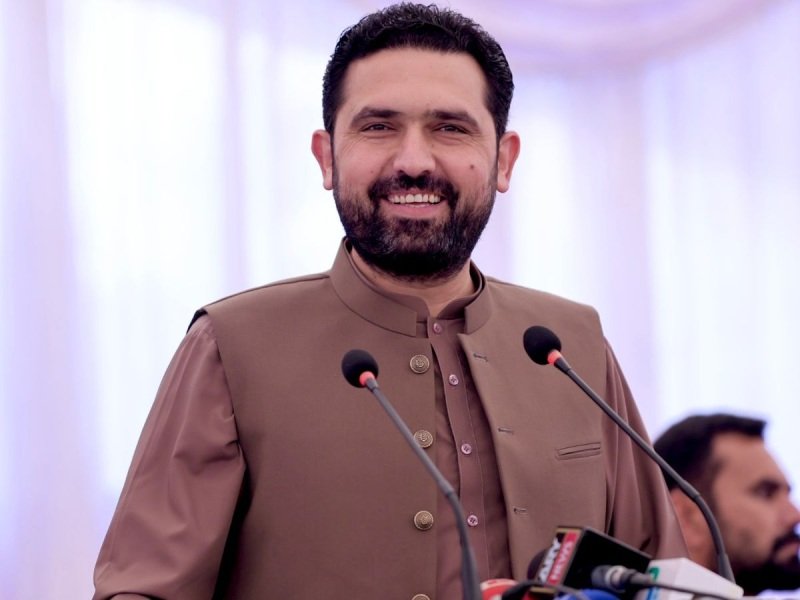
Addressing the gathering on behalf of the Chief Minister, KP Minister for Information and Public Relations Shafi Ullah Jan described the policy as a critical milestone for the province.
He said the initiative represented more than a policy document and reaffirmed the government’s commitment to protecting the lives and property of around 40 million citizens.
The minister said KP was moving away from a reactive approach focused primarily on post-disaster relief towards a culture of proactive preparedness and risk prevention, using scientific methods to anticipate hazards and reduce their impacts before disasters occur.
Speaking on behalf of German Ambassador to Pakistan Ina Lepel, Head of Cooperation at the German Embassy Dr. Mirjam Büdenbender-Buchholz congratulated the KP government and PDMA on developing the country’s first provincial DRR policy and reaffirmed Germany’s commitment to supporting disaster resilience in the province.
She noted that disaster risks were increasing due to factors including population growth, expansion of informal settlements, inadequate land-use planning and deforestation.
She emphasized that disaster risk reduction should focus on reducing both the likelihood and impact of hazardous events before they occur.
Focus on preparedness and climate resilience
The five-year policy framework places emphasis on prevention and preparedness, early warning systems, risk-informed development, community resilience, disaster risk financing and Adaptive Social Protection.
Particular attention has been given to protecting vulnerable households from climate-related and disaster-related shocks.
The Chief Secretary of Khyber Pakhtunkhwa said disaster management must now be considered an integral component of governance and development rather than an additional state function.
He described effective disaster risk management as a fundamental pillar of sustainable governance and fiscal responsibility.
Johanna Knoess, Head of Programme Adaptive Social Protection at GIZ Pakistan, highlighted the importance of connecting disaster risk management with social protection.
She said the integrated approach would enable authorities to better identify vulnerability by examining both poverty and exposure to disaster risks and, importantly, where the two overlap.
The Secretary of the Relief, Rehabilitation and Settlement Department said the policy launch marked the beginning of its implementation phase. He stressed that its success would depend on sustained coordination among government departments and other relevant stakeholders.
The ceremony concluded with a renewed commitment by the KP government and its partners to translate the policy into concrete action and build a resilient Khyber Pakhtunkhwa, where disaster risk reduction, preparedness, inclusive development and social protection are integrated into governance and development planning.
Also Read: Heavy Rain Floods Gujar Khan Markets, Traders Suffer Millions in Losses