As climate stress, water scarcity and population growth intensify pressure on global food systems, countries are increasingly turning to technology to protect and expand agricultural output. Data-driven farming, efficient irrigation and climate-resilient crops are reshaping food production, particularly in regions facing environmental and resource constraints.
Across Asia, Africa, Europe and the Americas, governments and farmers are adopting targeted innovations aimed at improving yields, reducing waste and strengthening resilience. Analysts say these technologies are delivering measurable gains at a time when traditional farming methods are struggling to keep pace with changing climatic and economic conditions.

Also Read: Pak–China agriculture innovation centre launched in Kasur to promote smart farming
Precision agriculture improves efficiency and yields
One of the most significant developments is the expansion of precision agriculture, which uses GPS mapping, soil sensors, satellite imagery and data analytics to manage farms at a highly localised level. By applying water, fertilisers and pesticides only where required, farmers are reducing input costs while increasing productivity.
In the United States, large corn and soybean farms using GPS-guided equipment have reported higher yields alongside reduced fertiliser use. Brazil has also expanded precision techniques in soy and maize cultivation, improving productivity on previously underperforming land without increasing cultivated area.
Drip irrigation helps farmers cope with water scarcity
Water efficiency has become a central focus through the adoption of drip and micro-irrigation systems, which deliver water directly to plant roots and minimise evaporation and runoff.
Israel has emerged as a global reference point, achieving high yields despite severe water scarcity by combining drip irrigation with fertigation. In India, states such as Maharashtra and Gujarat have promoted drip irrigation for fruits, vegetables and sugarcane, helping farmers stabilise production while using significantly less water during increasingly erratic monsoon seasons.
Climate-resilient seeds strengthen food security
Advances in climate-resilient and high-yield crop varieties are supporting food production in regions vulnerable to extreme weather. These seeds are designed to resist drought, flooding, pests and diseases.
In sub-Saharan Africa, drought-tolerant maize varieties have helped farmers sustain harvests during dry periods, with Kenya and Zambia expanding adoption to protect food supplies. In Southeast Asia, flood-tolerant rice varieties have reduced crop losses in flood-prone areas.
Drones and remote sensing transform farm management
The growing use of agricultural drones and remote sensing technologies is changing how farmers monitor and manage crops. Real-time imagery allows early detection of pest infestations, nutrient deficiencies and water stress.
In China, drones are widely used for crop spraying and field mapping, easing labour shortages and improving efficiency in rice and wheat production. Japan has also adopted drone technology to support its ageing agricultural workforce and manage larger areas more effectively.
Smart farming systems enable data-driven decisions
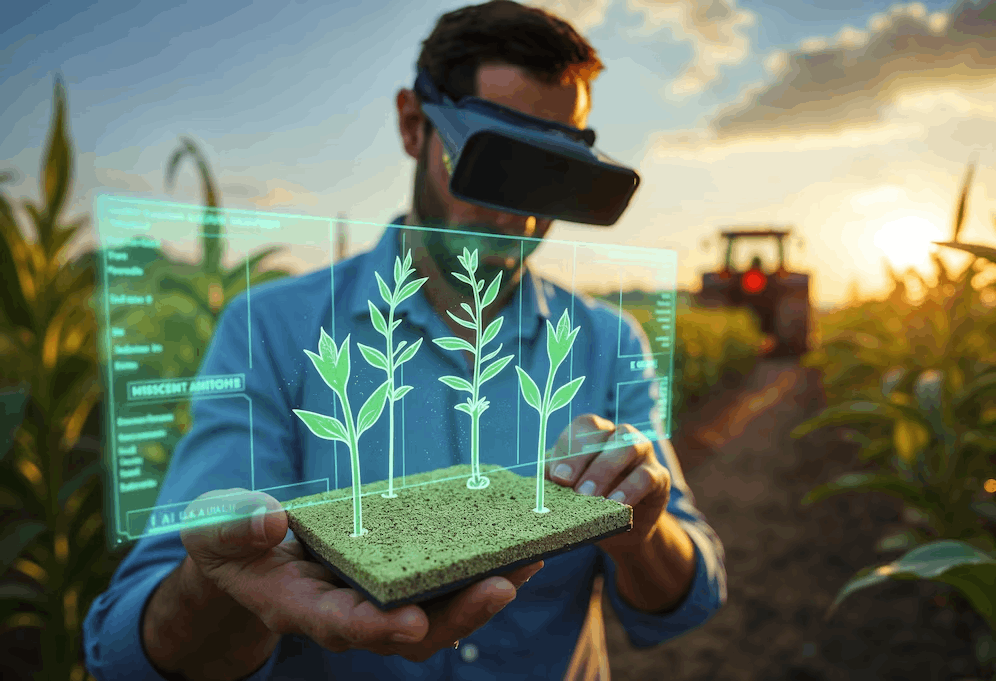
Smart farming and Internet of Things (IoT)-based systems are enabling farmers to respond more precisely to changing conditions. Sensors that monitor soil moisture, temperature and crop health allow automated adjustments to irrigation and fertilisation.
The Netherlands, one of the world’s leading agricultural exporters, uses sensor-equipped smart greenhouses and AI-driven systems to produce high yields with less land, water and energy. In Australia, IoT-based monitoring helps farmers manage vast farms remotely and respond more quickly to drought conditions.
Technology reshapes the future of global agriculture
Experts say the combined impact of these technologies reflects a broader shift toward technology-driven agriculture. Countries investing in modern farming tools are producing more food with fewer resources, strengthening food security and rural livelihoods.