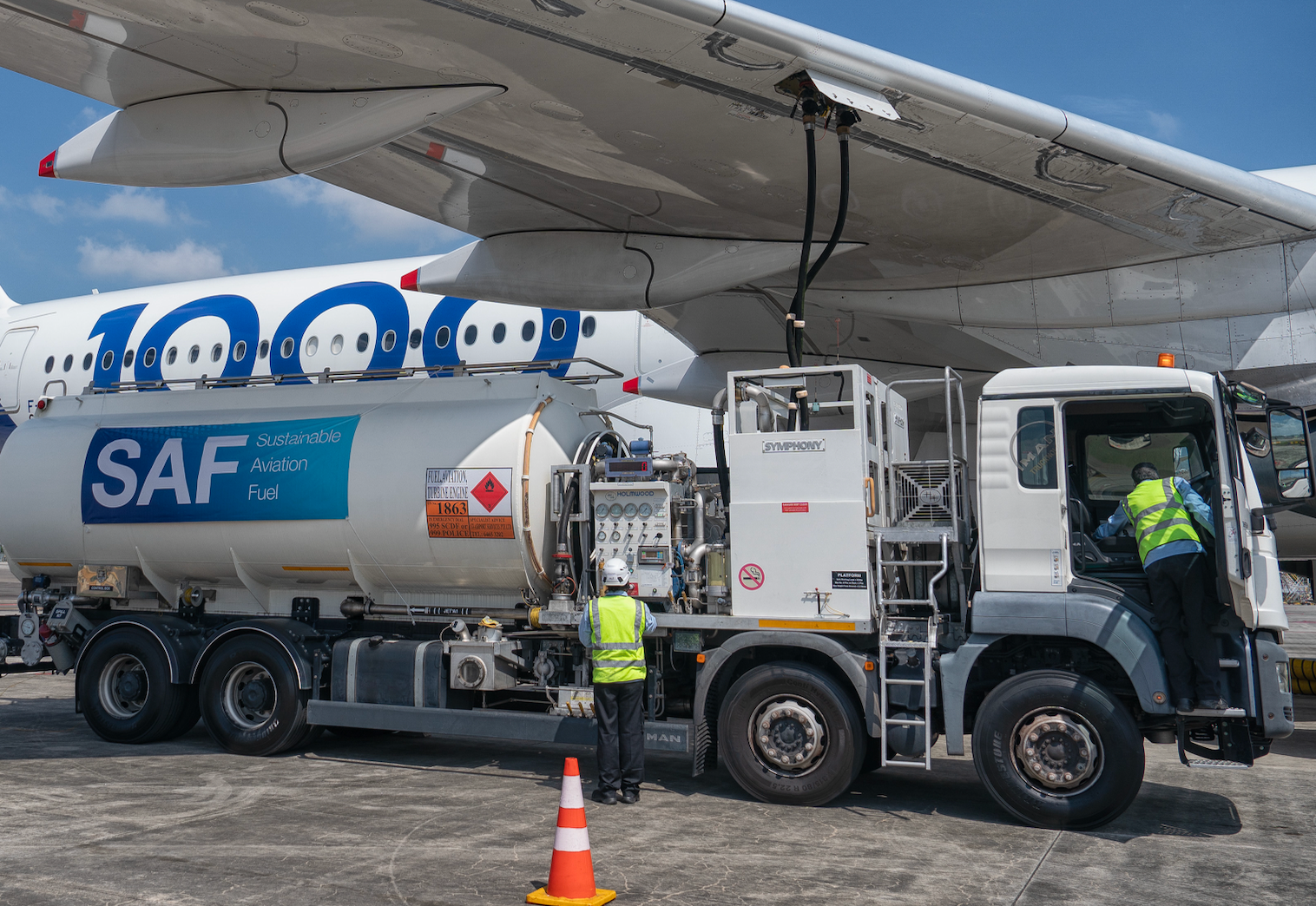
Geneva (Reuters) — The global airline industry is warning that its climate ambitions may falter as supplies of green fuel remain far below expectations. The International Air Transport Association (IATA) said progress has been slower than anticipated, citing limited production and regulatory hurdles as key obstacles.
Green fuel supply falls short of demand
Sustainable aviation fuel, often referred to as green fuel, is made from waste materials such as used cooking oil. It can cut emissions significantly compared with conventional jet fuel, but production remains limited and prices are two to five times higher than traditional fuel.
Net-zero goals under pressure

IATA projects just 2.4 million metric tons of green fuel will be available in 2026, covering only 0.8% of total consumption. The aviation sector pledged in 2021 to achieve net-zero emissions by 2050, relying heavily on a gradual transition to green fuel. “We’re not seeing SAF produced in the volumes we had hoped for and had expected. That is disappointing,” IATA Director General Willie Walsh said, warning that the industry’s long-term climate goals could be at risk.
Airlines frustrated by limited availability
Currently, green fuel accounts for about 0.3% of global jet fuel use, with projections suggesting it will rise to only 0.7% by 2025. Airlines say they are ready to buy all available supplies but accuse producers of inflating prices and failing to scale up. Walsh noted that some carriers may be forced to revise sustainability pledges as early as 2026, citing Air New Zealand as an example of setting more realistic expectations.
Confidence shifts between Airbus and Boeing
Beyond fuel concerns, Walsh highlighted a shift in industry confidence between aircraft manufacturers. Boeing’s performance has improved, while Airbus has faced setbacks due to supply chain disruptions and technical issues. Earlier this month, Airbus cut delivery targets after defects were found in fuselage panels, following a recall of 6,000 A320-series planes over a software glitch.
Delivery cuts add industry pressure
Airbus confirmed deliveries slowed in November, even as the A320 family recently surpassed Boeing’s 737 MAX as the most-delivered passenger jet. Walsh said fewer new aircraft than expected will reach airlines, adding to the challenges posed by limited green fuel supply. Together, these issues underscore the pressures facing aviation as it seeks to balance sustainability goals with operational realities.
Read related news here: https://greenpost.com.pk/category/business/
For more stories and insights, visit The Public Purview