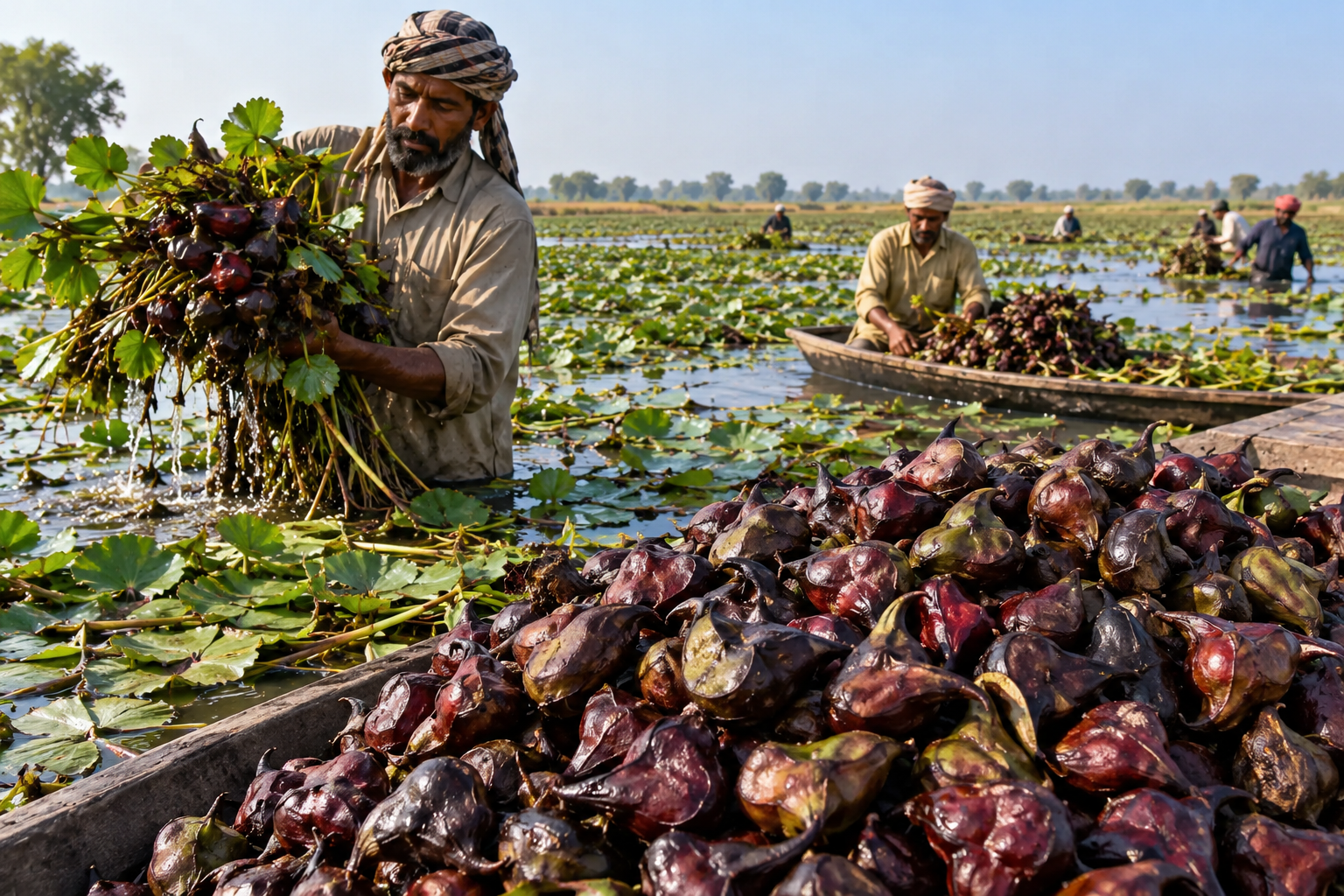
Naranj Mandi has emerged as a notable hub for water chestnut (singhara) cultivation, with thousands of acres of marshy and waterlogged land being used to grow the seasonal crop. What was once considered difficult-to-utilize land has increasingly become a source of income for farmers and traders, turning singhara into an important part of the local winter economy.
Water chestnuts are harvested during the colder months and are widely consumed across Pakistan, particularly as a seasonal snack. The crop is valued for its distinctive taste and nutritional content, while its cultivation offers farmers an opportunity to generate income from wetlands and areas that are less suitable for conventional crops such as wheat and vegetables.

The expansion of singhara farming has also created economic activity beyond cultivation. Farmers, laborers, transporters, wholesalers and retailers all benefit from the seasonal trade, with large quantities moving from production areas to markets. For communities around Naranj Mandi, the crop has consequently developed into a multi-million-rupee seasonal business.
With growing consumer demand and better utilization of marshland, water chestnut farming could provide further opportunities for rural livelihoods. Greater attention to modern cultivation practices, post-harvest handling and market access could help farmers increase productivity and strengthen the economic value of this distinctive winter crop.