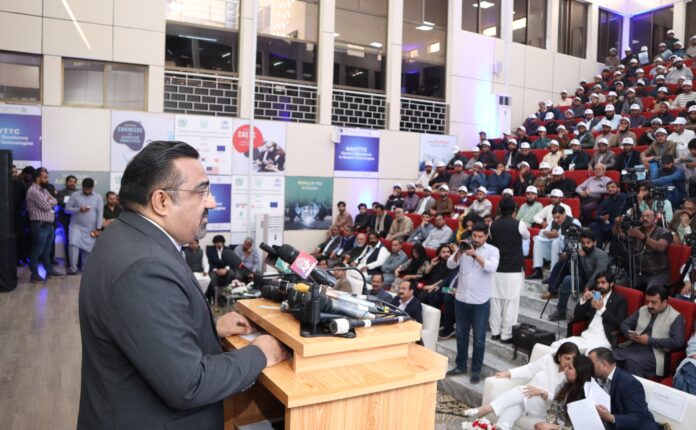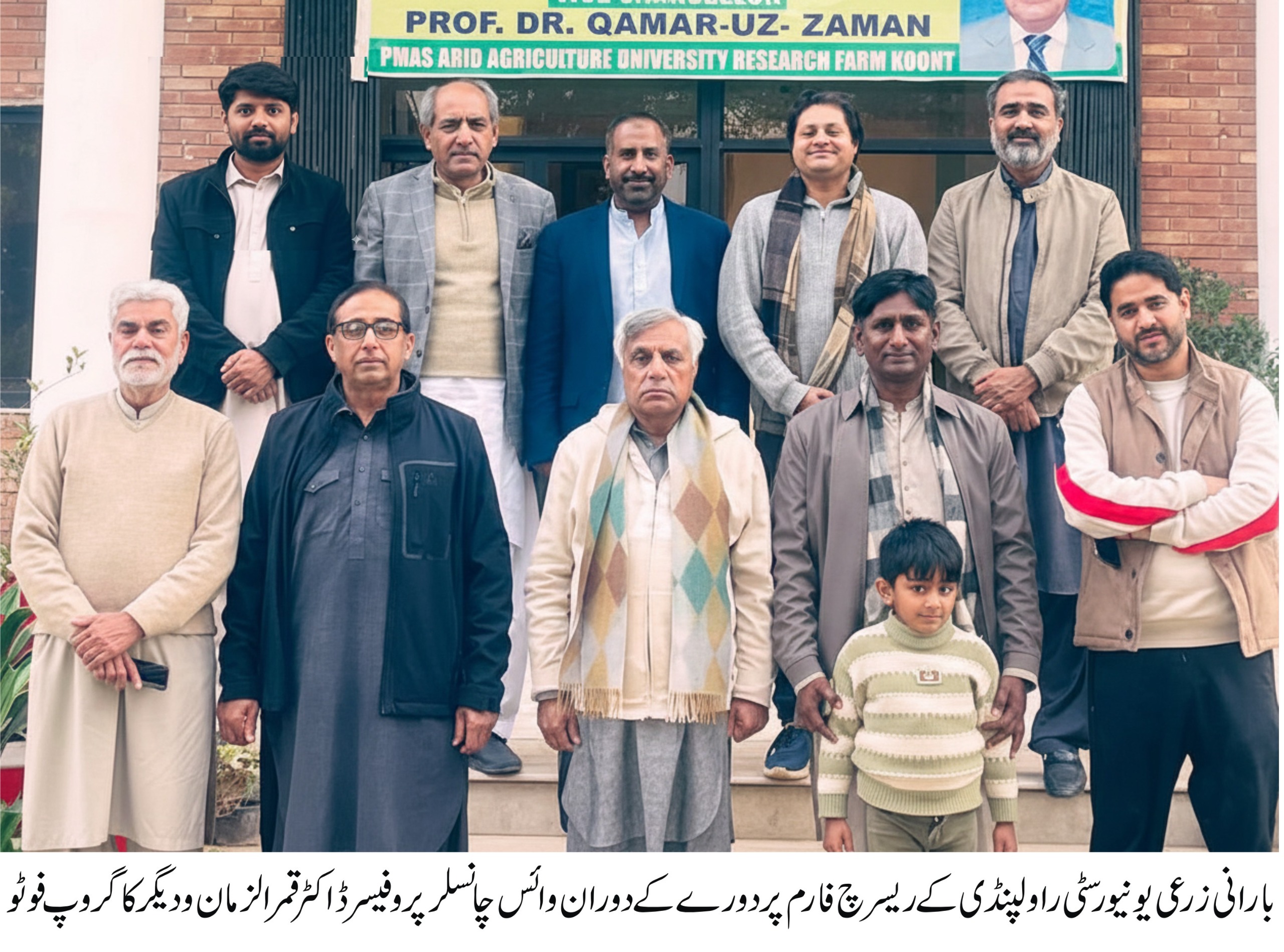
RAWALPINDI: Vice Chancellor of Pir Mehr Ali Shah Arid Agriculture University Rawalpindi, Qamar-uz-Zaman, visited the Center for Modern Agriculture and Water-Efficient Technologies at the University Research Farm (URF), Koont, to assess ongoing research initiatives aimed at promoting sustainable and technology-driven agricultural practices.
During the visit, the Vice Chancellor was briefed on a range of research and development projects currently underway at the farm. These included the Artificial Insemination Project, the Honey Bee Development Project, and experimental trials on various field crops and vegetables. He also inspected field laboratories where researchers and students are working on improving crop genetics, soil fertility, and efficient use of agricultural inputs.

Also Read: Zarkheze: Digitizing Agriculture with Seamless Credit and Smart Advisory
Dr. Tahir Iqbal, Focal Person of the Pak-China Center for Modern Agriculture, briefed the Vice Chancellor on mechanized wheat cultivation initiatives being implemented under high-efficiency irrigation systems. The briefing highlighted the role of precision agriculture tools and innovative irrigation techniques in improving water-use efficiency and crop productivity, particularly in water-stressed regions of Pakistan.
Director University Research Farm, Dr. Ghulam Qadir, presented an overview of the farm’s research activities and emphasized the collaborative role of faculty members, postgraduate students, and partner institutions. He said the research farm serves as a practical platform for translating academic research into field-level solutions for farmers.
Commending the efforts of the research teams, Prof. Dr. Qamar-uz-Zaman underscored the need for outcome-oriented research that directly benefits farmers and contributes to strengthening Pakistan’s agricultural sector. He stressed that research should focus on enhancing productivity, conserving natural resources, and supporting national food security.
The Vice Chancellor said that universities have a key role to play in addressing challenges such as climate change, water scarcity, and increasing food demand through innovation and collaboration. He encouraged researchers to ensure that scientific advancements are effectively transferred from laboratories to farms.
The visit concluded with an interactive discussion with researchers and staff, during which the Vice Chancellor reiterated the university’s commitment to advancing modern agriculture and supporting sustainable farming practices across the country.