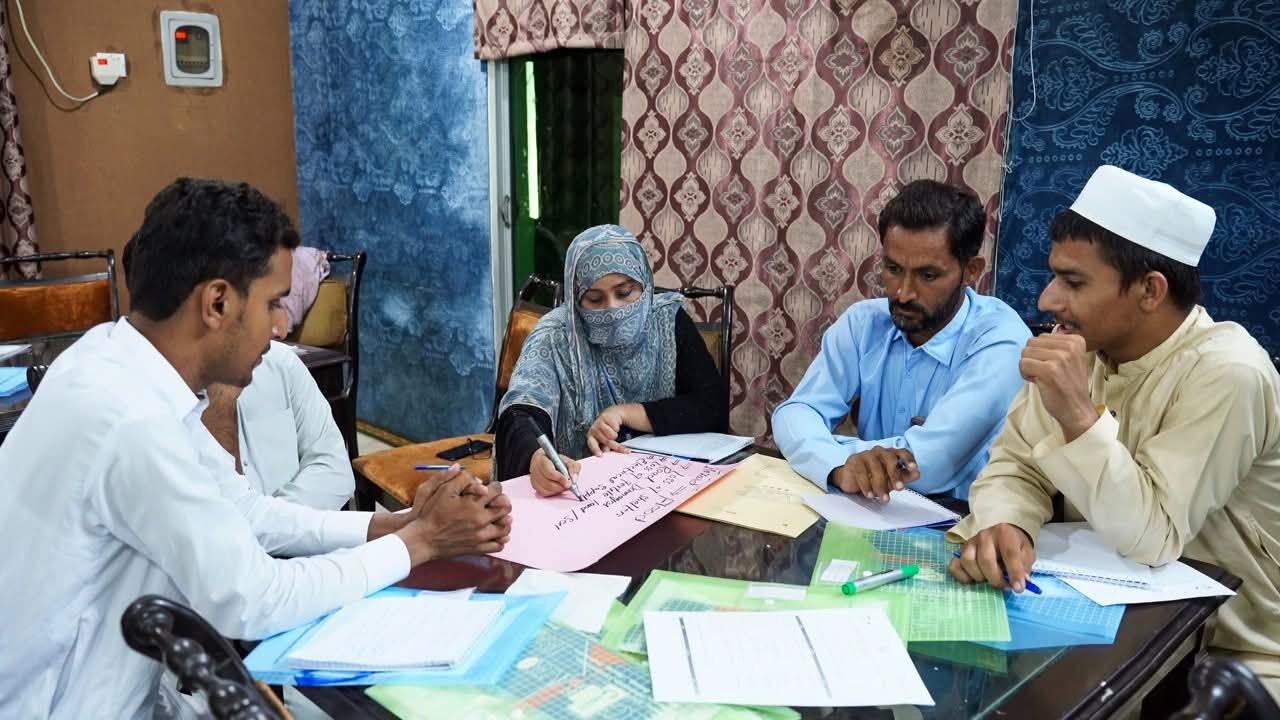
D.I. KHAN: Helvetas Pakistan has concluded a two-day training programme for the Infrastructure Workforce Group and Operation and Maintenance (O&M) Committees of District Dera Ismail Khan under the “Capacity Development for Disaster-Resilient Infrastructure for Safer Communities in Khyber Pakhtunkhwa” project.
The project is funded by the Federal Ministry for Economic Cooperation and Development (BMZ).

The training brought together skilled and semi-skilled workers responsible for constructing and repairing local infrastructure and members of O&M Committees responsible for inspecting and maintaining infrastructure after it becomes operational.
Participants discussed climate risks and key design considerations for climate-resilient infrastructure, along with construction practices and quality control measures.
The sessions also covered the use of nature-based solutions alongside engineered infrastructure. These included bioengineering, vegetative slope stabilisation and gabion structures, which can help strengthen infrastructure while working with natural landscape features.
Participants also examined site supervision and daily reporting procedures, as well as operation and maintenance practices that can determine the service life of infrastructure. The training covered preventive, predictive and corrective maintenance and their impact on long-term performance and lifecycle costs.
A practical exercise concluded the training, with participants preparing a daily progress report and site inspection log based on a project scenario.
Dera Ismail Khan faces particular infrastructure challenges from hill torrents originating in the Suleiman Range and the bunds and spate channels associated with the Rod Kohi system. These conditions make construction quality and regular maintenance important for protecting communities and infrastructure.
The training highlighted the importance of strengthening the capacity of the people who build, repair and maintain local infrastructure. Better skills, supervision and maintenance practices can help improve the quality, durability and climate resilience of infrastructure while supporting safer communities.