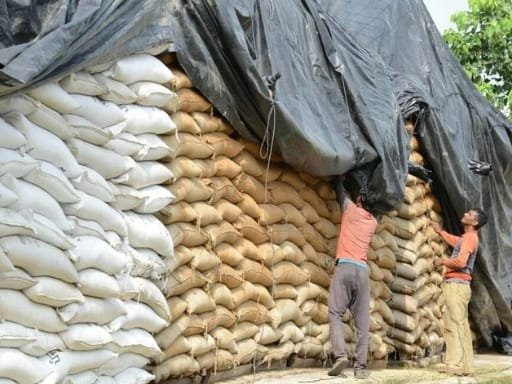
KARACHI: The Sindh government has suspended five Food Department officials over allegations of misconduct, negligence and suspected collusion with illegal wheat hoarders, reinforcing its crackdown on wheat stockpiling across the province.
The action was taken on the directives of Sindh Minister for Food Makhdoom Mehboob-uz-Zaman after the Commissioner of Sukkur Division submitted a detailed report on recent anti-hoarding operations in Khairpur district. Based on the report’s findings, the officials were placed under immediate suspension pending a departmental inquiry.

The suspended officials include Food Supervisors Shafaat Baloch (Nara), Nadeem Ahmed Shaikh (Gambat), Khalil Ahmed Memon (Gambat), Naseer Ahmed Memon (Gambat), and Food Inspector Waheed Ahmed Shaikh (Kot Diji). During the inquiry, their headquarters have been assigned to the office of the Director Food Sindh in Karachi, in accordance with service rules.
Makhdoom Mehboob-uz-Zaman said the provincial government has adopted a zero-tolerance policy against corruption, abuse of authority and any form of collaboration with hoarders. He said the anti-hoarding campaign aims to protect consumers, ensure the uninterrupted availability of wheat and flour, prevent artificial shortages and maintain price stability throughout Sindh.
According to the inquiry report, intelligence-based verification revealed that large quantities of wheat were allegedly shifted from commercial premises in Abul Wah Chowk, Gambat, to properties reportedly owned or controlled by influential individuals in an apparent attempt to evade enforcement action.
The report further alleged that confidential information regarding planned raids may have been leaked in advance, allowing traders to relocate or conceal illegally hoarded wheat before inspection teams arrived. If proven, the report noted, such actions would amount to serious misconduct, abuse of official authority and active facilitation of illegal hoarding.
Investigators also alleged that one official disclosed the identity of Intelligence Branch personnel involved in anti-hoarding operations to traders in Kot Diji, compromising sensitive government operations.
The report also highlighted weak coordination during the enforcement campaign, stating that requests to transport seized wheat to government warehouses and sustain anti-hoarding operations were not adequately supported. It further observed that in several cases traders locked their warehouses and fled, while officials merely sealed the premises without carrying out legal measures such as searches, forced entry, inventory, seizure or confiscation permitted under the law.
The Sindh government said the departmental inquiry will determine individual responsibility and reaffirmed its commitment to ensuring transparency, accountability and effective enforcement against illegal wheat hoarding.
Also Read: Punjab rolls out digital wheat procurement system to manage prices and payments