By Aftab Hussain
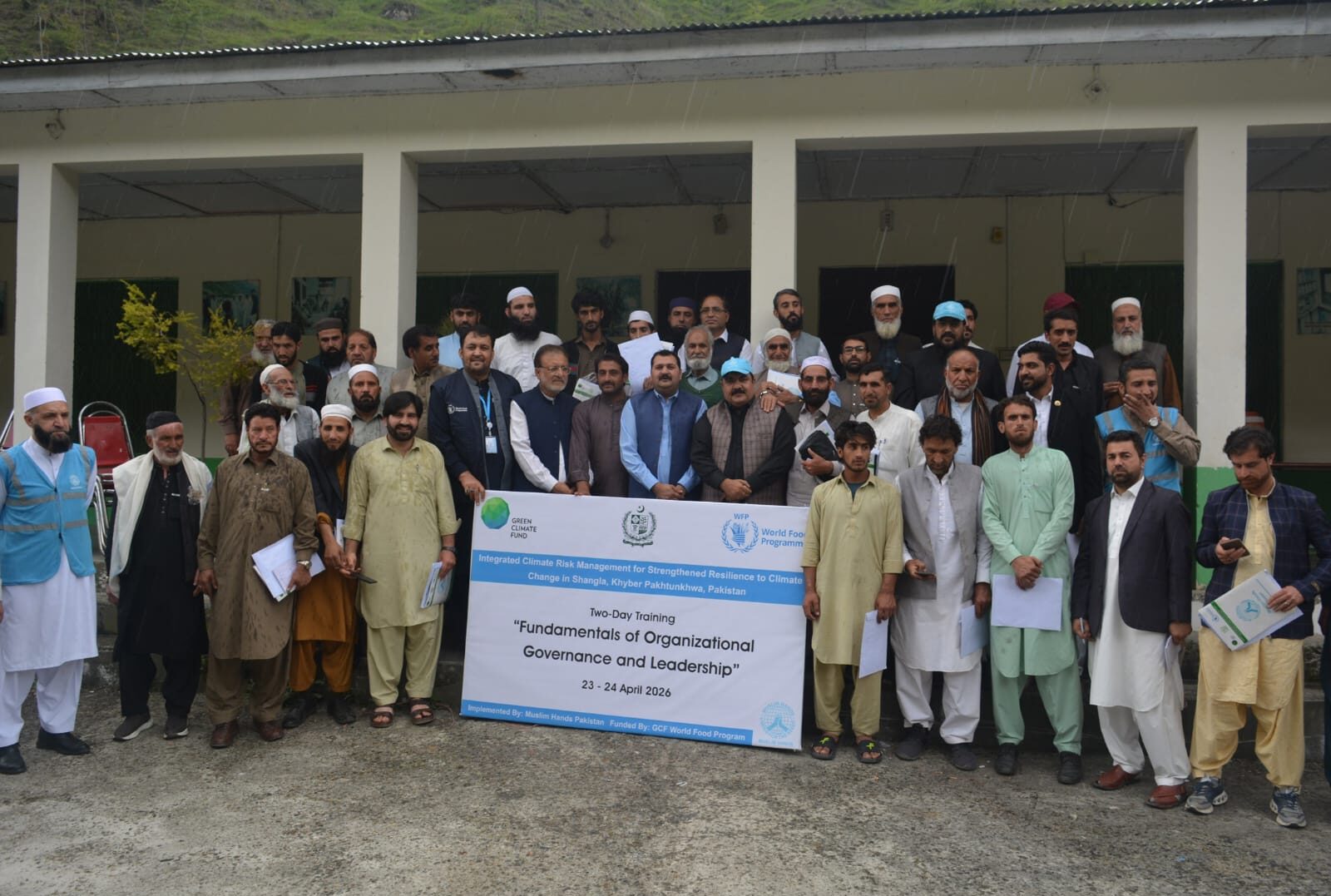
SHANGLA: A two-day training workshop was held in Shangla to equip rural organizations with tools and strategies to respond to climate change risks, as part of efforts to strengthen community-level resilience in vulnerable areas.

The initiative, conducted under the Integrated Climate Risk Management project, aims to enhance local capacity for disaster preparedness and climate adaptation in districts facing increasing threats from extreme weather events.
The project is funded by the Green Climate Fund in collaboration with the World Food Programme and implemented by Muslim Hands Pakistan. It is currently being executed in Shangla and Buner.
Building local capacity
The workshop focused on strengthening institutional and technical capabilities of rural organizations by promoting effective governance structures at the community level. Participants were trained to develop transparent and accountable systems to support sustainable development and disaster risk reduction.
Sessions also emphasized enabling communities to identify local challenges, prioritise needs, and design development plans using available resources.
Focus on climate resilience
The programme targets improved preparedness against climate-related hazards such as floods, landslides, and extreme weather conditions. It also promotes climate-resilient livelihoods and long-term sustainability through participatory planning and stakeholder coordination.
Capacity-building activities are a central component of the project, aimed at empowering local organizations to take an active role in decision-making and implementation processes.
Local implementation
The initiative is currently delivering relief and training activities in disaster-affected union councils, including Pirabad and Pirkhana in Shangla.
The workshop was attended by Deputy Commissioner Shangla Muhammad Abdullah Shah, Additional Deputy Commissioner (Relief) Fida Hussain, representatives of the World Food Programme, and officials from Muslim Hands Pakistan, along with members of rural organizations and local government departments.
Participants expressed confidence that such programmes would enhance the capacity of communities to manage climate risks and respond effectively to future challenges.