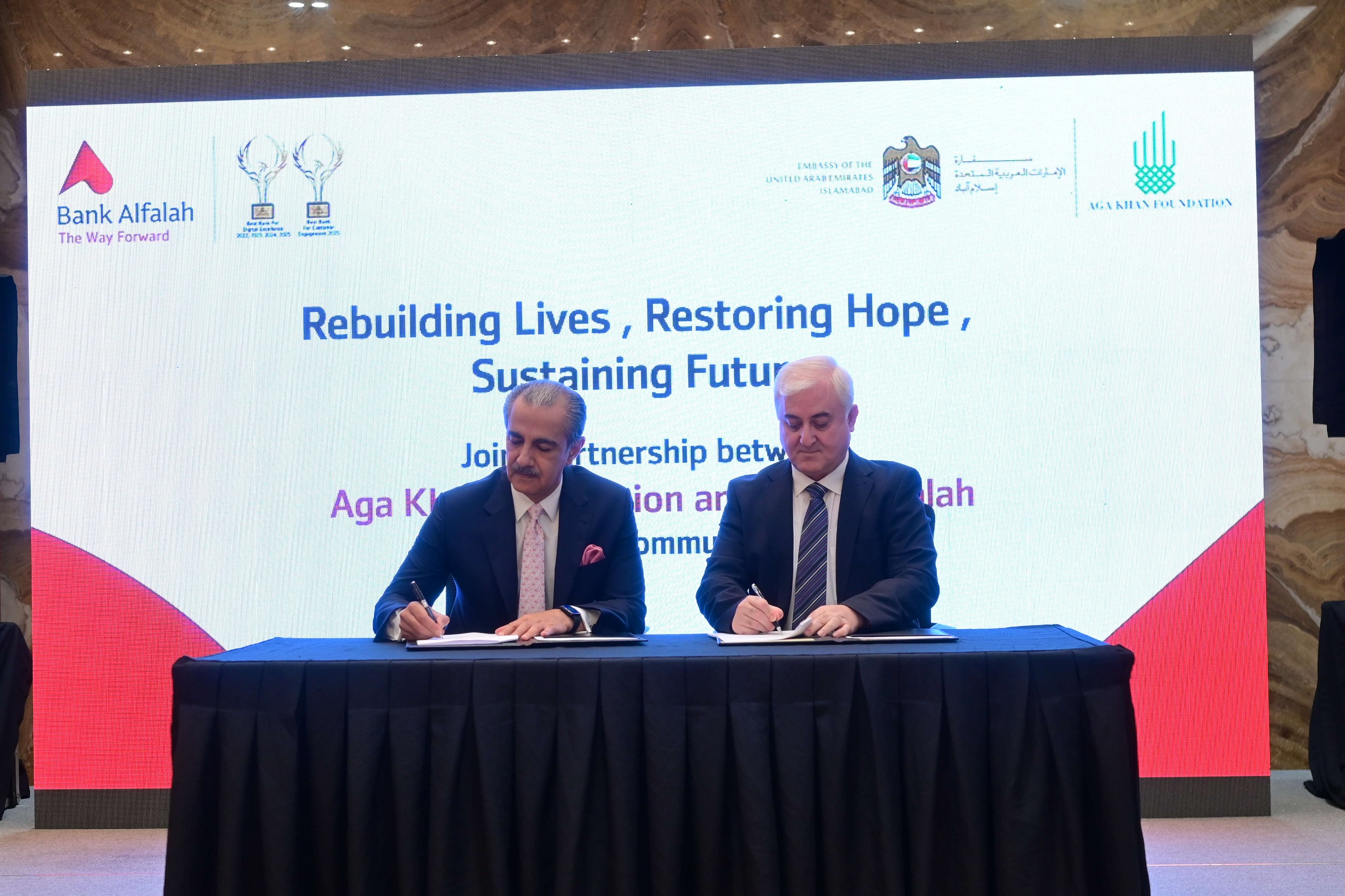
ISLAMABAD, May 8 (ABC):A new Rs66 million rehabilitation initiative has been launched to restore damaged infrastructure and strengthen climate resilience in flood-affected areas of Gilgit-Baltistan. The programme is a joint effort involving Aga Khan institutions and Bank Alfalah, aimed at rebuilding essential services disrupted by recent monsoon floods.
The initiative comes after the severe floods of August 2025, which caused widespread damage to water supply systems, irrigation channels, bridges, and housing in northern Pakistan.
What is the rehabilitation programme?

The flood rehabilitation programme focuses on restoring basic infrastructure and improving long-term disaster preparedness in affected communities.
Key work under the initiative includes rebuilding drinking water systems, repairing irrigation channels, and constructing flood protection structures. Emergency winterised tents are also being provided to support households in high-risk areas.
The programme is being implemented with support from Aga Khan development agencies, including the Aga Khan Agency for Habitat, Focus Humanitarian Assistance, and the Aga Khan Rural Support Programme.
Why does it matter?
The August 2025 monsoon floods caused flash floods, cloudbursts, debris flows, and glacial lake outburst floods across parts of northern Pakistan.
These events disrupted essential services and left many households without reliable access to clean water, agricultural irrigation, and safe shelter.
The new programme is designed not only to restore damaged infrastructure but also to reduce vulnerability to future climate-related disasters.
Who is affected?
The programme is expected to directly benefit more than 10,600 people, with nearly 13,000 additional individuals indirectly supported across districts including Gilgit, Ghizer, and Hunza.
Local communities in remote valleys are the primary focus, particularly households affected by repeated flooding and infrastructure damage.
What does the programme include?
In addition to water and irrigation restoration, the initiative includes a related investment for a solar energy system at a school in Chitral, aimed at improving access to electricity for education.
The overall funding structure includes contributions from Bank Alfalah and the Aga Khan Foundation, with additional support allocated for community-based resilience measures.
What happens next?
Implementation will involve coordination with local authorities and community participation to ensure long-term maintenance of rebuilt infrastructure.
Officials say the focus will remain on strengthening disaster preparedness systems so that communities can better respond to future climate shocks.